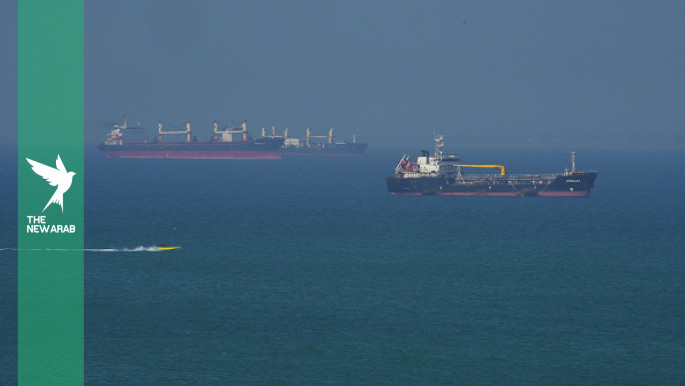
The US is moving to stop Iran profiting from the Strait of Hormuz blockade [Getty]
The US has warned shipping companies they could face sanctions for making payments to Iran for safe passage through the Strait of Hormuz, as tensions over the vital waterway continue to drive a fragile stand-off with global economic consequences.
The US Treasury has cautioned that payments for safe passage, including cash, digital assets, or even charitable donations, could expose companies to penalties, warning that “these risks exist regardless of payment method”.
At the centre of the crisis is the Strait of Hormuz, where Iran has effectively restricted shipping as a defensive measure from US-Israeli aggression while offering limited passage in exchange for fees, a move the US has said could trigger sanctions.
Washington has responded with its own naval blockade of Iranian ports, preventing oil exports and further squeezing Tehran’s economy. US officials say dozens of commercial vessels have already been turned back as part of the operation.
The dual blockade has reduced shipping traffic through Hormuz to a fraction of normal levels, intensifying pressure on global energy markets and contributing to higher fuel prices worldwide.
Against this backdrop of escalating economic and military pressure, a senior Iranian military commander warned that renewed conflict with the US is “likely”, underscoring fears that the standoff could tip back into open war.
Mohammad Jafar Asadi, a senior figure in Iran’s central command, said on Saturday that “a renewed conflict between Iran and the United States is likely”, adding that “evidence has shown that the United States is not committed to any promises or agreements”.
His comments come amid a shaky ceasefire that has held since early April, following the outbreak of war on 28 February when the US and Israel launched strikes on Iran, prompting retaliatory attacks and a near-total disruption of shipping through Hormuz – a chokepoint for roughly 20 percent of global oil and gas flows.
The warning followed fresh signs of diplomatic deadlock after US President Donald Trump rejected a new Iranian proposal delivered via Pakistani mediators.
“At this moment I’m not satisfied with what they’re offering,” Trump said, blaming “tremendous discord” within Iran’s leadership.
“Do we want to go and just blast the hell out of them and finish them forever – or do we want to try and make a deal?” he added, saying he would “prefer not” to take military escalation “on a human basis”.
Iranian officials insist they remain open to negotiations. Judiciary chief Gholam-Hossein Mohseni Ejei said Tehran had “never shied away from negotiations” but would not accept an “imposition” of terms.
The economic toll inside Iran is deepening, with inflation surging and basic goods becoming increasingly unaffordable.
Tehran has accused Washington of effectively waging economic warfare, while US officials argue their blockade is cutting billions of dollars in Iranian oil revenue.
In Washington, Trump has faced criticism over the conduct of the war, including remarks in which he described US naval seizures of Iranian-linked shipments as highly lucrative, likening it to piracy.
“We took over the ship, we took over the cargo, we took over the oil. It’s a very profitable business,” he said. “We’re like pirates. We’re sort of like pirates, but we are not playing games.”
Despite the ceasefire, both sides continue to accuse each other of violations, and regional tensions remain high, with ongoing Israeli strikes in Lebanon and continued military build-ups.
Trump has insisted that hostilities “have terminated”, but political and legal disputes persist in Washington over whether congressional authorisation is required for continued operations.
Meanwhile, warnings from Iranian officials and continued brinkmanship on both sides suggest the conflict may be entering a prolonged “frozen” phase – or risk reigniting entirely
(Agencies contributed to this reporting)