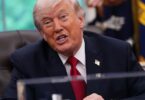
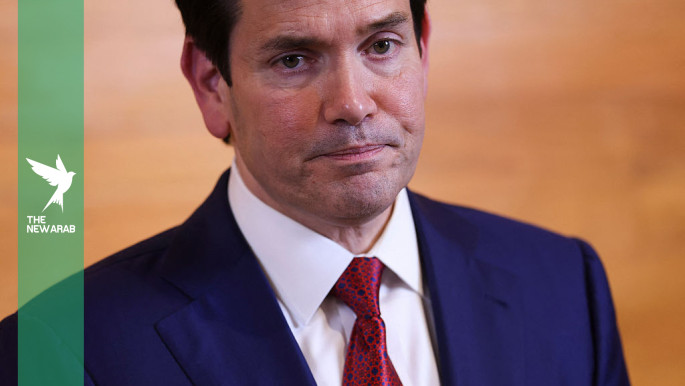
US Secretary of State Marco Rubio said Washington is considering training selected Lebanese army units to dismantle Hezbollah [Getty]
The United States is floating a plan to train and equip select Lebanese army units to confront Hezbollah, reviving a fraught approach attempted in the early 1980s when Washington backed the Lebanese military to contain armed groups, only for the effort to collapse into deeper fragmentation and a bruising American withdrawal.
US Secretary of State Marco Rubio said in comments to Fox News earlier this week that Washington was preparing a framework to support “certain” Lebanese army units with the training, equipment and capabilities needed to act against Hezbollah, arguing that Israel would then “not have to do it”.
“We’re working towards establishing, is a system that actually works, where vetted units within the Lebanese Armed Forces have the training, the equipment, and the capability to go after elements of Hezbollah and dismantle them,” he said.
French-language Lebanese daily L’Orient-Le Jour reported on Thursday that the proposal remains embryonic, with Lebanese presidency and army sources saying they had not been formally notified of such a programme.
But the message fits the wider US-Israeli vision for Lebanon, which seeks to widen the gap between the Lebanese state and Hezbollah, keep pressure on Beirut to disarm the group and push the army towards a role many Lebanese officials and security figures see as politically explosive.
The approach also carries echoes of the early 1980s, after Israel’s 1982 invasion and the evacuation of the Palestine Liberation Organisation (PLO) from Beirut, when Washington helped train and arm Lebanese army units to confront armed factions. That project failed, with the army unable to impose control over militias, the country sinking further into conflict, and US forces withdrawing after the 1983 bombing of the Marine barracks in Beirut.
Lebanese military sources cited by local media on Thursday stressed that additional training or equipment would not be decisive without a clear political order to disarm Hezbollah by force, a move that would carry major risks for internal stability.
Retired officers have also warned that the issue was not merely one of capacity, but of whether the army was willing, or able, to enter into a direct confrontation with Hezbollah.
The pressure comes as Lebanon’s political leadership faces a widening split over US-backed direct negotiations with Israel.
Israel-Lebanon talks
President Joseph Aoun is pressing ahead with the direct talks with Israel, saying Lebanon is waiting for Washington to set a date, while Parliament Speaker and key Hezbollah ally Nabih Berri has rejected direct negotiations and insists the priority must be a full ceasefire and an Israeli withdrawal from southern Lebanon.
The dispute escalated this week after Aoun said he had coordinated his steps with Berri and Prime Minister Nawaf Salam, a claim Berri’s office rejected as “inaccurate, to say the least”.
Sources close to Berri told The New Arab that he had never agreed to direct talks with Israel and was not aware of the US statement issued after the Washington meetings, which they said differed significantly from the November 2024 ceasefire text.
Hezbollah has also accused the US statement of granting Israel a “dangerous pretext” to continue attacking Lebanon.
MP Ibrahim Moussawi said the November 2024 ceasefire agreement did not give Israel any right to strike Lebanese territory, and called for a clear public position rejecting any such interpretation.
Two children, five women among dead on Thursday
Meanwhile, Israel has continued to intensify its attacks across southern Lebanon despite repeated claims that it was observing restraint under US pressure.
At least nine people, including two children and five women, were killed and 23 others wounded in Israeli strikes on southern Lebanon, according to Lebanon’s health ministry, in an initial toll on Thursday.
Israeli forces struck towns including Toul, Harouf, Aadchit and Jibchit in the Nabatieh district, while other attacks targeted Batouliyeh, Hanniyeh, Touline, Jmaijmeh, Safad al-Battikh, Zibqin, Jabal al-Botm, Qabrikha and Khirbet Selm.
A strike destroyed a water station in Batouliyeh, cutting off water supplies to residents, while Israeli forces also blew up the al-Bayyad tourist resort and carried out wide demolitions in Bint Jbeil.
According to a TNA toll, 42 people have been killed in Israeli attacks on Lebanon in the past 24 hours.
Attacks make Israel ‘look bad’, Trump warns
The escalation followed reports that Israeli Prime Minister Benjamin Netanyahu asked US President Donald Trump to restrict the timeframe for direct talks with Lebanon to no more than two to three weeks.
Israeli media reported that Israel warned Washington it would seek permission to return to its “original battle plan” if no results were achieved within that period.
Trump, however, told Axios that he had urged Netanyahu to keep Israeli action in Lebanon “surgical” and avoid destroying buildings, saying such scenes were “terrible” and made Israel “look bad”.
Axios also reported that US officials were concerned the ceasefire could collapse before its expected expiry in mid-May, even as Washington publicly denies that it is falling apart.
On the ground, Israeli army chief Eyal Zamir toured occupied positions near Taybeh in southern Lebanon, where Israeli forces had recently sustained attacks leading to the killing of one and the injury of six soldiers.
He alleged that Israeli forces were holding a so-called “yellow line” to prevent direct fire on northern settlements. He said that despite a ceasefire agreement, the fighting would continue to “remove threats”.
Hezbollah, for its part, has resumed a more active military response than during the previous ceasefire period, announcing on Thursday attacks on Israeli tanks, artillery positions and troop gatherings using attack drones.
The group said it hit a Merkava tank near Beit Lif, two other Merkavas near Qantara, and Israeli military vehicles and soldiers in Bayada, while Israeli media reported a drone launched from Lebanon had set a vehicle on fire in the Western Galilee.
At least 12 Israeli soldiers were injured after being targeted by a drone in Shomera, near the Lebanese border, according to Israeli media reports.
share