The WHO has raised concern over persistent immunisation gaps in Africa, noting that while vaccines prevent about 1.8 million deaths annually, millions of children remain unvaccinated
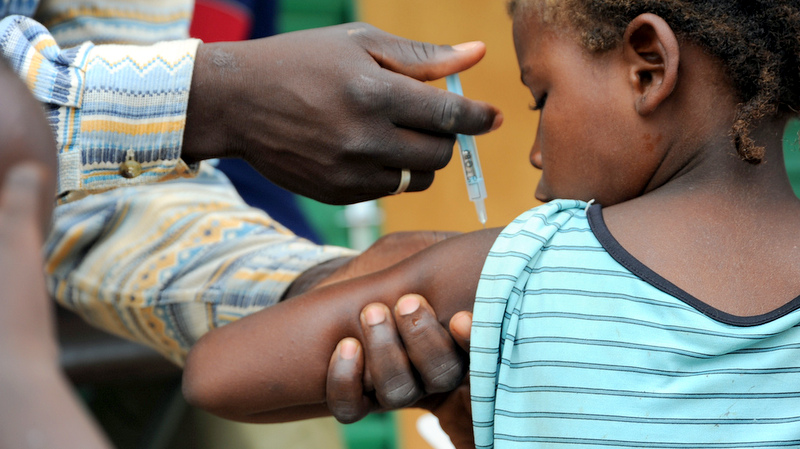
The World Health Organisation (WHO) has stated that vaccines prevent about 1.8 million deaths in Africa every year. However, it also warned that an estimated 6.7 million children across the continent have never received a single routine vaccine.
In the statement marking African Vaccination Week 2026, the WHO Regional Director for Africa, Mohamed Janabi, said the commemoration highlights the importance of immunisation at all stages of life.
He noted that vaccines protect not only children but also adolescents, adults and older persons, noting that immunisation is a lifelong public health investment.
Mr Janabi added that every year, vaccines prevent around 1.8 million deaths in Africa, stressing that a saved life is more than a number, but represents families kept whole and communities able to thrive.
African Vaccination Week was endorsed in September 2010 through resolution AFR/RC60/14 to strengthen immunisation programmes in the African Region.
It is observed annually in the last week of April, alongside World Immunisation Week 2026.
The week aims to highlight the collective actions needed to strengthen immunisation systems across the region, improve timely vaccine uptake, and protect people of all ages against preventable diseases.
It also seeks to keep immunisation high on national and regional health agendas through advocacy and partnerships, while supporting the delivery of other lifesaving health interventions.
Observed from 24 to 30 April, African Vaccination Week 2026 is marked under the theme “For Every Generation, Vaccines Work,” emphasising vaccination across the life course.
The WHO said that since 2000, about 500 million African children have been protected through routine immunisation, noting that vaccines are a lifelong investment in health and development.
In addition, the health body noted that countries across the continent are increasingly adopting innovations such as digital health records, solar-powered cold chain systems, and community-led outreach to improve vaccine coverage.
The agency also highlighted the introduction of malaria vaccines in 25 African countries as a step in addressing one of the continent’s leading causes of illness and death.
In December 2025, the African Regional Verification Commission confirmed that Cabo Verde, Mauritius, and Seychelles had eliminated measles and rubella.
The WHO described the development as proof that a measles-free Africa is achievable with sustained vaccination coverage and strong disease surveillance systems.
The organisation said immunisation efforts since 1988 have prevented an estimated 1.57 million deaths from polio and averted paralysis in more than 20 million people.
The WHO added that nearly 200 million children were vaccinated against polio in high-risk areas such as the Lake Chad Basin and the Horn of Africa in the past year.
Through the “Big Catch-Up” initiative, about 8.75 million children who previously missed routine vaccines have now been reached, while coverage for diphtheria, tetanus and whooping cough has returned to pre-pandemic levels.
Despite these gains, the WHO expressed concern that about 6.7 million children in Africa remain “zero-dose,” meaning they have never received any routine vaccines, while an additional 9.5 million are under-immunised.
It said many of these children live in conflict-affected, underserved or geographically hard-to-reach communities, where access to healthcare remains limited.
The agency warned that ongoing measles outbreaks, diphtheria cases, and the risk of vaccine-derived poliovirus transmission show that recent progress could be reversed if efforts are not sustained.
At the midpoint of the Immunisation Agenda 2030, the WHO said African countries must strengthen domestic financing for immunisation as external funding becomes increasingly uncertain.
It stressed that immunisation remains a core component of primary healthcare and universal health coverage, describing it as one of the most cost-effective public health interventions.
“Every dollar spent on childhood immunisation in Africa returns an estimated forty-four dollars in economic benefits,” the statement said.
The WHO added that it recently launched a report in collaboration with Gavi, the Vaccine Alliance, assessing two decades of immunisation progress and outlining priorities towards 2030 targets.
Mr Janabi called on governments, development partners and communities to work together to ensure equitable access to vaccines across Africa.
He urged stakeholders to prioritise immunisation so that its benefits reach every person, at every stage of life.