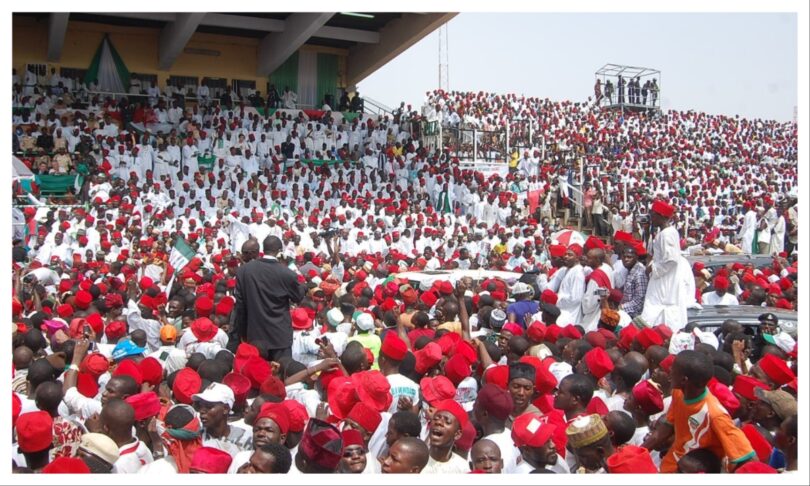
The Kwankwasiyya Movement has said it welcomes criticism but will not tolerate what it described as false and defamatory claims against its leader, Rabiu Musa Kwankwaso.
In a statement issued on Wednesday night to DAILY POST, its spokesperson, Habeeb Sale Mohammed, stressed that while democratic engagement allows for differing opinions, there must be a clear distinction between constructive criticism and deliberate falsehood.
“We are open to criticism, but not lies,” the statement said, noting that political leaders are expected to face scrutiny in a democratic society.
The movement said it believes in freedom of expression and the right of Nigerians to hold and express political views.
The statement added that it welcomes criticism when it is constructive, factual and aimed at strengthening democratic culture.
It, however, warned against the spread of what it called malicious allegations.
“There is a clear distinction between legitimate political criticism and the deliberate publication of falsehoods designed to deceive the public, damage reputations, incite hatred or create divisions,” the statement added.
The group said Senator Kwankwaso, who has spent decades in public service, has always shown tolerance and maturity in handling criticism and opposition.
“Neither Senator Kwankwaso nor the Kwankwasiyya Movement is afraid of criticism or political opposition,” it said.
But it maintained that it would not remain silent in the face of what it described as deliberate lies and character assassination.
“We will not fold our arms and watch individuals deliberately manufacture lies, spread malicious allegations or engage in character assassination under the guise of political commentary,” the statement said.
The movement warned that those spreading false claims should be ready to defend them through legal means.
“Any individual or group that intentionally disseminates false and malicious allegations against our leader should be prepared to defend such claims through lawful and appropriate channels,” it said.
It added that freedom of expression comes with responsibility.
“Public discourse must be guided by facts, evidence and honesty. Democracy cannot thrive where falsehood is elevated above truth,” the statement noted.
The movement also stressed that no individual is above the law, regardless of status or position.
“No individual is above the law. No office is too high. No position is too influential. Whether the source of the falsehood is a politician, a cleric, a traditional ruler, a media personality or any other public figure, we shall not hesitate to pursue every lawful remedy available to protect the integrity, reputation and dignity of our leader and our movement,” it added.
The statement further noted that since his emergence as vice-presidential candidate of the NDC, Kwankwaso has been working to build alliances across the country.
It highlighted his relationship with the party’s presidential candidate, Peter Obi, saying their collaboration has inspired hope among Nigerians seeking credible leadership.
“It is not surprising that the growing acceptance of Senator Kwankwaso and the rapid rise of the NDC have become a source of concern to some political interests,” the statement said.
The group accused some individuals of resorting to misinformation and personal attacks instead of engaging in healthy political competition.
“Such malicious and unprovoked attacks will neither distract us nor discourage us from pursuing our vision for a more prosperous and united Nigeria,” it added.
The statement comes in the wake of remarks by Primate Elijah Ayodele, founder and head of INRI Evangelical Spiritual Church, Lagos, who allegedly made comments during a sermon questioning Kwankwaso’s relationship with Peter Obi.
Ayodele was reported to have said, “Kwankwaso is a fake to Obi, Kwankwaso will betray you. Kwankwaso has been paid to be vice president to Obi.”
Following the comments, Kwankwaso, who is the vice-presidential candidate of the Nigeria Democratic Congress (NDC), reportedly threatened to institute a N10 billion defamation suit against the cleric over the alleged remarks.