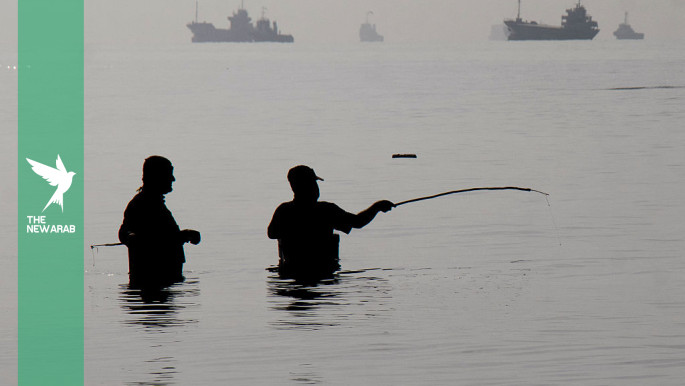
Regional partners have urged Washington and Tehran to come to an agreement to lift the blockade of Hormuz [Getty]
Iran has presented a new three-stage peace plan aimed at ending the war with the US, although initial statements from Iranian and American officials suggest there are significant obstacles to achieving a long-term agreement.
According to the latest proposal, submitted via Pakistani mediators on Sunday, the first stage would require the US and Israel to end hostilities and provide guarantees against future attacks on Iran.
The second stage would focus on reopening the Strait of Hormuz and negotiating a comprehensive framework for managing the waterway, which has become a major source of global economic strain.
Only after these steps are completed would negotiations begin on Iran’s nuclear programme.
However, US President Donald Trump is unlikely to support the proposal in its current form, with analysts pointing to wide divergences in the two sides’ core demands.
Iran’s nuclear programme and enriched uranium
Iran’s proposal seeks to postpone discussions on its nuclear programme until tensions over the Strait of Hormuz are dealt with. Tehran appears to be attempting to break the deadlock by separating the most contentious issue from immediate negotiations.
Washington, however, insists that the nuclear issue must be addressed upfront, while US officials have made clear that any agreement must include limits on Iran’s enriched uranium stockpiles before sanctions or blockades are lifted.
US Secretary of State Marco Rubio said on Monday that the nuclear file remains the central obstacle, saying that Iran’s leadership holds an “apocalyptic vision of the future” and stressed that Washington’s priority is to prevent Tehran from acquiring a nuclear weapon – an ambition the Islamic Republic continues to deny.
White House spokesperson Olivia Wales reiterated that position, saying the US would only accept a deal that “never allows Iran to have a nuclear weapon”.
Previous negotiations have already exposed the depth of disagreement.
Washington reportedly demanded that Iran suspend its nuclear programme for 20 years and relinquish its 972-pound stockpile of highly enriched uranium.
Tehran countered with a proposal involving five years of restrictions followed by limited civilian enrichment, an offer that was rejected by Trump, although no viable compromise has emerged since.
The Strait of Hormuz
The future of the Strait of Hormuz remains another major sticking point.
Trump reviewed the latest proposal with senior national security officials on Monday, according to the White House.
While Rubio acknowledged that Iran appears serious about negotiations, he stressed that the US would not accept Iranian control over the strategic waterway.
US officials argue that lifting the blockade without resolving nuclear concerns would weaken Washington’s leverage. This position persists despite growing pressure from regional states and international organisations to restore maritime traffic and ease global economic disruption.
Iran, meanwhile, has signalled its intention to retain control over the strait, with one contentious element of its proposal being the introduction of transit fees for vessels passing through Hormuz.
Some Iranian officials have suggested a charge of up to $2 million per ship – a proposal strongly rejected by Washington and much of the world, fearing a domino effect at other global chokepoints.
Iranian Foreign Minister Abbas Araghchi recently visited Oman in what appeared to be an effort to secure regional backing for a toll-collection mechanism. Muscat’s response remains unclear, though Oman and other Gulf states have previously opposed such measures.
The International Maritime Organization has also dismissed the proposal, with Secretary-General Arsenio Dominguez stating there is “no legal basis” for imposing transit fees in the strait.