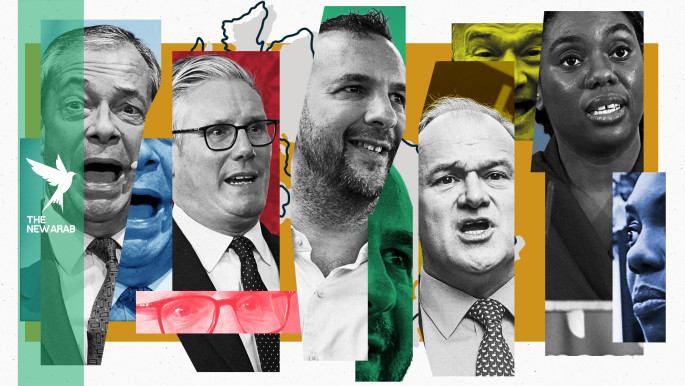
The UK’s local elections in May have offered a telling window into where British politics is heading.
Arguably, they signal one of the most profound challenges to the post-World War II two-party system in modern Britain, as mainstream support collapses and insurgent parties such as Reform and Greens fill the vacuum.
The BBC’s Projected National Share, a statistical model based on council results to predict a General Election, reveals a strikingly fragmented landscape.
Once comfortably dominated by the Conservatives and Labour, Reform currently leads at 26%, a notable feat, but far from the 35-40% majorities that once defined winning politics.
The Greens follow at 18%, with Labour and the Conservatives tied at 17%.
In the local elections, Reform, Nigel Farage’s populist right-wing party, swept across the country, gaining over 1,450 councillors. The Greens, the left-wing environmentalist party which captured votes from Labour’s disillusioned left, have also walked away with 587 councillors.
Labour finished with 1,068 councillors, but the real story is the 1,496 it lost. The Conservatives fared little better, shedding 563 to end up with 801. Despite retaining the most councils in control at 28, Labour lost 38. Britain’s political fragmentation is unmistakable, as more voters turn their back on establishment politics.
Labour’s implosion
For Labour, it’s a bloodbath of their own making. Prime Minister Keir Starmer’s failures are multiple: the purging of the left from his party, the alienation of core voters, and an unyielding attachment to the kind of neoliberal centrism that has deepened inequality for decades.
His complacency has been stark, telling disaffected members in February 2023, “If you don’t like the changes we’ve made, the door is open, and you can leave”, managing the remarkable feat of alienating both the left and the right simultaneously.
That complacency became amplified after the July 2024 election, where his party won on the back of plummeting support for the Conservatives, rather than broad enthusiasm for Labour. The losses last week are a testament to that complacency.
Nowhere has that abandonment been felt more acutely among British Muslims.
“There has been a massive breach of trust between British Muslims and the Labour Party, and it goes beyond Gaza,” Chris Doyle, director of the Council for Arab-British Understanding (Caabu), told The New Arab.
“It’s the feeling that Labour has abandoned them and their values. But if you put it all together, economic malaise, Gaza, the sense that Labour simply isn’t working for them, British Muslims are actually in alignment with most of the country. It’s an emotional collapse, not a tally on a spreadsheet.”
Reform has meanwhile made deep inroads into Labour’s traditional ‘Red Wall’ in northern England, hoovering up working-class voters who feel betrayed by Labour and the Conservatives.
Much of this stems from accusations of Starmer’s government being weak on immigration, a narrative relentlessly amplified by Reform and sections of the right-wing media, and one that has stuck despite Labour’s own efforts to deliver harsher anti-migration policies to appease critics.
If anything, his deference to anti-migrant scapegoating has simply legitimised Reform’s framing while alienating what remains of Labour’s progressive base.
The electoral consequences of 7 May were clear. In Sunderland, a city Labour held for over 50 years, Reform seized 58 of the 75 seats, leaving Labour with just five. In Wigan, Reform won 24 of the 25 seats contested.
In Tameside, half a century of Labour dominance simply ended, as Reform UK won 18 of the 19 contested seats, leaving Labour with 25 and short of a majority.
These represent a notable rupture. By depicting Labour as the establishment that ignores working-class concerns and themselves as the insurgents, Reform hasn’t just won votes in the Red Wall. They’ve torched it.
For the Conservatives, this is simply the bill coming due. Since 2010, they oversaw the gutting of public services through austerity, presided over the chaos of Brexit, endured Boris Johnson’s Covid-19 scandals, watched Liz Truss sink the economy in 2022, and limped through Rishi Sunak’s holding operation until their inevitable collapse in July 2024.
Between them, the two parties that governed Britain for the better part of fifteen years have left little but wreckage. That voters have looked elsewhere is hardly surprising.
“This is partly a structural collapse for Labour, the relationship between the party and the working class has been disappearing for quite some time,” Professor John Curtice, professor of politics at the University of Strathclyde and Britain’s leading elections analyst, told The New Arab.
“Labour’s vote is now defined by trying to balance between social liberals and social conservatives. Social conservatives are moving to Reform, social liberals to the Greens, and Labour has been trying to triangulate between the two, which is an increasingly untenable position.”
Palestine and the realignment of Labour’s progressive vote
Along with Labour’s abandonment of anti-austerity pledges and bold redistributive policies, Palestine and the Middle East have emerged as a focal point for many of Labour’s critics.
Starmer’s purge of the Corbyn-era left, ostensibly to root out antisemitism and make the party more electable, but also to silence pro-Palestinian voices, alienated much of the Muslim vote long before polling day.
That rupture deepened as Starmer sided with Israel’s genocidal war on Gaza and made only symbolic criticisms as pressure mounted. It wasn’t enough to cost him the 2024 election, but the Green surge suggests Starmer’s economic and foreign policy have become a genuine liability.
The scale of this shift is most visible in historic Labour strongholds. In Hackney, a Labour stronghold since 2002, the Greens delivered a seismic blow, winning 42 seats to Labour’s nine and taking the mayoralty with Zoë Garbett.
In Lewisham, Labour’s 55-year dominance simply ended: the Greens seized an outright majority with 40 seats, reducing Labour to 14, with former Labour councillor-turned-Green Liam Shrivastava becoming the borough’s first Green mayor.
“The Greens have benefited because they have been able to position themselves as morally distinct from Labour on Gaza, while also connecting this to wider concerns around social justice, the cost of living and local public services,” Parveen Akhtar, senior lecturer of Politics and International Relations at Aston University, told The New Arab.
“In some urban areas, particularly among younger Muslim voters, they are increasingly seen as a credible progressive alternative, they have been listening and talking to people in a way that Labour, for so long, simply didn’t. Labour just took it for granted that they would get large numbers of Muslim voters.”
The Greens, however, have come under sustained attack from Labour and sections of the media over allegations of antisemitism, including those levelled against around 30 members and candidates, raising questions over the party’s vetting procedures.
Green figures and supporters have pushed back forcefully, stating that many of the accusations deliberately weaponise legitimate criticism of Israel and anti-Zionism, conflating it with antisemitism, a tactic that drew similar controversy during Jeremy Corbyn’s Labour leadership.
Party leader Polanski, himself Jewish, has been outspoken, criticising police conduct around pro-Palestinian demonstrations and, controversially, arguing that Israel, like any state, has no inherent right to exist, only individuals do, a position with considerable grounding in international law, though one that has drawn predictable backlash from Labour and parts of the right-wing media.
Islamophobia and the politics of Farage’s rise
Yet for roughly a quarter of the British electorate who voted for Reform, swept up in anti-migrant rhetoric and anti-establishment anger, Gaza is at best a footnote.
Reform’s position makes that clear. Farage has said he would not suspend weapons sales to Israel and does not believe Israel’s destruction of Gaza constitutes genocide.
His party has also launched Reform Friends of Israel, headed by Jason Pearlman, until December, a media advisor to Israeli President Isaac Herzog, who similarly denies that a genocide has occurred.
While Farage has positioned himself as a champion of English nationalism, his international alignments have attracted scrutiny. The UAE has actively courted far-right and Islamophobic figures across Europe, and Farage has been a prime target.
In January 2026, he accepted an expenses-paid trip to Abu Dhabi, where he pledged to ban the Muslim Brotherhood, a striking example of where the UAE’s anti-political Islam crusade and European right-wing nationalist movements converge.
Comments from newly elected councillors and party figures have reinforced concerns that Reform’s rise could exacerbate hostility toward Muslims and other minorities.
In Sunderland, newly elected councillor Glenn Gibbins was suspended, though only after public outcry, after posting that Nigerians “should melt them all down and fill in the potholes”.
Other candidates have called for shooting Muslims at festivals or described Islam as “the religion of rape, incest and paedophilia”. This comes amid documented rises in anti-Muslim hate crimes, which many fear Reform’s rise could further exacerbate.
“Islamophobia has been there for a while, Reform is simply highlighting a situation where Muslim-bashing has become more vogue,” Chris Doyle added. “The question is whether it damages Reform electorally, or whether it makes life harder for Muslims. It could do both.”
“British Muslims should not feel distinct; their concerns are shared by most people in this country.”
Israel, too, appears to see Farage as a more reliable ally than Starmer, whose support, though unwavering in practice, has become rhetorically muddier.
That was clear after Israel’s Foreign Minister Gideon Sa’ar held a phone call with Nigel Farage in September 2025, explicitly in the context of dissatisfaction with Keir Starmer’s Labour government which recognised the State of Palestine that month.
And when the US-Israeli war on Iran began in late February, Farage was notably softer than most European leaders, directing his criticism at Iran’s domestic repression rather than condemning the strikes themselves.
He even admitted that while the strikes might be illegal, geopolitics trumps legality, a worldview that aligns him with a broader nationalist-realist current associated with Donald Trump and parts of the contemporary populist right, and where national interests trump any notion of a rules-based international order.
What comes next
With Labour’s support collapsing and the party facing an almost certain loss of the huge parliamentary majority it won in 2024, Reform and the Greens look set to become the defining rival forces in British politics.
That would mean a genuinely polarised contest: populist nationalism with a hard anti-migrant edge against a politics of environmental values, human rights, and redistribution.
Farage as Britain’s next Prime Minister by the next general election in 2029 is now being seriously discussed, and if Reform sustains this momentum, it’s not an implausible trajectory.
However, Britain’s First Past the Post (FPTP) system remains a formidable obstacle; it was built for two-party dominance, and converting a vote share in the mid-to-high 20s into a parliamentary majority is a very different challenge to winning council seats.
Some analysts already suggest Reform may be approaching its ceiling, especially with signs of stabilisation creeping in after the rapid gains.
But no doubt the Greens will keep challenging the party and provide an alternative to Reform’s anti-migrant discourse.
“What we are seeing more broadly is the weakening of the old two-party model of minority political incorporation,” said Dr Parveen Akhtar.
“At the same time, local issues remain crucial. In cities such as Birmingham, anger around bin collections, economic mismanagement, council cuts, and service delivery, have intersected with frustration over Gaza.”
Jonathan Fenton-Harvey is a journalist and researcher who focuses on conflict, geopolitics, and humanitarian issues in the Middle East and North Africa.
Follow him on Twitter: @jfentonharvey
Edited by Charlie Hoyle