Washington and Tehran are sending conflicting messages ahead of follow-up discussions in Switzerland
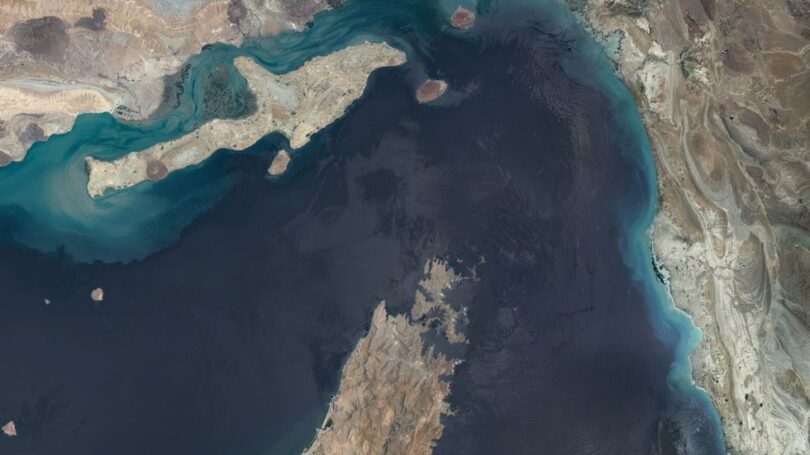
The situation in the Strait of Hormuz remains tense following the signing of a memorandum of understanding between Washington and Tehran, as the countries’ delegations descend on Switzerland for follow-up discussions.
Commercial shipping through the key waterway was disrupted after the US-Israeli attack on Iran in February, and its reopening has become one of the key points of the memorandum signed by President Donald Trump on Wednesday. Washington promised to lift its own blockade of Iranian ports, while Tehran would gradually “make arrangements using its best efforts for the safe passage of commercial vessels.”
Trump touted the preliminary deal as an “immediate reopening,” announcing that “the oil is flowing” after the first tankers sailed through – before Tehran claimed to have shut down the waterway again.
What does Iran say?
Tehran accused Washington of failing to fulfill its commitments and force Israel to stop its “crimes” in Lebanon. The Khatam al-Anbiya Central Headquarters military command announced on Saturday that “the Strait of Hormuz is closed,” while the Islamic Revolutionary Guard Corps warned vessels against approaching the waterway, saying their safety would be “jeopardized.”
What does the US say?
US Vice President J.D. Vance has denied that traffic through the strait had been interrupted, insisting that “we actually got 16 million barrels of oil out of the Strait of Hormuz yesterday.” In an interview with Fox on Saturday, Vance called it “a record going back to even before the conflict started.”
US Central Command stated that “commercial ship traffic in the Strait of Hormuz increased June 20,” while US forces continue to operate in the area. According to CENTCOM data, safe passage through the waterway “remained intact,” and at least 55 merchant vessels had passed through as of Saturday.
What is actually happening?
Dozens of vessels, including three Saudi oil supertankers and five sanctioned Iranian ships, have moved through the waterway in recent days, according to data analytics company Kpler, which noted that most were “following established Iranian route patterns.”
Hormuz traffic shows recovery
Verified Strait of Hormuz crossings reached 25 on 18 June, marking a notable increase in daily maritime activity. Traffic was evenly distributed across both directions, with most vessels following established Iranian route patterns. Five sanctioned… pic.twitter.com/kqnil079nf
— Kpler (@Kpler) June 19, 2026
Some commercial vessels continued traversing the strait as of Saturday evening, according to the MarineTraffic monitoring website. The number of tankers sailing through the waterway reportedly peaked at 25 on Thursday, but fell to single digits on Friday.
Are US-Iran talks in jeopardy?
Washington and Tehran are expected to reach a final settlement on remaining disputes, including Iran’s nuclear program, within a 60-day negotiating period, but the first round of talks was postponed. Vance eventually departed for Switzerland on Saturday, with Trump’s special envoys Steve Witkoff and Jared Kushner also expected to take part in the talks, which are now planned for Sunday.

The Iranian delegation, led by Foreign Minister Abbas Araghchi and Parliament Speaker Mohammad Ghalibaf, also flew in aboard Minab168, a flight commemorating the deaths of schoolgirls in the deadliest US strike. The delegation also includes the head of the Iranian central bank, the deputy oil minister, and the chairman of the National Iranian Oil Company.
Tehran agreed to the Swiss meeting primarily to “clarify” how the US plans to fulfill its commitments under the memorandum, according to Iranian Foreign Ministry spokesman Esmail Baghaei.
“Ending the war on all fronts, including Lebanon” is a key pillar of the mutual understanding, he stated, adding that the memorandum comes as a “single package” and that violation of any provision calls the entire agreement into question.
What triggered Iran’s backlash?
Israel has continued bombing Lebanon despite the US-Iran agreement, while Hezbollah has reportedly clashed with IDF troops occupying southern parts of the country since March.
The Lebanese Health Ministry said at least 47 people were killed and 97 injured in intense Israeli airstrikes on Friday night alone, while the overall death toll from the Israeli invasion is nearing 4,000.
The US-Iran memorandum explicitly calls for a cessation of all hostilities by the signatories and their allies, and for “ensuring the territorial integrity and sovereignty of Lebanon.”
After mediation by the US and Qatar, the sides reportedly agreed to halt hostilities, although neither Hezbollah nor Israel officially confirmed the deal, and open-source intelligence monitors said sporadic exchanges of fire and Israeli strikes in Lebanon continued.
What is Israel’s stance on the US-Iran deal?
Israeli Prime Minister Benjamin Netanyahu has insisted that Israeli troops will remain in southern Lebanon for as long as Israel deems necessary, while the IDF has published a new map showing an occupied area extending roughly 10km into Lebanese territory. Hardline National Security Minister Itamar Ben-Gvir said Israel would not be bound by “Trump’s agreement,” writing on X: “All of Lebanon should burn!”
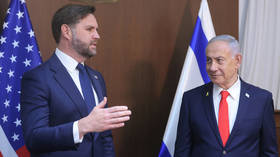
The memorandum has strained US-Israeli relations, with Trump and members of his administration publicly accusing West Jerusalem of using excessive force in Lebanon.
“You can’t just kill your way out of solving every single national security problem that you have,” Vance said, addressing Ben-Gvir and similarly minded Israeli officials.
US intelligence officials believe that Israel will likely attempt to undermine the peace process, the Washington Post reported this week, claiming that Netanyahu could bet his political survival on escalating the conflict with Hezbollah ahead of the autumn elections.