Okechukwu Uwaezuoke
About 25 years ago, a group of young artists from the University of Nigeria, Nsukka, arrived in Lagos determined to challenge conventional ideas about art. Mentored by Professor El Anatsui, they staged a joint exhibition, New Energies, at Mydrim Gallery and Nimbus Art Centre in Ikoyi.
The exhibition confronted audiences with works that blurred the line between art and everyday objects. A cigarette-cup measure of garri was presented as an artwork. So was an arrangement of ceramic teacups. Many viewers, accustomed to paintings and sculptures, were bewildered. Some were dismissive. Yet the artists succeeded in forcing audiences to reconsider what could legitimately be presented—and defended—as art.
A year earlier, I had encountered a similar challenge at Dak’Art, the Dakar Biennale. As one of the pioneer editors of the Biennale newspaper, I spent much of my time tracking down exhibitions scattered across the Senegalese capital and its environs.
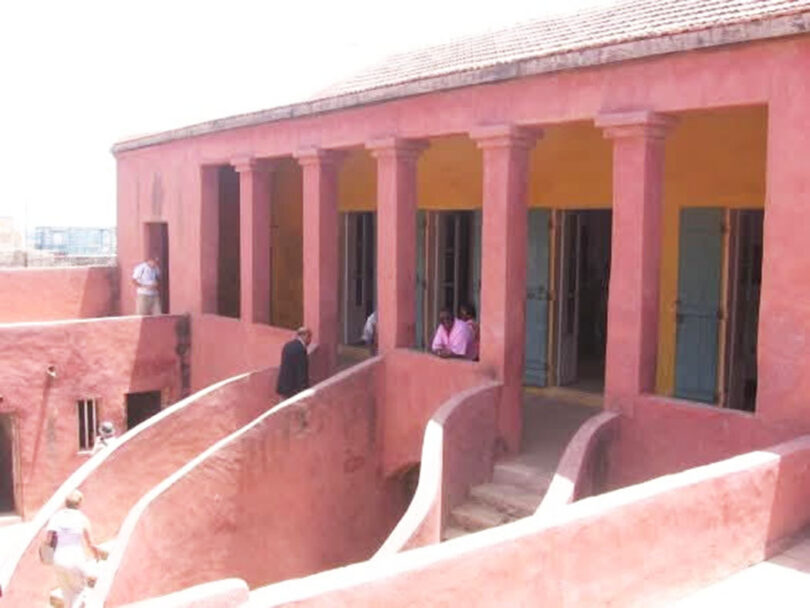
One afternoon, accompanied by an American acquaintance, Larry Torres, I travelled to the Maison des Esclaves on Gorée Island in search of an off-site exhibition. We searched room after room and found nothing. Convinced the exhibition was either poorly signposted or nonexistent, we headed back towards the jetty.
There we met Professor El Anatsui, who had also come to see the exhibition. During our brief conversation, we realised something startling: the exhibition we had been searching for was the large heap of granulated sugar we had already seen on the floor of one of the rooms, dotted with miniature plastic cowboys and Indians.
That was the artwork.
Larry and I exchanged sceptical glances. Was this really art? Professor Anatsui merely smiled, as though recognising that we were approaching the question from entirely different directions.
Years later, I came to think of him as something of a high priest of conceptual art. His silence that day spoke volumes. The artist had simply exercised his artistic freedom.
And that is where the discussion becomes interesting.
Few concepts are invoked more frequently in contemporary art than freedom of expression. Yet few are examined less critically. Most people understand freedom as the ability to think, say, or do as they please without interference. Dictionaries largely reinforce this understanding, equating freedom with the absence of restraint.
Artists, perhaps more than anyone else, have embraced this ideal. The Surrealist André Breton, for instance, championed automatism, encouraging artists to bypass conscious control and allow the unconscious mind to speak directly through words and images. He celebrated unrestricted expression and the exploration of imagination’s furthest reaches.
Yet Breton is also credited with remarking that the simplest Surrealist act would be to walk into the street with a gun and fire randomly into a crowd. Though intended as provocation, the statement exposes the difficulty at the heart of absolute freedom. If freedom means the absence of all restraint, where does one draw the line?
No sensible society accepts unlimited freedom. As the old saying goes, your right to swing your arm ends where another person’s nose begins.
The same principle applies to artistic freedom.
Artists do not create in isolation. Their work emerges from personal experience, culture, education, beliefs, and the society around them. Inspiration does not arise from nowhere; it is shaped by observation, reflection, and engagement with the world. In this sense, the artist is less an inventor than a mediator.
The crucial question, therefore, is not whether artists are free to express themselves. Of course they are. The more important question is: what exactly are they expressing?
This is where contemporary art often becomes contentious. A cup of garri can be art. A heap of sugar can be art. Virtually anything can become art if it successfully communicates an idea, an experience, or a truth.
Yet artistic freedom does not place the artist beyond scrutiny. Has the chosen form conveyed something meaningful? Has it illuminated an aspect of reality that might otherwise have remained unnoticed? Or has it relied merely on novelty, provocation, or shock?
These are legitimate questions.
Too often, debates about contemporary art end the moment someone invokes “freedom of expression.” Yet freedom and responsibility are not opposing principles. Every artistic gesture carries consequences. Every work contributes something—whether constructive or corrosive—to the environment in which it appears.
This does not mean artists should avoid difficult subjects. Art has always confronted society’s failures, hypocrisies, and wounds. It should continue to do so. But there is a difference between exposing darkness and becoming fascinated by it.
Artists who reveal social decay perform a valuable service. Yet their task need not end there. They can also help us imagine alternatives. It is not enough merely to point to the wound; one should also seek the possibility of healing.
Perhaps the artist’s highest calling lies not simply in reflecting the world as it is, but in revealing what it might become.
The heap of sugar on Gorée Island and the cup of garri in Lagos continue to provoke debate. Perhaps that alone justifies their existence. Yet they leave us with a larger question that every artist must ultimately answer:
Is the work merely exercising freedom, or is it serving a purpose?
The answer matters.