
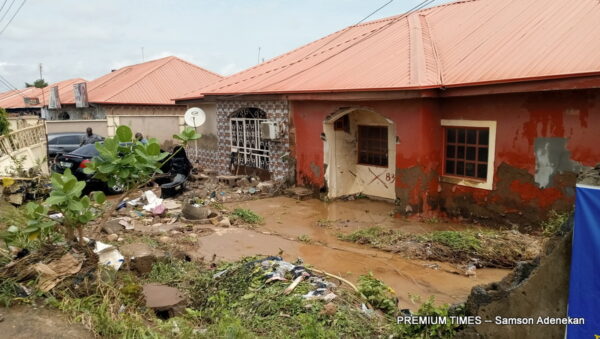
Rain will continue to fall. Whether it reaches our farms as nourishment, our reservoirs as water security or our homes as a destructive flood will depend partly on the climate, but also significantly on the decisions we make.
At last Friday’s sermon in my neighbourhood mosque, the Anas Ibn Malik Islamic Centre Masjid at AMSSCO Platinum City Estate, Galadimawa, Abuja, the Imam, Bashir Bello Shagari, spoke on the theme, “Rain: A Blessing, Mercy, Trial and Lesson.”
The sermon invited worshippers to look beyond rain as an ordinary meteorological event. It presented rain as a blessing for which humanity must be grateful, a mercy that sustains creation, a possible trial when it causes harm, and a lesson about responsibility and accountability.
That message should not end within the walls of the mosque. It speaks directly to Nigeria’s environmental and climate challenges and, more importantly, to the quality of our public policies and governance in addressing them.
The Qur’an describes rain as an expression of divine mercy: “And He is the One who sends down the rain after they have despaired, and He spreads His mercy” (Qur’an 42:28). It also asks humanity to reflect: “Have you considered the water that you drink? Is it you who bring it down from the clouds, or are We the One who sends it down?” (Qur’an 56:68–69).
These verses establish water as more than a commodity. It is a common resource upon which life depends. The obligation to receive it with gratitude must, therefore, include responsibility for using it appropriately, preparing for the risks associated with it and protecting the environment through which it flows.
Gratitude cannot be reduced to words while drains are filled with refuse, green areas are converted into housing estates, trees are removed without replacement, and buildings are approved on natural waterways. It must be expressed through responsible conduct, environmental stewardship and policies that preserve this gift for present and future generations. That is the essence of sustainability.
The Islamic concept of khilafah, humanity’s trusteeship over the earth, provides a compelling foundation for sustainability. Human beings may use the earth’s resources within nature’s capacity to regenerate and absorb the effects of human activity, but we do not possess an unlimited moral licence to degrade them. Development that destroys the ecological systems on which society depends is neither responsible nor sustainable. Environmental degradation usually brings both immediate warnings and long-term consequences.
This message has acquired particular urgency in the Federal Capital Territory. Flooding in August 2026 affected several parts of Abuja, including Wuse II, Gudu, Gaduwa, Durumi, Maitama, Katampe, Mabushi, Lugbe and Gwarinpa. The FCT Administration subsequently announced the removal of structures obstructing waterways and, in September, began a citywide drainage-clearing exercise during the peak of the rainy season.
These actions are necessary, but they raise difficult governance questions. What weaknesses in planning approval and enforcement allowed such developments to occur? Were environmental impact assessments undertaken? Why do drainage systems remain blocked until flooding becomes an emergency? Why must residents repeatedly lose homes and businesses before preventive action begins?
Flooding is often described as a natural disaster, but rainfall alone does not explain its human consequences. Heavy rain becomes catastrophic when it meets poor drainage, uncontrolled development, indiscriminate waste disposal, inadequate infrastructure and weak enforcement of planning regulations.
Abuja’s experience illustrates the difference between weather and disaster. The government cannot prevent rain, but public decisions help determine whether rainwater passes through functioning drainage channels or through people’s homes.
Citizens also carry responsibilities. Individual behaviour is a central part of environmental stewardship and climate action. Throwing plastic bottles, food containers and household waste into drains may appear to be a private act, but its consequences are collective. When thousands of such actions converge, drainage channels become refuse dumps and entire communities are placed at risk.
The sermon reminded worshippers: “Do not throw yourselves with your own hands into destruction” (Qur’an 2:195). That instruction applies to a motorist attempting to cross raging floodwater. It also speaks to every private action and official failure that creates the conditions for preventable harm.
The sermon also brought back memories of my childhood in Jos and Keana. At the time, the last Saturday of every month was reserved for compulsory environmental sanitation. I remember that virtually every household kept basic implements such as cutlasses, hoes, rakes and brooms. Families used them to clear overgrown surroundings, remove refuse and open drainage channels.
The practice did more than keep our communities clean. It instilled discipline and gave citizens a sense of responsibility and ownership in protecting their environment. Children grew up understanding that environmental sanitation was not the responsibility of the government alone. Every household had a role to play.
That lesson became even more relevant after flooding in Keana, Nasarawa State, in 2025. Reports indicated that the flood destroyed houses and farmlands and disrupted livelihoods. Although no lives were reported lost, the damage showed how quickly rainfall can change from blessing to trial when communities and institutions are inadequately prepared.
The communal ethic I witnessed growing up appears to be weakening. Urbanisation, changing lifestyles and growing dependence on government have gradually displaced a culture of shared environmental responsibility. Today’s climate realities require us to restore that spirit in a more organised and sustainable form.
Government must provide effective waste-management services, drainage infrastructure, planning enforcement and early-warning systems. Citizens must complement these measures by keeping their surroundings clean, protecting drainage channels, planting trees and refusing to turn waterways into refuse dumps. Sustainable environmental governance succeeds when sound public policy is matched by responsible citizenship.
The danger extends far beyond the FCT and Keana. Federal flood projections for 2026 identified thousands of communities across 33 states as exposed to varying levels of risk. Yet Nigeria’s flood season continues to follow a painfully familiar cycle. Forecasts are issued, warnings are publicised, rains intensify, communities are displaced, emergency relief is distributed, and public attention fades until the next disaster.
The catastrophe in Mokwa, Niger State, in May 2025, remains one of the clearest warnings. Hundreds of lives were reportedly lost, homes were destroyed, and thousands of residents were displaced. Farmland and infrastructure were also devastated. The tragedy affected food production, household incomes, public health and local economic activity.
The devastating Maiduguri flood of 2024 similarly showed what happens when extreme rainfall intersects with vulnerable infrastructure and inadequate disaster preparedness. Homes, public facilities, and livelihoods disappeared underwater, leaving hundreds of thousands of people displaced.
These disasters show why Nigeria must continue strengthening prevention and preparedness alongside emergency response.
Relief materials are essential after a disaster, but their distribution should not be mistaken for a complete disaster-management policy. Good governance is measured not only by how officials respond after a tragedy, but also by what institutions did before it occurred.
Climate change is increasing the intensity and unpredictability of extreme weather. Yet climate change must not become an excuse for administrative failure. It may intensify rainfall, but it does not dump refuse into drains, approve construction on floodplains, neglect critical infrastructure or prevent governments from enforcing building regulations.
Nigeria must move from seasonal flood response to year-round climate governance.
First, flood-risk information produced by the Nigerian Meteorological Agency and the Nigeria Hydrological Services Agency should be integrated into state and local development decisions. Forecasts should determine where construction is permitted, which communities require early evacuation plans and where infrastructure investment must be prioritised.
Second, planning approvals must become more transparent. Residents should be able to determine whether developments around them comply with approved land-use plans and environmental standards. Officials and developers responsible for illegal construction on waterways must be held accountable. Enforcement should be consistent, lawful, transparent and humane.
Third, drainage maintenance should be treated as routine public infrastructure management, not an emergency activity undertaken after flooding begins. Budgets for drainage construction and maintenance should be publicly disclosed, while completed projects should be independently monitored.
Fourth, governments must invest in nature-based solutions. Wetlands, green corridors, urban trees and permeable surfaces absorb and slow rainwater. Paving every available space and removing vegetation may create the appearance of rapid development, but it increases runoff and transfers the cost to vulnerable communities.