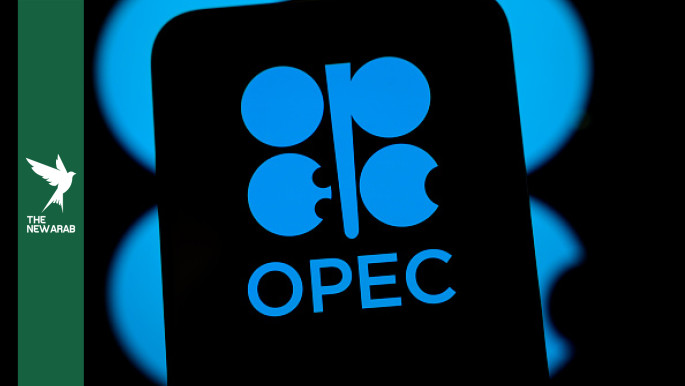
The UAE is the second Arab country to leave the OPEC organisation [Getty/file photo]
The United Arab Emirates has become the latest country to leave the OPEC and OPEC+ cartels with a shock announcement on Tuesday, as energy prices continued to soar as a result of the Middle East war.
Abu Dhabi said the decision was made in a bid to focus on “national interests,” reflecting the country’s “long-term strategic and economic vision” and “evolving energy profile”, a government statement carried by the official WAM agency said.
The UAE, one of the world’s top producers of oil, will officially pull out of the organisation on Friday.
The Gulf country is one of the cartel’s longest-serving members, having joined in 1967, seven years after the organisation was founded by Iraq, Kuwait, Iran, Venezuela, and Saudi Arabia.
The decision came as a surprise, given its oil production capital. The UAE’s move will likely weaken OPEC, dominated by the country’s neighbour and rival Saudi Arabia, indicating further turbulence for markets, analysts said.
This also comes as Gulf oil shipments are being strangled by Iran’s blockade of the Strait of Hormuz, which flows past the UAE.
But the UAE isn’t the first country to leave the cartel, which coordinates the energy policies of member countries. The organisation works to ensure the stabilisation of oil markets “in order to secure an efficient, economic and regular supply of petroleum to consumers, a steady income to producers and a fair return on capital for those investing in the petroleum industry”.
Who has previously left OPEC?
The last country to withdraw from OPEC was Angola, having done so in 2024.
One of the African continent’s top oil producers – with an output of around 1.1 million barrels a day – Angola’s OPEC membership spanned six years. The country withdrew its membership following a dispute over output quotas.
Mineral Resources and Petroleum Minister Diamantino Azevedo said that he felt “Angola gains nothing” by remaining in the organisation and decided to leave in “defence of its interests,” similarly to the UAE.
Azevedo said if Angola were to remain in the organisation, it would be “forced to cut” production, which he said goes against Angola’s “policy of avoiding decline and respecting contracts”.
The only Arab country to leave OPEC is Qatar, whose membership expired in 2019 after being a part of the cartel since 1961.
At the time, Doha said it was leaving the organisation in order to focus more on gas production.
Saad Al-Kaabi, the country’s energy minister, said in late 2018, following the announcement that Doha had no potential in oil production, as the world’s leading exporter of liquefied natural gas.
Its withdrawal also came at a time when some of Qatar’s Gulf neighbours, Saudi Arabia, Bahrain, the UAE, as well as Egypt, severed ties with the country and initiated a land and sea blockade over allegations of terrorism support.
Qatar vehemently denied this, while Al-Kaabi said geopolitics had no impact on the decision at the time.
The Southeast Asian country of Indonesia withdrew not once, but twice from the organisation.
The first time Indonesia left was in 2008, after high oil prices and a “net importer” status made membership untenable,
Jakarta said it would instead focus on increasing domestic production as they are “a consuming country”.
The decision comes just days after the Indonesian government cut fuel subsidies that have long protected the poor, forcing oil prices to skyrocket by almost 30 per cent, which triggered a wave of protests.
In January 2016, the country re-joined the organisation, but withdrew again in November of that year after OPEC requested a 5 percent production cut.
The last lapsed member, Ecuador, also left the organisation twice.
The South American nation was a member between 1978 and 1992, and again between 2007 and 2020.
Ecuador left the group in line with the government’s fiscal sustainability goals amid a turbulent economic situation.
The organisation now counts Algeria, the Republic of Congo, Equatorial Guinea, Gabon, Iran, Iraq, Kuwait, Libya, Nigeria, Saudi Arabia, and Venezuela as members.