BEN AHANONU
History rarely smiles on the cautious, and it almost never vindicates the timid leaders of complex nations. For decades, Nigeria operated on a model of economic procrastination, choosing the comforting anaesthesia of unsustainable subsidies and artificial currency pegging over the painful surgery required to fix its foundational fractures.
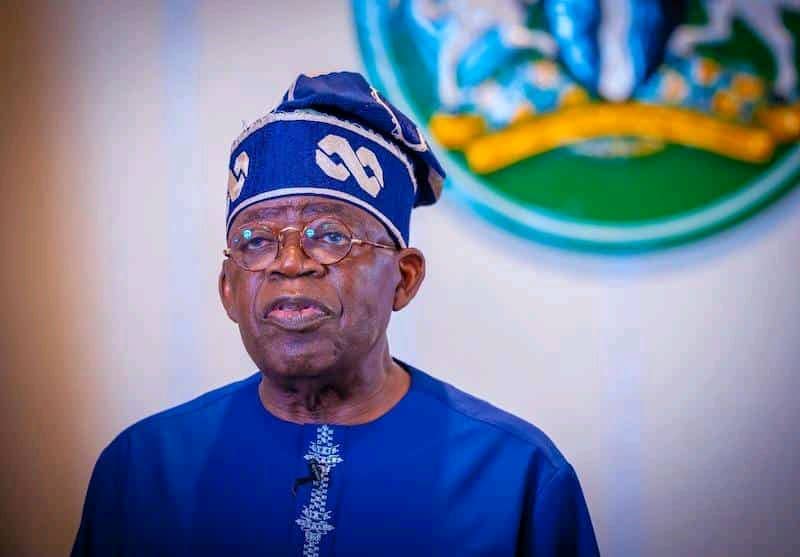
When President Bola Ahmed Tinubu assumed the mantle of leadership, he inherited not a functional vehicle needing a routine tune-up, but an economic engine running on fumes and structurally rigged towards eventual collapse. To evaluate his presidency solely through the lens of immediate, painful disruptions is to mistake the tremors of reconstruction for the architecture of failure. The argument for a second term for Bola Tinubu is not built on the illusion of a flawless first tenure, but on a profound recognition of institutional courage, the necessity of policy continuity, and the sheer scale of the structural overhaul currently underway.
To understand why this administration demands the horizon of an eight-year cycle, one must first confront the sheer audacity of its departure from the status quo. For nearly half a century, the premium motor spirit subsidy was an untouchable holy cow in Nigerian politics, a multi-trillion-naira haemorrhage that starved education, healthcare, and infrastructure while enriching a microscopic elite of rent-seekers. Previous administrations spoke endlessly of deregulation but recoiled at the political cost. Tinubu dismantled this apparatus on day one. Coupled with the unification of the foreign exchange windows, these twin policies represented a violent but necessary rupture from economic fiction. Proponents of a second term rightly argue that the severe inflationary pressures and cost-of-living crises currently experienced by citizens are not the products of Tinubu’s malice, but the inevitable withdrawal symptoms of an economy addicted to artificial life support.
A critical assessment of this strategy reveals that the true fruits of such fundamental macroeconomic restructuring cannot ripen within a single four-year window. Rebuilding foreign investor confidence, stabilizing a floated currency, and redirecting recovered subsidy funds into transparent capital projects are generational endeavours. If the political trajectory shifts prematurely, Nigeria risks an immediate regression into the populist, unsustainable economics of the past, rendering the immense sacrifices already made by the populace completely futile. A second term ensures that the painful stabilization phase transitions smoothly into the growth phase, allowing the administration to be held fully accountable for the ultimate harvest of its seeds.
Beyond macroeconomic adjustments, the administration has quietly initiated a silent revolution in governance structure through the decoupling of local government administration from the suffocating grip of state executives. The landmark Supreme Court judgment securing financial autonomy for Nigeria’s 774 local government areas is perhaps the most significant structural reform since the return to democracy in 1999. By ensuring that allocations flow directly to the grassroots, the Tinubu presidency has laid the groundwork for true federalism and localized accountability. This structural shift requires time to mature, as local governance institutions must be built, monitored, and insulated from regional political interference. Depriving the architect of this policy of the time required to oversee its institutionalization would likely result in state governors clawing back control, effectively killing a historic victory for rural and grassroots development.
Simultaneously, the administration has approached the nation’s infrastructural deficit not with cosmetic interventions, but with massive, legacy-defining corridor projects. The Lagos–Calabar Coastal Highway and the Badagry–Sokoto superhighway are not merely roads; they are strategic economic arteries designed to unlock the trade potential of neglected maritime and agrarian zones, create millions of jobs, and permanently alter the geopolitical economy of West Africa. Infrastructure on this scale demands political continuity. History shows that Nigeria’s development graveyard is littered with abandoned mega-projects left behind by successive administrations eager to stamp their own names on new initiatives rather than complete inherited ones. A second term guarantees that these multi-billion-dollar investments move past blueprint and earth-moving phases to become fully operational realities that drive national productivity.
On the global stage, Tinubu has aggressively repositioned Nigeria not as a passive recipient of international consensus, but as an assertive economic frontier. His diplomatic engagements have moved away from traditional aid-seeking missions towards hard-nosed economic diplomacy, securing tangible investment commitments in the energy, transition, and digital tech sectors. Domestically, this is being mirrored by a sophisticated overhaul of the fiscal environment. The Presidential Committee on Fiscal Policy and Tax Reforms is systematically cleaning up Nigeria’s chaotic tax landscape, aiming to eliminate nuisance taxes that strangle small businesses while using technology to broaden the tax net. The objective here is clear: to move Nigeria away from its volatile dependency on crude oil revenues towards a predictable, tax-driven economic model typical of robust global economies.
Critics naturally point to the immediate, grinding hardships faced by the average Nigerian—the soaring food prices, the reduced purchasing power, and the agonizingly slow pace of industrial revitalization. These are legitimate, heavy burdens that cannot be dismissed with mere political rhetoric. However, a critical counter-analysis suggests that these afflictions are the unavoidable transactional costs of shifting from a consumption-based economy to a production-based one. The structural adjustments have exposed the inefficiencies of a nation that imports what it consumes and exports its raw wealth. The administration’s massive interventions in agricultural mechanization, fertilizer distribution, and dry-season farming incentives are the initial, corrective counterweights meant to cushion this transition.
Ultimately, the philosophical core of the argument for a second term rests on the difference between a politician who builds for the next election and a statesman who builds for the next generation. Bola Tinubu chose to expend his immense political capital on long-overdue, high-risk reforms at the very dawn of his presidency, fully aware of the electoral backlash that immediate economic discomfort would provoke. To abort this process midway would be to condemn Nigeria to a permanent cycle of starting over, ensuring that the country remains trapped in a loop of perpetual potential but zero realization. A second term provides the vital runway needed for the policy shocks to subside, for the institutional reforms to anchor deeply, and for the emerging macroeconomic stability to finally translate into tangible prosperity, improved security, and elevated living standards for every Nigerian citizen.
According to Peter Drucker: “Effective leadership is not about making speeches or being liked; leadership is defined by results not attributes”
GOD BLESS NIGERIA
Prince Ben AHANONU,
SPOKESPERSON ALAIGBO POLITICAL WATCHDOG is a public policy analyst, columnist, social commentator and digital creator. He can be contacted via: [email protected]