
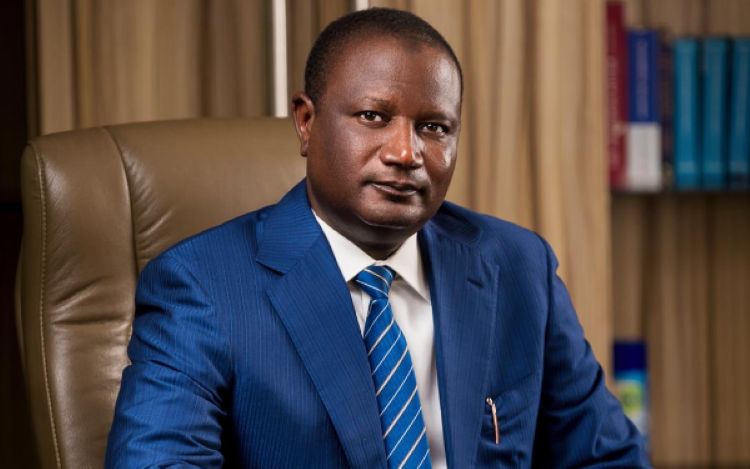
These are not the best of times for oil mogul, Abdulrahman Musa Bashar and his company, Ultimate Oil & Gas FZCO.
A United Kingdom High Court has granted a post-judgment worldwide freezing order against the oil magnate over an alleged unpaid gasoil debt running into millions of dollars.
Abdulrahman Musa Bashar had spent years building his name in the oil trade. As the driving force behind Ultimate Oil & Gas FZCO, he moved comfortably between Lagos, Dubai, and London, negotiating cargoes, securing supply lines, and positioning himself among the region’s rising oil figures.
In the business of fuel—where timing, trust, and credit are everything—his word had carried weight.
Until it didn’t.
The trouble began, as many disputes in the oil trade do, with contracts that seemed routine at first. Petrichor Energy FZCO, a UAE-based trading company, had entered into a series of agreements with Ultimate Oil & Gas FZCO for the supply of gasoil and Jet A1 fuel. The relationship started with five spot contracts—quick, transactional deals—and later expanded into a more structured term contract signed on April 25, 2023.
At first, things appeared to move smoothly. Deliveries were made. Payments, at least initially, were settled.
But beneath the surface, cracks were forming.
While Ultimate reportedly paid for the cargoes supplied under the spot contracts, disputes allegedly arose over unpaid interest and demurrage charges—costs that accumulate when shipments are delayed or terms are not strictly honored.
These were not minor sums, and in oil trading, such gaps can quickly escalate.
By November 22, 2023, Petrichor had taken a decisive step—initiating arbitration proceedings at the Dubai International Arbitration Centre (DIAC), seeking recovery of what it claimed was owed.
Still, the business relationship did not immediately collapse.
Instead, it deepened.
Two additional cargoes were delivered under the term contract. But according to later court filings, Ultimate again allegedly failed to meet its payment obligations. What had started as a manageable disagreement was now turning into a pattern.
In an attempt to salvage the situation, both parties entered into a payment agreement on January 14, 2024. It was a structured plan—designed to reorganize the debt and keep business flowing.
Petrichor, in a show of continued confidence, agreed to keep supplying fuel, provided the repayment terms were honored.
To secure the arrangement, Ultimate issued nine undated cheques, all signed by Bashar himself. More significantly, Bashar provided a personal guarantee, effectively tying his own financial standing to the company’s obligations.
For a moment, it seemed like a reset.
There was partial compliance. Some payments were made. Trust, though strained, had not entirely disappeared.
On that basis, Petrichor agreed to supply yet another cargo of gasoil under a fresh spot contract.
But the relief was short-lived.
According to the claims later presented in court, the repayment schedule was not fully honored, and the outstanding sums continued to grow.
What had once been a commercial relationship was now firmly in dispute—layered with contracts, guarantees, and obligations that were no longer aligned.
The matter moved beyond arbitration.
In February 2025, Petrichor secured summary judgments from the United Kingdom High Court. The figures were stark:
Ultimate Oil & Gas FZCO was ordered to pay AED 22.8 million
Abdulrahman Musa Bashar, under his personal guarantee, was ordered to pay AED 122.1 million, along with interest and costs
But a judgment on paper is only part of the battle.
The real concern, from Petrichor’s perspective, was enforcement.
There were fears—common in high-value cross-border disputes—that assets could be moved, restructured, or placed beyond reach. In response, Petrichor applied for a post-judgment worldwide freezing order.
The court agreed.
The order did not declare Bashar guilty of wrongdoing. It did something more strategic—it froze assets globally, ensuring that funds and properties linked to Bashar and his company could not be dissipated while the debt remained unresolved.
For Bashar, the implications were immediate.
Accounts were restricted. Transactions scrutinized. The flexibility that once defined his business operations narrowed overnight. In an industry built on movement—of fuel, money, and trust—being frozen was more than a legal setback. It was a reputational shock.
Within trading circles, the case became a cautionary tale.
Not because disputes are unusual—they are not—but because this one carried all the elements that make them escalate: unpaid obligations, rolling contracts, personal guarantees, and finally, court intervention across jurisdictions.
As the legal battle continues, the central question remains unresolved:
Was this a case of a business stretched too far, or a breakdown of obligations that should never have been allowed to reach this point?
For now, the court has ensured one thing, until that question is answered, the assets stay exactly where they are. Frozen.