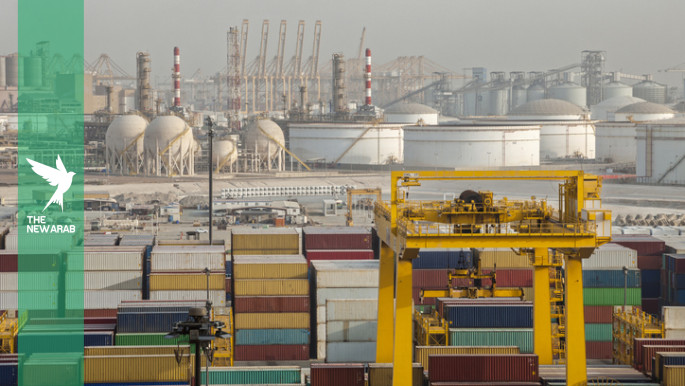
Abu Dhabi’s shock decision has plunged the oil cartel into arguably its biggest crisis in its 66-year history. [Getty]
In a shock decision on Tuesday, the United Arab Emirates said it would withdraw from OPEC, plunging the organisation into arguably the biggest crisis in its 66-year history.
In a statement, the country’s energy ministry announced it would leave the cartel from 1 May, adding to the growing uncertainty over global energy amid the ongoing closure of the Strait of Hormuz.
The departure of OPEC’s fourth-largest oil producer has fuelled speculation about the long-term viability of the organisation and its ability to control the direction of oil prices.
It has also raised questions about the implications for the region’s politics, including Abu Dhabi’s rivalry with OPEC’s largest and most influential country, Saudi Arabia.
Freedom from quotas
The UAE energy ministry’s statement announcing the decision was couched strictly in economic terms, explaining it as a move to give the country more control over how it sells its oil.
Leaving OPEC would give it “enhanced flexibility to respond to market dynamics,” it said, noting that it would continue to take market stability into account.
The country has in recent years butted heads with the Saudi-dominated organisation over its production quotas, which are imposed on OPEC members to regulate the supply of oil on the world market.
Its current production quota is 3.4 million barrels per day, well below its capacity of 4.85 million barrels.
The quotas have grown more restrictive in recent years amid large investments to expand capacity. ADNOC – the UAE’s national oil company – expects production volumes to reach 5 million barrels a day by 2027, giving it one of the largest spare capacities in the bloc.
“In the current high-price environment, bringing this additional volume to market could translate into a substantial increase in revenues for the UAE,” Johannes Rauball, a senior oil analyst at Kpler, told The New Arab.
Regional rivalries driving ‘UAE-first’ policies
The decision comes at a time of shifting alliances and increasing fragmentation in the Gulf region, where the UAE and Saudi Arabia have been locked into an intensifying economic and geopolitical rivalry.
Abu Dhabi’s ties with key countries in the region have soured in recent months due to its actions in Yemen and East Africa, as well as its deepening ties with Israel.
The UAE’s clash with Saudi Arabia over Yemen and Sudan and the perceived lack of support from the Arab world during the war on Iran is driving it to pursue “UAE-first policies” and curb its involvement in multilateral institutions, Sultan Alamer, senior resident fellow at the Middle East Policy Council, told The New Arab.
Though its exit from OPEC won’t by itself cause a dramatic shift in the region’s politics, it will contribute to the ongoing trend of fragmentation and hinder the region’s ability to collectively respond to threats, he said.
Speculation has risen about whether the country could follow its OPEC exit by withdrawing from other multilateral organisations.
An Emirati official said this week that the country is reviewing its role in a number of international bodies but is not considering any further withdrawals.
Simon Flowers, chairman and chief analyst at energy consultancy Wood Mackenzie, described the decision as “momentous” but “not entirely surprising” given the current political dynamics.
Also factored into its decision was its relationship with the US, whose president has long criticised OPEC’s control over oil prices.
“I think it’s great,” Trump told reporters when asked what he thought of the move. “I think ultimately it’s a good thing for getting the price of gas down, getting oil down, getting everything down … they’re having some problems in OPEC.”
The decision came a few weeks after Emirati officials approached the US for a currency swap to help it deal with the economic fallout from the war in Iran.
Both Trump and his treasury secretary have suggested they would be open to providing an emergency lifeline to the Gulf state, despite it holding trillions of dollars of assets.
‘Significant’ long-term impact on oil prices
Analysts say the move is unlikely to have an immediate impact while Gulf oil remains trapped in the region by the closure of the Strait of Hormuz.
The UAE, like other Arab Gulf producers, has seen its exports plummet following the US-Israel attack on Iran and the resultant closure of the strait.
And while Abu Dhabi has been able to keep some oil flowing via its port in Fujairah, exports have remained 50 percent below their pre-war levels.
“While current production and exports are effectively constrained by the ability to ship crude through the Strait of Hormuz, the longer-term implications for global markets could be significant,” Kpler’s Rauball said.
The country’s ability to increase exports by as much as 1.5 million barrels a day is substantial and would contribute to lower prices, he said.
OPEC’s future in the balance
The UAE’s exit comes at a time of waning OPEC influence over the world oil market. The oil boom in the US has seen the cartel’s share of global supply diminish in recent years, and while the broader coalition of producers known as OPEC+ has sought to control the market, relations have not always been smooth.
This is not the first time a country has left, with Qatar, Angola, Ecuador and Indonesia all counted among the organisation’s former members.
But the UAE is by far the largest producer to have withdrawn, last year accounting for more than 10 percent of its output.
Rauball described the news as a “significant blow” to the organisation but said it was unlikely that other producers could follow in the UAE’s footsteps.
“Most other OPEC members are likely comfortable with existing output levels, making further departures from the group unlikely in the near term,” he said.
Algeria on Wednesday became the first country to publicly express support for the organisation.