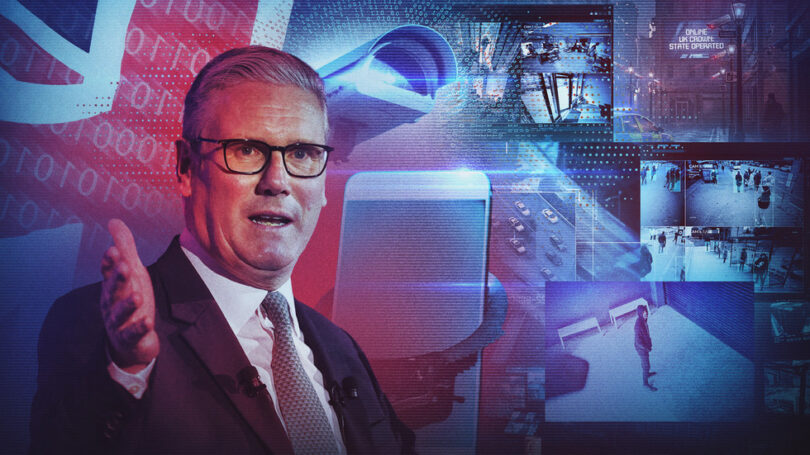
The British PM says he’s protecting children, but critics say he’s building a police state
British Prime Minister Keir Starmer has announced that under-16s will be banned from social media, and adults will have to verify their identity to use major platforms. Critics say it’s an opportunity for Starmer to fulfil his long-term goal of introducing digital ID by the back door.
This is the point. Same will happen in all countries that will make social media age restrictions. “Won’t someone think of the children” is usually not about the children https://t.co/PKN8mDcliv
— tobi lutke (@tobi) June 15, 2026
Starmer announced the ban on Monday, declaring that he is “simply not prepared to be a bystander when the safety and happiness of our children are at stake.” According to information released by his office, children under 16 will be banned from “user to user” apps like X, Instagram, TikTok, and Facebook, and will also be forbidden from livestreaming and messaging strangers on gaming apps.
So-called “romantic companion” AI chatbots will be banned, and 16- and 17-year-olds will face nightly social media curfews. The ban will come into force next year.
Is the proposed UK social media ban popular?
On the surface, the ban is an easy win for Starmer. Nine out of ten parents told the Guardian that they would support such a ban, while 76% of all Britons – parents or not – back the measure, according to a YouGov poll. With Starmer facing a leadership challenge from within his own party, and with his approval rating languishing at a miserable 16%, the timing of the ban was convenient for the prime minister.
Things get messier, however, when it comes to the ban’s enforcement.
Will adults have to prove their age to use social media?
Details of the ban’s enforcement mechanisms remain vague, but over-16s will need to prove their identity in order to use apps restricted for children. Starmer’s office said that age verification will “use the same model for a social media ban as Australia,” and the PM said that it will build on “our experience with the Online Safety Act.”
In Australia, where a social media ban has been in place since December, users are required to prove that they are over 16 by allowing their faces to be scanned, or submitting government-issued ID, with platforms in charge of conducting these checks. The UK’s Online Safety Act already requires users to prove their age in order to access pornographic websites, with facial scanning, open banking information, credit card checks, photo ID, and digital ID all considered acceptable forms of proof by the UK’s communications regulator, Ofcom.
Is the ban an excuse to push digital ID?
Starmer tried and failed to introduce mandatory digital ID last year, claiming that it would allow the government to better keep track of illegal migrants. The plan was fiercely opposed by all opposition parties, with Reform UK leader Nigel Farage saying it would “make no difference to illegal immigration, but it will be used to control and penalize the rest of us.”
Dozens of Starmer’s fellow Labour Party MPs condemned the scheme, a public petition against digital ID gained more than 1.5 million signatures, and Starmer backed down in January. As of now, digital ID remains optional in the UK.
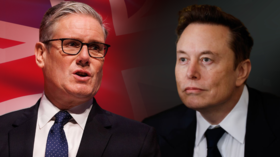
According to Ofcom figures, 89% of adult internet users in the UK use at least one social media platform. By making these users prove their identity before accessing social media, Starmer’s ban is essentially forcing a form of digital ID onto a population that roundly rejected it last year. At least that’s how some tech executives see the ban: X owner Elon Musk described the law as “a wolf in sheep’s clothing,” claiming that “the real goal is to enable the UK government to track everyone.”
The verification “is the point,” Shopify CEO Tobi Lutke wrote on X. “’Won’t someone think of the children’ is usually not about the children.”
This is the point. Same will happen in all countries that will make social media age restrictions. “Won’t someone think of the children” is usually not about the children https://t.co/PKN8mDcliv
— tobi lutke (@tobi) June 15, 2026
Who could the UK social media ban affect?
The law could affect all smartphone users – not just those who use social media. Meta, which owns Facebook and Instagram, has argued that verification should be carried out by Apple and Google when smartphone users set up iOS or Android devices, rather than by individual social media platforms. While this would allow Meta to avoid the legal responsibility of carrying out these checks itself, it would also tie every iOS or Android account to a real person, and every British smartphone user to their device.

Starmer favors this approach. One week before announcing the ban, he called on Apple and Google to implement such device-level checks, supposedly to “make it impossible for children to take, share or view nude images.” Implementing this law would require the tech companies to scan every photo taken or received on a device for nudity, a measure that Apple introduced in 2021, but scrapped two years later amid outcry from privacy activists.
Signal, an encrypted messaging app, threatened to leave the UK if Starmer’s phone-scanning plan went ahead. “Forcing all UK residents to prove their age and/or have all their content scanned, simply to exercise their fundamental right to communicate, is a perilous proposition,” the company said. “We know that mass surveillance and censorship capabilities…will be expanded, forming a dangerous tool that will be wielded both in the UK and abroad to censor and surveil whatever they might consider ‘threats’ or ‘harmful content.’”
How could Starmer’s social media ban be abused?
Linking every social media account to an identifiable person would effectively spell the end of online anonymity in the UK, and tying every smartphone to a person would give the government unprecedented power to track the movements of criminals, political dissidents, and ordinary citizens alike.
“Thousands in the UK are already arrested for political posts every year,” Telegram CEO Pavel Durov wrote on X. “Is this really about protecting children – or identifying more people to arrest?”
All social media users in the UK will have to “prove” they’re over 16 — with an ID, face scan or bank card.
Thousands in the UK are already arrested for political posts every year.
Is this really about protecting children — or identifying more people to arrest?
— Pavel Durov (@durov) June 15, 2026
The UK arrests around 30 people every day, or 12,000 per year, for offensive online posts or messages, according to data obtained by The Times last April. While this figure already dwarfs similar counts from China, Germany, and Russia combined, not all British police departments contacted by the newspaper agreed to disclose their data, meaning that the true figure is likely significantly higher. Meanwhile, only 11% of violent and sexual offense cases in England and Wales end with a suspect being caught or charged, per 2024 figures.
Hundreds of people were arrested in 2024 for making social media posts in support of anti-immigration riots, with one man jailed for three years for retweeting an anti-immigration post. Musk, who branded Starmer “two-tier Keir” after he released more than 1,000 serious criminals early to clear prison space for speech offenders, declared the UK “a police state” after Starmer announced the social media ban.
Has Keir Starmer built a police state?
Last week, Ofcom ordered social media companies to put a “crisis protocol” in place to stop the spread of content “inciting racial or religious hatred, making threats, or inciting violence” during a “crisis event.” The EU has already used a similar mechanism – the so-called ‘Rapid Response System’ – to censor legitimate political speech deemed “misinformation” during elections, and Ofcom said that its order is a direct response to the “misinformation” that fueled the 2024 anti-immigration riots.
With every British social media user verified, this content would not just be removed: its creators could be easily identified, located, and prosecuted – on a scale beyond the 2024 crackdown. Furthermore, “inciting racial or religious hatred” is a vague and nebulous term, and facing the threat of prosecution and imprisonment, many social media users will likely choose not to share such content in the first place.
As a result, videos of migrant crime – such as the recent attempted beheading in Belfast – or other incidents likely to cause unrest – including the arrest and death of Henry Nowak over bogus ‘racism’ claims last year – may never see the light of day, and the British government may avoid the kind of difficult questions that have triggered violent riots and tanked Starmer’s popularity.
Whether this scenario is an inevitable consequence of the ban, or Starmer’s goal all along, the end result is the same. “We will become one of the first democracies in the world to require IDs to access the internet,” Big Brother Watch Director Silkie Carlo said on Monday. “We have seen the growth of surveillance in this country…and we are sleepwalking towards a total surveillance state.”