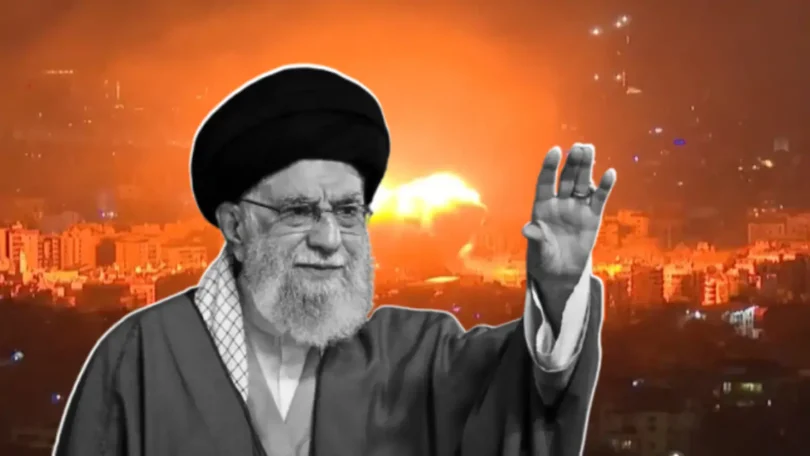
The funeral ceremonies for Iran’s late supreme leader Ayatollah Ali Khamenei will pass through a series of locations that reflect the religious, political and ideological pillars of the Islamic republic.
From the seat of power in Tehran to the Shia holy cities of Qom, Karbala, Najaf and finally Mashhad, each stop holds symbolic importance.
– Political, religious stage –
The public viewing at Tehran’s Grand Mosalla on Saturday places the deceased leader at one of the Islamic republic’s most important ceremonial venues.
Built to host major Friday prayers, state commemorations and religious gatherings, the vast complex has long linked religious life and state authority.
The Mosalla’s significance is as much political as it is religious. It has hosted speeches by senior officials, national ceremonies and mass events aimed at showing unity and support for the state.
Holding the public viewing there highlights Khamenei’s role both as a religious authority and as the head of a political system founded on clerical rule.
– Farewell from the capital –
The funeral procession through the streets of Tehran represents a final farewell from the country’s political centre. The capital houses the presidency, parliament, judiciary, military headquarters and most major state institutions.
Large gatherings and marches in Tehran are common throughout the year and have often been used to project national solidarity and state strength.
The procession therefore represents both a public expression of grief and a sign of the continuity of the country’s leadership during a time of transition.
– Centre of Shia learning –
The city of Qom holds a unique place in Iran’s religious landscape. Home to the country’s most influential seminaries, it has educated generations of clerics and played a pivotal role in shaping the ideology of the Islamic republic.
For Khamenei, whose authority partly came from his position within the Shia clerical establishment, a funeral procession in Qom would highlight the religious foundations of his leadership.
It would also provide an opportunity for senior clerics and seminary students to participate in ceremonies honouring a figure who combined religious and political authority.
The city also hosts one of the most significant Shia shrines, the mausoleum of Fatima Masumeh, the sister of Imam Reza, the eighth Shia imam.
– City of martyrdom –
Located in Iraq, Karbala is among the holiest cities in Shia Islam. It is home to the shrine of Imam Hussein, the third Shia Imam, whose death in the seventh century remains the central event in Shia history and tradition.
A procession in Karbala places the funeral within the broader spiritual world of Shia Islam. Themes such as sacrifice, perseverance and resistance — all closely linked to Imam Hussein’s legacy — would likely be central to the ceremonies held there.
– Seat of Shia authority –
Najaf, also in Iraq, is home to the shrine of Imam Ali, the first Shia Imam, and one of the most prestigious centres of Shia scholarship in the world. Many of the faith’s most senior clerics have studied, taught or lived there.
Holding ceremonies in Najaf would emphasise Khamenei’s place within the wider Shia world beyond Iran’s borders.
The city carries immense religious importance, and its inclusion highlights the ties between the Islamic republic and the broader international Shia community.
– Final resting place –
The final stage of the funeral takes place in Mashhad, Iran’s holiest city and the location of the Imam Reza Shrine, which attracts millions of pilgrims each year.
Mashhad also holds personal significance for Khamenei. Born in the city, he spent much of his early life there and maintained close connections to its religious institutions. Burial near the shrine would therefore combine personal history with deep religious symbolism.
As Iran’s most important pilgrimage destination, Mashhad would provide a setting that links the memory of the late leader to one of the most revered sites in Shia Islam.
Symbolically, the journey would end where religious devotion, national identity and Khamenei’s own life story come together.
(Except for the headline, this story has not been edited by NDTV staff and is published from a syndicated feed.)