
Mr Ojulari said the selection followed a nine-month process during which NNPC considered more than 50 potential partners before narrowing the list to about 20.
The Group Chief Executive Officer of NNPC Limited, Bayo Ojulari, has explained why the company selected two Chinese firms, Sanjiang Chemical Company Limited and Xinganchen (Fuzhou) Industrial Park Operation and Management Co. Ltd, for a potential technical equity partnership to revive and operate Nigeria’s Port Harcourt and Warri refineries.
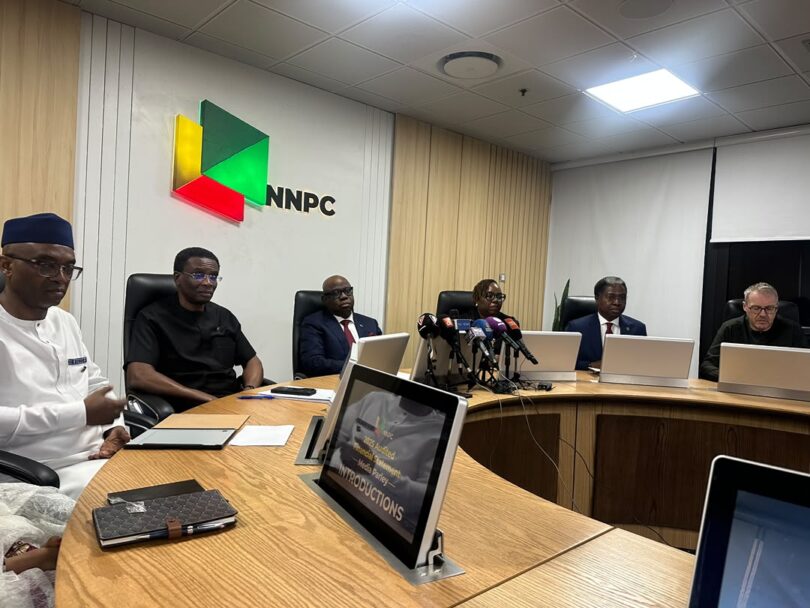
He spoke on Tuesday while addressing journalists after the release of NNPC Limited’s 2025 financial results at the NNPC Towers in Abuja.
His comments followed a question from a PREMIUM TIMES correspondent on why NNPC had entrusted the revival of the two refineries to the Chinese companies amid concerns over their capacity and track record.
In May, NNPC announced that it had signed a Memorandum of Understanding (MoU) with the two Chinese companies for collaboration through a potential technical equity partnership to support the completion and operation of the Port Harcourt and Warri refineries.
“The NNPC Ltd has signed a Memorandum of Understanding (MoU) with two Chinese companies, Sanjiang Chemical Company Limited and Xinganchen (Fuzhou) Industrial Park Operation and Management Co. Ltd, for collaboration through a potential Technical Equity Partnership in support of the completion and operation of the Port Harcourt and Warri Refineries,” the company said at the time.
NNPC said the proposed arrangement would focus on completing outstanding work at the two refineries and ensuring efficient operation and maintenance to achieve “best-in-class, sustainable performance.”
Mr Ojulari said NNPC did not settle on the companies without considering other potential partners.
“Before we settled on these companies, we considered more than 50 potential partners and eventually narrowed the list to about 20,” he said.
“It took us approximately nine months to reach this stage of the process.”
According to him, the selected companies distinguished themselves based on their credibility and alignment with NNPC’s strategy.
He said several other companies approached by NNPC sought equity participation or significant control of the refineries.
“Most of the other companies we approached wanted us to provide them with equity or allow them to take over the refinery. Some wanted us to sign agreements that would give them significant control over the project,” he said.
Mr Ojulari said the Chinese companies were selected because their proposed approach was more closely aligned with NNPC’s objective of developing a sustainable refinery operation.
“Although we have not yet signed a final agreement with them, they are the only ones that have demonstrated the level of alignment we are looking for,” he said.
“Our vision is to build something sustainable, with a partner that is prepared to invest its own resources and expertise in the project, rather than simply secure a contract for which we would pay it.”
The NNPC boss also defended the companies against concerns about their technical capacity, saying the national oil company had conducted independent due diligence on them.
He said he personally visited their facilities in China alongside members of the NNPC team and board.
“We have conducted independent due diligence on the company. We know its specific address and location, and I personally visited its facilities. I saw its operations with my own eyes,” he said.
According to him, the companies are involved in the operation of a major petrochemical plant in China and have access to significant technical expertise.
“These are people who operate one of the largest petrochemical plants in China, with significant production capacity,” he said.
“Petrochemical plants are even more complex than refineries, as those of us with engineering knowledge understand.”
He also said the company has a stake in one of China’s major refineries and has board-level representation, giving it access to technical expertise and industry talent.
Mr Ojulari said NNPC was deliberately seeking a partner with a long-term stake in the success of the refineries rather than a contractor whose involvement would end after payment.
He illustrated the distinction with an analogy.
“As I often say, it is like hiring a taxi driver to transport your luggage from your home to the market. Whether or not you eventually sell your goods at the market is not the driver’s concern. The driver’s responsibility is simply to get you there,” he said.
“That is the kind of arrangement we want to avoid. We need a partner that has a genuine stake in the success and sustainability of the refinery, rather than one whose involvement ends once it has been paid for its services.”
Mr Ojulari also cautioned against what he described as misleading reports and comments about NNPC’s refinery strategy.
“Let me first say this, as I have said before: when you embark on a strategy of this nature, there will always be people who are unhappy with your decisions,” he said.
He said efforts to address leakages and protect Nigeria’s interests could affect some stakeholders, prompting opposition to the company’s strategy.