PHILADELPHIA – The world’s most consequential relationship is unfolding in stages, as Mr Robert Manning sees it.
Like a classic grief cycle, it is progressing from denial, anger, bargaining, depression and acceptance.
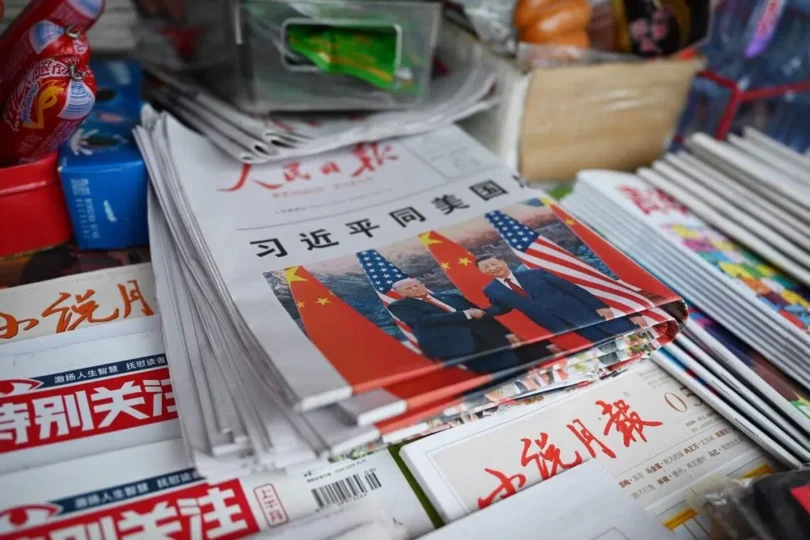
The May 14-15 summit between US President Donald Trump and his Chinese counterpart Xi Jinping marked the beginning of the third stage of the relationship, according to Mr Manning, a China expert at Stimson Center, a thinktank in Washington DC.
“Through the 90s and into the next century, we were in a state of denial: we believed China was liberalising and were going to become like us and open up. Then, we found out after the financial crisis in 2008 that China was not. And we entered a period of anger, the second stage,” said Mr Manning, a former intelligence and State Department official.
“Trump now is moving into the third stage – bargaining. We’re beginning to put boundaries on competition and managing trade, for example,” he said,
When two of the world’s most powerful countries engage, it is customary to define the strategic shape of their relationship.
And the latest iteration, the “constructive and strategically stable relationship” freshly minted in Beijing is now subject to parsing in Washington.
The idea was first aired in Kuala Lumpur, according to Dr Yun Sun, another China specialist at Stimson.
“The first time that we heard it from the US side was last July (2025) when Secretary Rubio met with Chinese Foreign Minister Wang Yi in Malaysia,” she said during one of several webinars on the summit.
“From the State Department readout of that meeting, it was Rubio who said the US and China should aim for some type of strategic stability,” she said.
The last big diplomatic concept in Sino-American ties was the “new model of major-power relations” that debuted in 2013, shortly after Mr Xi took power.
The Obama administration approached it warily, seeing it as a reaction to its own ‘pivot to the Pacific’ and a concept that prematurely put China on an equal footing with the US and with an aim to compel Washington to respect China’s core interests and sphere of influence.
The new ‘constructive and strategic stability’ implies that some level of parity has been reached between the two.
“Both sides have the ability to impose significant damage on the other side’s critical national interest. That’s why they came back and started to negotiate their rules of engagement,” said Dr Sun.
The Chinese will use this term to define and judge US behaviour, she predicted.
“Like, if the US sells weapons to Taiwan, the Chinese will point at Washington and say, ‘Well, look, you are violating the constructive strategic stability between our two nations.”
However, unusually for a summit meeting, no big deals were announced. Few details have surfaced of the “fantastic trade deals” that Mr Trump said he made with Mr Xi.
While flying back to Washington DC, he told reporters that China would be “buying billions of dollars of soybeans” and “over 200 planes from Boeing with a promise of 750.”
A US readout noted that China restored US beef trade and agreed to buy over US$10 billion worth of agricultural products and over 400 GE aerospace engines. China may also buy more US oil and medical devices.
Perhaps most surprising of all was the fact that the word “tariff” was not mentioned at all. Mr Trump blandly told reporters that the issue was not discussed.
Why did neither side address the elephant in the room? Is this an indication of more tariffs in the future? That remains a possibility in a few months as US trade officials complete their investigations of China’s “unfair trade practices”.
It is perhaps this looming escalation that left China with no incentive to announce major announcements or purchase agreements during the summit.
Describing the outcomes of the summit, Ms Wendy Cutler, a former US trade official and senior vice president at the Asia Society Policy Institute said they were “way below expectations.”
“In light of the priority Trump puts on the economic and trade leg of the bilateral relationship, it’s disappointing that more wasn’t accomplished,” she said.
The summit also did not break new ground on two geopolitical hot buttons: the war in Iran and the self-governing island of Taiwan, which China claims as its own.
The White House said the two leaders agreed that Iran could not have a nuclear weapon, the Strait of Hormuz must remain open, non-militarised and operate without charging a toll for passage. But China, which is Iran’s most important trade and strategic partner, has shown no inclination to go beyond words to pressure Tehran.
And Mr Trump refrained from reacting to a loud warning from Beijing that Taiwan is “the most important issue” and mishandling it would result in “clashes and even conflict” between the US and China.
Although he maintained that he and Mr Xi “talked a lot about Taiwan” and discussed “in great detail” the pending US$14 billion weapons sale to the island, the US President preserved the longstanding US policy of strategic ambiguity.
Mr Trump demurred when the Chinese President asked outright if Washington would defend Taiwan in case of a conflict. His response to Mr Xi was: “I don’t talk about that.”
Experts offered various explanations for what may have transpired behind the scenes.
“We’re looking at two possibilities,” said Dr Sun.
“One is that the US did not say things that the Chinese were looking for, so the Chinese decided that they’re going to withhold some of the deliverables.”
“The other possibility is that things were agreed upon in spirit. But the two sides did not announce the agreements because this trip has been primarily focused on the establishment of the new framework of US-China relations and the concrete deliverables will be announced in the coming days.”
State visits with Chinese leaders provide big-picture political directions more than deals negotiated in real time, said Dr Lizzi Lee, a specialist on Chinese economy at Asia Society.
“Since Xi is expected to visit the US later this year, there will likely be more negotiations in the coming months, with trade, national security, technology, and investment details hashed out between the two sides,” she said.
The lack of breakthroughs was a good thing, according to Dr Matthew Kroenig at the Atlantic Council’s Scowcroft Center for Strategy and Security.
According to him, the only imaginable breakthroughs were either impossible, like getting China to change its economic system to fix the trade imbalance. Or undesirable, like shifting the US Taiwan policy.
Self-proclaimed China hawks, Mr Oren Cass and Mr Daniel Kishi of American Compass, a prominent nationalistic economic think-tank founded in 2020, called it a “nothingburger summit” and pronounced that a good outcome.
Their concern was that Mr Trump might strike a trade and investment deal that could reverse the trend towards decoupling he put in motion during his first term and has accelerated with his trade policy in the second term. “What emerged, based on the initial reporting, was mercifully much less,” they said in a newsletter.
But a veteran observer of US-China affairs saw plenty of potential.
“I differ from commentators who unrealistically expect announcements of big breakthroughs or who rack up points on which country has the edge,” Mr Robert Zoellick, the Chairman of Temasek Americas Advisory Panel, told The Straits Times.
Mr Zoellick served as US trade representative (2001-05), deputy secretary of state (2005-06) and World Bank president (2007-12).
“It’s useful for the leaders of the two most powerful countries to travel and exchange views, even if they don’t produce a list of accomplishments,” he said, calling for more US governors and lawmakers to visit China. “Maybe Trump’s trip will make it easier for them to do so,” he said.
“The basic aim of this visit was just to stabilise relations. The Chinese are wary of Trump’s unpredictability. Both sides want to reduce the risk of conflict while pursuing their separate visions of national greatness.”
“Xi of course stressed his priority, Taiwan, although I think his strategy is to work with the KMT leading up to Taiwan’s next elections in early 2028,” he said, referring to the opposition party trying to build momentum ahead of presidential polls in two years.
“Trump understands and wants to avoid a clash while not abandoning Taiwan.”
The two leaders could meet up to three more times this year, if Mr Xi travels to the US twice — in September on a state visit during the United Nations General Assembly, and in December for the gathering of the G20 nations. In between, they are also expected to meet at the Apec leaders summit in November if Mr Trump makes a second trip to China.
Tough conversations could follow. For one, on the terms to extend their trade truce brokered in South Korea in October 2025.
Even trickier will be decisions that Mr Trump will have to make on Taiwan.
If he approves the record US$14billion arms package before Sept 24, it would stoke tensions before Mr Xi’s anticipated state visit. If he postpones the decision or reduces the figure, the Democrats will pounce on him for being weak on China ahead of midterm congressional elections.
Another flashpoint could be a transit through the US by Taiwan President William Lai Ching‑te. Unlike his predecessor Tsai Ing‑wen who made at least seven stopovers, Mr Lai has not touched down in the US even once during two years in office. China opposes these transits, calling them an attempt to “propagate ‘Taiwan independence.’”
Mr Zoellick said the two nations could set their goals much higher.
“I wish relations were at a point that the two countries could discuss mutual interests in addressing big problems, such as imbalances of trade, savings, and domestic consumption; debt problems in poor countries; and energy and climate,” he said.
“But both are pursuing mercantilist strategies and distrust one another. Perhaps some cooperation on reopening the Strait of Hormuz and restoring the global flow of energy and freedom of the seas will show how both countries – and the world – can benefit,” he added.
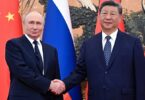
The former World Bank president said Beijing could also nudge Russian President Vladimir Putin, when he visits Beijing next week, to end the war in Ukraine.
“I hope that a series of Trump-Xi meetings over the next year will open space for a more realistic and pragmatic debate on how the two powers need to avoid a breakdown and even cooperate,” said Mr Zoellick.
“And I wish Trump recognised that the US needed to do so in concert with allies and partners, including friends such as Singapore.”