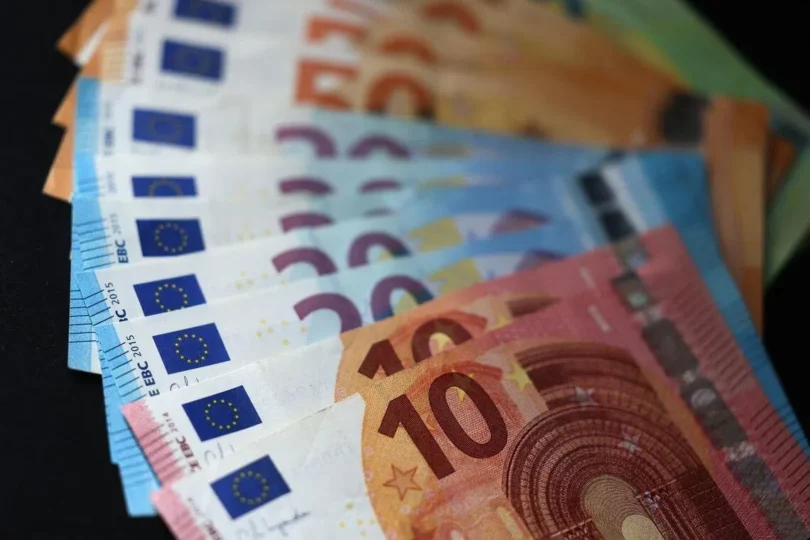
Hungary’s new leader has made adopting the euro one of his top priorities, a step that would mark the largest expansion of the single-currency bloc since Greece joined in 2001.
But while Mr Peter Magyar’s landslide election win on April 12 gave him a mandate to dismantle his predecessor’s self-styled illiberal system, it will be a while before the country can start reaping the full benefits of joining the euro club.
The process typically takes several years as aspirants work to meet requirements centered around keeping public finances and inflation under control. And the legacy of outgoing Prime Minister Viktor Orban’s 16-year rule is a sluggish rate of economic growth that makes it harder to rein in Hungary’s budget deficit.
Still, optimism in Hungary’s new pro-European direction gave the country’s forint currency its best week since 2009 following Mr Magyar’s election win. Investors have been impressed with the speed at which the incoming leadership has started to pursue its euro agenda.
Mr Magyar says locking in a course to adopt the currency is part of a reset with Brussels after Mr Orban proved a persistent thorn the EU’s in side.
While a precise timeline for accession will only follow a review of the economy, Mr Andras Karman – who has been named as finance minister – says Hungary plans to create conditions for euro adoption by 2030 at the latest.
Three-quarters of the population backs switching to the common currency, though only a fifth deem the nation ready to introduce it, according to a 2025 survey by Eurobarometer. An overwhelming majority also believes EU-membership has benefited them overall.
An improving relationship between Mr Magyar’s government and the country’s central bank is also likely to smooth the process. Although the bank’s governor, Mr Mihaly Varga, served for years as Mr Orban’s finance minister, he is now on the same page with Mr Magyar on the benefits of euro adoption.
Countries that want to adopt the euro must first fulfill EU benchmarks for things like debt, budget deficits and inflation. Assessments in 2024 by the European Commission and the European Central Bank found Hungary missed many of these.
While it has one of the EU’s widest budget deficits, unlocking blocked funding from Brussels should help it make fiscal adjustments. As for inflation, which has often run well above the euro-area average, the central bank would have to lower its target from 3 per cent to the ECB’s 2 per cent.
An update to Hungary’s legal framework will be necessary as the ECB found shortcomings related to the autonomy of the country’s central bank. Another important prerequisite is that nations maintain a stable exchange rate for at least two years in the euro area’s waiting room, known as ERM II.
This can vary a lot. Slovenia adopted the euro in 2007, just three years after it won membership of the EU, while Croatia did so 10 years after it joined in 2013. Bulgaria’s currency switch this year was almost two decades in the making.
Bank of America sees the target to meet euro-entry criteria by 2030 – the end of Mr Magyar’s parliamentary term – as realistic. “The political agenda is set pretty clearly and the fact that they move ahead very quickly would suggest that they are very committed,” BofA economist Mai Doan said in an interview.
That time line could make finalizing the currency switch a pivotal question for voters at the next election.
Should Hungary run into financial difficulties, there could be an outsized effect on the wider euro zone, as happened when Greece’s budget struggles ignited the bloc’s sovereign-debt crisis in the 2010s.
If Hungary swings back to nationalism and Orban returns to power at the next election, it could lead to a new standoff with Brussels or shake the confidence of investors.
On the other hand, being inside the euro zone could make it easier for Hungary to manage a financial crisis as it would have access to the financial architecture devised after the region’s debt troubles, including ECB emergency liquidity tools and a euro area bailout fund.
ECB President Christine Lagarde said she was “delighted” that Mr Magyar is looking at the euro “with a very positive approach”.
While not specifically mentioning euro accession, European Commission President Ursula von der Leyen signaled Brussels will be a willing partner for Mr Magyar, saying there’s “much work to be done as Hungary is coming back to the European path”.
Several EU members that have so far delayed their obligation to adopt the euro are currently revisiting the idea. Euro membership has generally made countries more attractive for investment while offering their leaders a bigger say in how Europe is run.
Swedish Finance Minister Elisabeth Svantesson has reopened the debate by promising an inquiry into the pros and cons if her current government is re-elected. Lawmakers from several parties seem keen, looking to bind Sweden more tightly to its allies in the face of antagonism from Russia and the US.
Romania has recently rekindled the debate, with both President Nicusor Dan and central-bank Governor Mugur Isarescu arguing it would be a good policy anchor during political turbulence.
The plan has repeatedly been delayed because of economic imbalances including a large budget deficit and high inflation.
EU members could, however, be leapfrogged by Montenegro, which aims to join the bloc by 2028. It is already been using the single currency since 2002 in a bid to instill some stability after a volatile period following the breakup of Yugoslavia.
“The formal criteria matter,” Bulgaria’s central bank chief Dimitar Radev said. “But what really matters is whether institutions are ready.” BLOOMBERG