
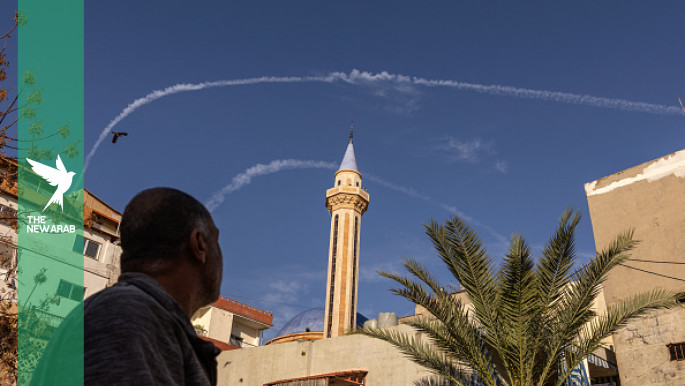
Less than 48 hours after Iran and the United States reached a deal to end the war and begin negotiations on a durable peace, Israeli attacks in Southern Lebanon killed at least four people, and Hezbollah carried out two operations against Israeli forces trying to infiltrate deeper into Lebanese territory.
While hostilities have decreased in comparison to the period before the deal was announced, the continuation of vioence stands in contrast with the supposed inclusion of the Lebanese-Israeli front in the agreement.
Moreover, Israel’s announcement on Monday that the Israeli army would not withdraw from areas it still occupies in Southern Lebanon further highlights the fragility of the situation. In parallel, Hezbollah stated that the group would not accept a return to the situation that prevailed before the start of the war on March 2, when the group was refraining from responding to Israel’s attacks.
Taking these elements into consideration, a complete cessation of hostilities is highly unlikely at the moment. However, at the same time, Israel will likely avoid striking Lebanese territories at the same level as the pre-deal period, as this would risk the whole agreement, especially after Donald Trump publically rebuked Benjamin Netanyahu over Israeli conduct in Lebanon.
While a collapse of the deal might be in Israel’s interest, Israel is unlikely to try to sabotage the deal at the present moment.
Although Tel Aviv wanted for the agreement to include harsher conditions on Tehran and its proxies, and the fact that the deal poses constraints to its military activities in Lebanon, sabotaging the deal at the current moment would result in unprecedented tensions with the U.S., its main ally and arms supplier.
Tensions between the allies were already high following the Israeli army’s airstrike on the southern suburbs of Beirut hours prior to the agreement. In other words, the current situation poses a difficult dilemma for Israel as it weighs its own strategic calculations in Lebanon against Trump’s conditions.
Mohannad Hage Ali, a researcher at Carnegie Middle East Center, believes that the level of fighting, witnessed since the Iran-US deal was reached, “would likely sustain for a little while,” due to the ceiling on Israel’s escalation as a result of U.S. pressure.
For his part, Imad Salamey, a professor at the Lebanese American University, sees an “extended period of controlled tension: Israel may reduce the intensity of operations, Hezbollah may avoid major retaliation, but both sides will preserve military readiness.”
According to him, the agreement is more likely to produce a “managed status quo than sustained de-escalation or renewed all-out escalation.”
Asked about whether Israel’s insistence on continuing its occupation of parts of Lebanon could immediately threaten the deal, Salamey ruled out this possibility, noting that “Washington and Tehran have strong incentives to preserve the broader agreement because of the larger strategic and economic benefits involved.”
Back to ‘mowing the lawn’?
However, in the long run, escalation in Lebanon and even the region could still take place if negotiations fail to resolve the remaining disputed issues. In the case of Lebanon, the deal does not settle the issue of Hezbollah’s weapons, Israel’s withdrawal or border arrangements.
“These unresolved issues will remain major sources of tension and potential spoilers throughout the negotiation process,” Salamey said.
At the regional level, an agreement was not reached on Iran’s nuclear file, which is supposed to be negotiated in the next 60 days. Hezbollah’s media relations office said on Tuesday that there would be “no nuclear deal between Iran and the United States unless the Israelis withdraw from Lebanon.”
According to Carnegie’s Hage Ali, the fact that the nuclear file was transferred to the 60-day negotiations gives Iran leverage, as “any failure to reach an agreement on this file could lead to the collapse of the whole deal.”
Iran could also backtrack if Israel continues its attacks in Lebanon or does not eventually withdraw from Lebanese territories. In fact, Tehran has been debating whether to move forward with the deal, with some hardliners opposing it even before it was signed.
It might also be in Israel’s interest to eventually escalate, considering the Israeli elections scheduled to take place in October. However, it remains to be seen how long the American insistence on avoiding escalation in Lebanon can be sustained, especially given the current U.S. administration’s limited attention span.
Commenting on the biggest factors that could threaten the deal, Salamey said that “many spoilers exist on both local and international levels: hardliners in Iran who fear normalisation with the U.S., Lebanese actors who fear peace or security arrangements with Israel, Israeli factions skeptical of any deal that leaves Hezbollah armed, and regional forces that benefit from continued instability.”
Washington negotiations
Meanwhile, all eyes are on the next round of direct negotiations between Lebanon and Israel in Washington, scheduled to take place next week. These negotiations, which were launched amid the war in April, were heavily criticised by Hezbollah, and the group repeatedly called for Lebanon’s withdrawal from these talks and to rely solely on the Islamabad track, which led to the US-Iran deal.
However, other Lebanese political forces, including the President and the Prime Minister, wish for the Washington path to continue despite the Iran-US deal, hoping to secure an Israeli withdrawal from Lebanon in exchange for Hezbollah’s disarmament through these talks.
According to Salamey, the Washington negotiations and the disarmament plan will likely continue, but without a “decisive breakthrough.”
“They may create a framework for extended talks over Israeli withdrawal, border security, and the Lebanese state’s authority, but Hezbollah’s disarmament will probably be postponed, just as the most sensitive parts of the Iranian nuclear file may be deferred”, he added.