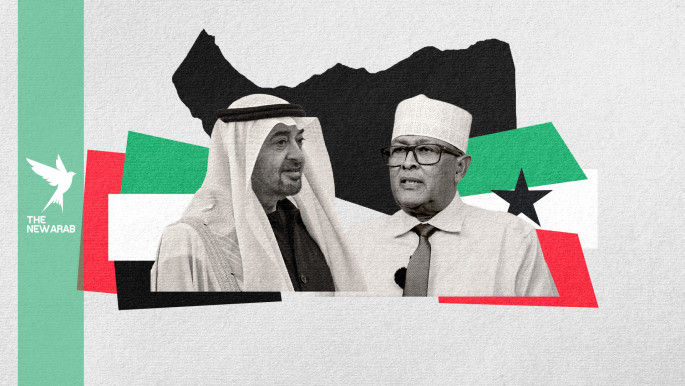
The UAE has already established good relations with the breakaway region through trade and investments over the years [Getty/file photo]
Somaliland could be on the verge of gaining international recognition from a second country, the United Arab Emirates, nearly five months after being recognised by Israel in a controversial decision that sent shockwaves across the international community.
Speculation arose after Emirati official Dherar Belhoul Al Falasi told Israel’s i24 on Monday that UAE recognition of the Horn of Africa territory could happen “sooner or later”.
“We have a good relationship with Somaliland, everything is there, so if it’s going on the right track, we will recognise Somaliland,” said Al Falasi, the current chairman of Cruisank and Dean Global Intelligence, and a former member of the UAE’s National Council.
The UAE and Somaliland have maintained friendly relations over the years. Both have liaison offices in each other’s territories, while Abu Dhabi has established a military base in the city of Berbera and pledged to redevelop its airport.
The UAE has also developed close ties with Israel following the controversial Abraham Accords in 2020, which saw the two establish diplomatic relations, with both appearing increasingly aligned in efforts to expand their geopolitical influence across the Red Sea and Horn of Africa region.
So what are the chances that the UAE could follow through with such a controversial move?
Omar Mahmood, a Horn of Africa analyst at the International Crisis Group, said Emirati recognition of Somaliland could benefit both sides.
If the UAE were to acknowledge Somaliland, located along the Gulf of Aden, as an independent nation, it would give the Gulf state “a foothold in the regional game for geopolitical influence in this strategic maritime passageway,” he told The New Arab.
Mahmood added that such a move would also support DP World’s investment in the port of Berbera, which remains underutilised.
The UAE has sought to expand its influence in the Horn of Africa over the years as part of efforts to diversify its economy away from oil dependence in line with its Vision 2031 project.
The oil-rich Gulf state has invested heavily in trade, agriculture, port infrastructure, maritime security and military alliances across East Africa.
Its ambitions in the region have largely centred on port development and control over trade routes, particularly in the Red Sea. At least $442 million has reportedly been invested in Berbera Port alone.
Given the volatile nature of the Horn of Africa and the need to protect its economic interests, the UAE has also established military bases in Somaliland, Eritrea and Djibouti. These have served not only anti-piracy operations and broader security objectives, but also military goals linked to the war in Yemen.
As part of its push to broaden influence in the region, the UAE has also sought to establish humanitarian ties with countries across the Horn of Africa.
For Somaliland, Mahmood said recognition by the UAE would equally represent a major breakthrough, particularly after Israel became the first country to formally recognise the territory last year.
“If the UAE followed, this would build further momentum, which Somaliland believes will open the door for other countries to follow suit. It could also benefit from increased engagement, such as additional economic investments or technical expertise exchanges,” he added.
When asked how likely formal recognition was, Mahmood said it was “difficult to say”.
There could be “costs to recognition”, he told The New Arab, including “diplomatic isolation” from countries opposed to Somaliland’s independence.
“International organisations that the UAE is part of, such as the Arab League, have also come out against it. So this complicates any decision and likely leads countries like the UAE to think twice before taking the plunge.”
Despite the potential benefits of official diplomatic relations, Mahmood warned that recognition by the UAE would not necessarily “solve Somaliland’s challenges” and could instead deepen tensions in the region.
“It will still attract negative attention from those opposed to it and remain trapped in a diplomatic limbo, operating independently from Somalia in practice, but still not viewed within the international state system as a complete member.
“Without solving the core differences between Somalia and Somaliland, there will always be a level of tension in the region. A more useful approach than picking sides would be for external allies to jointly pressure Mogadishu and Hargeisa for sustained dialogue to determine their future relationship in order to move past the impasse.”
The UAE has already provoked Somalia’s ire through its dealings with Somaliland. Relations between Abu Dhabi and Mogadishu have witnessed their sharpest deterioration yet after Somalia annulled key agreements with the Gulf state in January this year.
Israeli-Somaliland relations grow worryingly closer
Concerns have also grown over increasingly close ties between Israel and Somaliland. On Tuesday, Somaliland said it would officially open an embassy in occupied Jerusalem, while Israel plans to open one in Hargeisa.
Somaliland’s first ambassador to Israel, Mohamed Hagi, visited Israel on Monday, where he presented his credentials to Israeli President Isaac Herzog.
This will mark the first time Somaliland, where Islam is the official religion, has opened an embassy overseas. The move is particularly controversial because the embassy will be located in occupied Jerusalem despite the city’s significance to Muslims and its disputed status under international law.
Somaliland, which broke away from Somalia in 1991 following the country’s civil war, was thrust further into the spotlight after Israel formally recognised it in December last year.
The move drew widespread condemnation from Somalia, the African Union, the Arab League and numerous other countries.
Mogadishu condemned the recognition as a violation of Somali sovereignty, calling it “a naked invasion” of the country. Somalia maintains that Somaliland remains an integral part of its territory and considers it among its federal member states.
Somali President Hassan Sheikh Mohamud accused Israeli Prime Minister Benjamin Netanyahu of carrying out “the greatest abuse” of Somalia’s sovereignty.