LONDON – Britain hopes to reschedule a summit with the European Union after the summer to press on with a reset in relations and demonstrate that closer ties are “crucially important” in volatile times, its EU negotiator said on July 1.
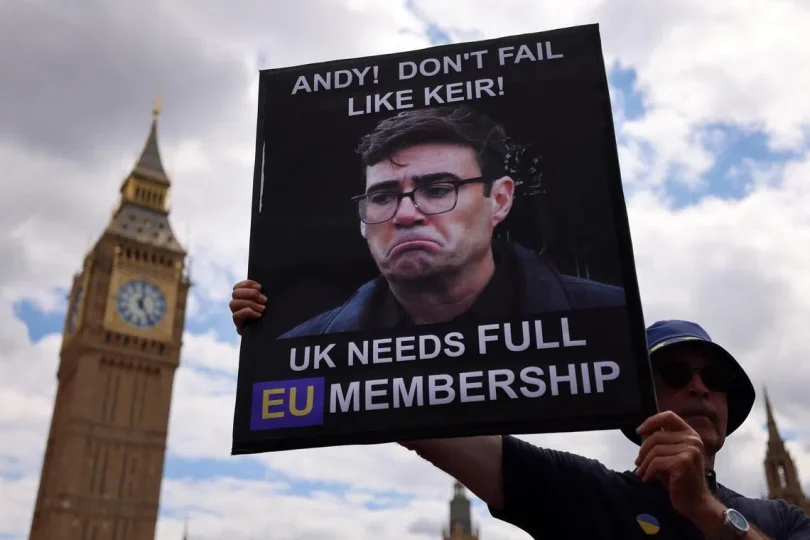
In Brussels to meet EU trade chief Maros Sefcovic after a planned July 22 summit was postponed following Prime Minister Keir Starmer’s resignation, Nick Thomas-Symonds said he wanted to offer assurance that technical work continued as Britain awaits its next leader, expected to be Andy Burnham.
He told Reuters in an interview that talks on agri-food, linking emissions trading systems and a youth-mobility scheme were “in a very positive position” and delivering the summit package was his priority despite the “short delay” until Starmer’s successor takes his post.
The priority after that would be to sell it to Britons “by showing the benefits… of what the cooperation does”, a nod to the challenge posed by veteran Brexit campaigner Nigel Farage’s populist Reform UK party.
Farage’s party has maintained a healthy lead in almost every opinion poll for more than a year before a national election due in 2029.
Thomas-Symonds, in charge of negotiations with the bloc for two years, said an increasingly volatile world meant closer ties between Britain and the European Union were now more important.
“The broader point I’m making (is) about the importance of this relationship and the need to deepen cooperation going forward in a very dangerous world that we find ourselves in,” he said.
“This is about where we are in 2026. I think 2026 is very different from 2016 (when Britain voted to leave the EU). I think 2026 is very different from 2024. And I think at this time we can see… the crucial importance of our supply chains, the deep supply chains we have with the European Union.”
Under Starmer’s reset with the EU, Britain first looked at securing those deals in agri-food, on linking emissions trading systems and the youth mobility scheme to try to thaw relations with the bloc after the 2016 Brexit vote.
Nick Thomas-Symonds has been in charge of Britain’s negotiations with the EU for two years.
PHOTO: REUTERS
Since then, Thomas-Symonds’ brief has expanded. Britain is also hoping to take part in other schemes, such as the Ukraine support loan, and to try to get carve outs from the bloc’s “Made in Europe” plan.
That could see the EU prioritising European-made goods in public contracts, squeezing British firms out of its supply chains.
With Burnham seemingly giving the nod to Britain’s approach, Thomas-Symonds said he wanted to persuade the EU that “we have shared challenges, we are not each other’s problem” when it came to the “Made in Europe” plan.
“It is absolutely critical for us that the vital supply chains that we have with the European Union, not just that we preserve what we have, but that we are building upon them as we move into the later part of the decade,” he said.
He said there had been some progress in those talks, but as in other areas, such as steel, where both sides agreed initial quotas under new safeguard measures, more work was needed to secure beneficial long-term deals.
“This is about looking forward,” he said. REUTERS