The lawmakers also rejected proposals to suspend diplomatic relations with Pretoria.
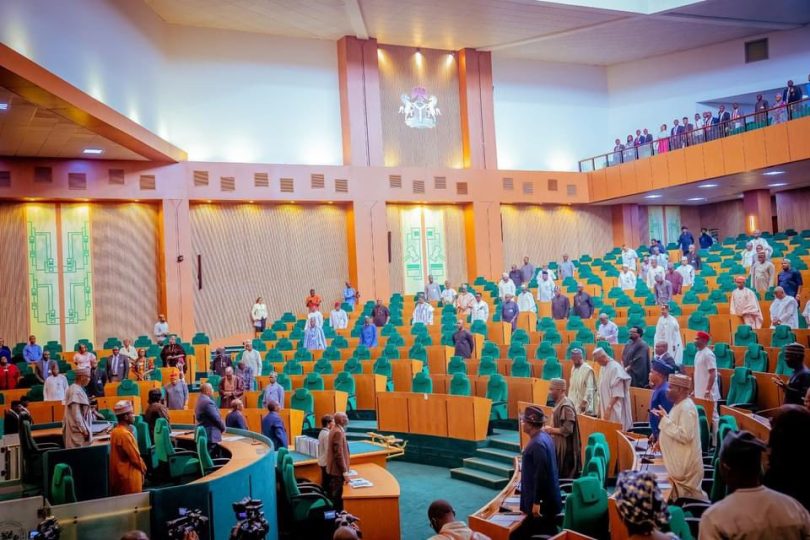
The House of Representatives on Thursday strongly condemned the wave of xenophobic attacks against Nigerians and other African nationals in South Africa, urging the federal government to intensify diplomatic pressure on Pretoria while rejecting proposals by some lawmakers to immediately suspend diplomatic relations between both countries.
The resolution followed the adoption of a motion of urgent public importance sponsored by Yusuf Gagdi (APC, Plateau), who decried what he described as recurring violence, unlawful arrests, extrajudicial killings and persecution of Nigerians living in South Africa.
Moving the motion during plenary, Mr Gagdi said repeated xenophobic attacks in South Africa had claimed innocent lives, destroyed businesses and forced many Africans to flee their homes despite years of diplomatic engagements between the two countries.
He said recent reports pointed to a fresh escalation of attacks against Nigerians, as well as citizens of Ghana, Zimbabwe, Zambia, Mozambique, Malawi and other African countries legally residing in South Africa.
According to him, the Nigerian government recently confirmed the deaths of two Nigerians, including one who reportedly died while in the custody of the South African police and another who was allegedly murdered outside his business premises.
Mr Gagdi said the latest incidents demonstrated that Nigerians remained vulnerable despite repeated assurances from the South African government that foreign nationals would be protected.
He reminded lawmakers that Nigeria played a leading role in the struggle against apartheid by providing diplomatic support, financial assistance and humanitarian aid to South Africa during its liberation struggle.
According to him, successive Nigerian governments committed enormous national resources in support of the anti-apartheid movement based on the ideals of African solidarity and freedom.
“It is therefore profoundly disturbing that Nigerians and other Africans are now facing persecution, humiliation and violent attacks in the very country whose freedom Nigeria helped to secure,” he said.
The lawmaker said the recurring attacks had become systematic and increasingly deadly, warning that failure to hold perpetrators accountable had encouraged a culture of impunity.
He also criticised what he described as inflammatory remarks allegedly made by a South African minister, saying such comments were capable of worsening tensions and encouraging hostility against Nigerians and other African nationals.
Mr Gagdi maintained that the attacks undermined the principles of African unity, Pan-Africanism and regional integration upon which the African Union was founded.
He further cited Section 19 of the 1999 Constitution, which commits Nigeria to promoting African integration and international cooperation, as well as international human rights instruments, including the African Charter on Human and Peoples’ Rights and the International Covenant on Civil and Political Rights, which guarantee the rights to life, dignity, equality and protection from discrimination.
He warned that continued attacks could further strain diplomatic relations, weaken regional institutions and diminish confidence in African states’ commitment to protecting human rights and the rule of law.
Following the motion, lawmakers across party lines called for stronger measures against South Africa.
Co-sponsor of the motion, Billy Osawaru (APC, Edo), recalled that the House had adopted a similar motion on 5 May, following which the federal government facilitated the voluntary return of hundreds of Nigerians from South Africa.
He said about 856 of nearly 1,000 Nigerians who registered for evacuation had already been brought home.
While commending the government’s intervention, Mr Osawaru said the latest killings showed that South Africa’s security agencies had failed in their responsibility to protect foreign nationals.
“We have engaged diplomatically, but it looks like Nigeria is being undermined. This is no longer a time for endless discussions. Other African countries are already taking decisive steps. Nigeria must also act,” he said.
He proposed that Nigeria suspend political, diplomatic and parliamentary engagements with South Africa, including trade, investment and economic diplomacy, until concrete steps were taken to halt the attacks.
His proposal, however, did not receive the backing of the House.
Deputy Speaker Benjamin Kalu, who presided over the session, cautioned against taking such a far-reaching decision without first completing a proper investigation.
“We cannot suspend diplomatic relations now until we carry out our investigation and establish the facts,” Mr Kalu said.
When the proposal was subjected to a voice vote, the majority of lawmakers rejected it.
Ghali Tijani (APC, Kano) also advocated the immediate severance of diplomatic ties with South Africa until justice was secured for Nigerian victims.
He described the attacks as a recurring tragedy that required stronger diplomatic action rather than routine condemnations.
Similarly, Jesse Onuakalusi (NDC, Lagos) urged the federal government to pursue legal remedies under international law, including compiling records of Nigerians killed in South Africa and seeking redress through international judicial mechanisms.
He also suggested that Nigeria consider recalling its ambassador and reviewing commercial relations with South Africa, arguing that Nigerian businesses continued to suffer while South African companies generated substantial profits from Nigeria.
Kayode Akiolu (APC, Lagos) criticised what he described as South Africa’s failure to appreciate Nigeria’s historic contributions to ending apartheid.
He recalled that Nigerians made financial contributions during the anti-apartheid struggle and said South Africans needed to be reminded of Nigeria’s sacrifices.