
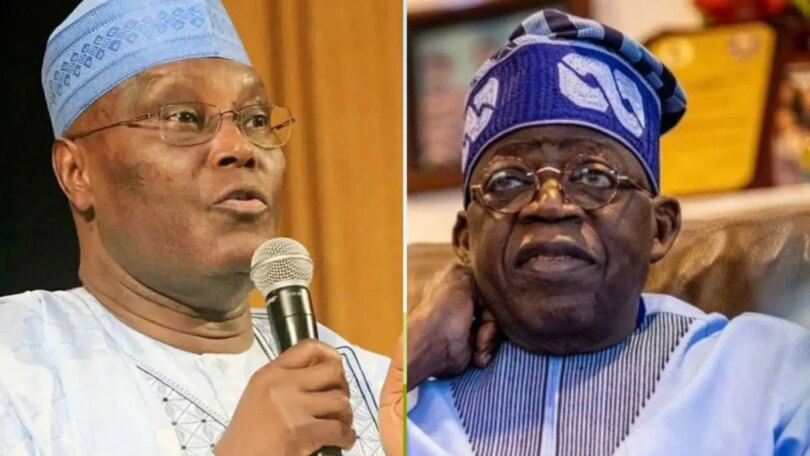
The African Democratic Congress (ADC) Presidential Campaign Council has dismissed a projection by The Economist that President Bola Tinubu could retain the presidency in the 2027 election.
This was as the campaign council argued that electoral forecasts cannot determine how Nigerians will vote.
Phrank Shaibu, Director of Strategic Communications of the ADC Presidential Campaign Council, made the position known in a response titled, “No forecast can overrule the people: Nigerians will vote out Tinubu and elect Atiku.”
Shaibu was reacting to a report published by The Economist on October 1, which examined Tinubu’s prospects ahead of the 2027 presidential election.
The publication identified incumbency and access to ruling-party structures among factors that had benefited incumbents in previous Nigerian elections.
It also highlighted the fragmentation of the opposition, noting that ADC presidential candidate Atiku Abubakar and NDC presidential candidate Peter Obi are contesting the election on separate political platforms.
Religion and voter cynicism were also identified as factors that could shape voting patterns in the 2027 election.
However, Shaibu argued that such factors could influence an election without necessarily reflecting the choices Nigerians would ultimately make at the polls.
“These factors matter. But they are not the same as public consent, and none can tell us how Nigerians will vote in January. A forecast is not a verdict,” he said.
He also challenged the interpretation of economic hardship and limited access to public services as evidence that Nigerians had become politically passive.
According to him, Nigerians experiencing insecurity and economic difficulties still retain the right to determine their political choices and will decide how to vote when given the opportunity.
Shaibu further argued that receiving medical assistance or other forms of support should not automatically be taken as evidence of widespread approval for the administration.
Turning to the economy, he said the cost of living would remain an important consideration for voters, pointing to the impact of food prices, transport fares, school fees, electricity bills and the cost of operating businesses.
He cited inflation at 15.39 per cent in August and food inflation at 19.57 per cent year-on-year.
Shaibu said a reduction in the rate at which prices increase should not be confused with an actual reduction in the prices of food and other essential goods.
“Nigerians measure the economy by what their income can buy, what they must go without and whether they can provide a decent life for their families,” he said.
The ADC campaign council spokesman also rejected the suggestion that low voter turnout could benefit Tinubu in the next election.
He argued that the relatively low participation recorded during the 2023 presidential election could have been driven by apathy, insecurity, distrust, logistical difficulties or the perception that voting would not change the outcome.
Shaibu maintained that low turnout could not, by itself, be treated as evidence that most Nigerians supported the incumbent.
“Tinubu won the election; he did not receive the votes of most registered voters,” he added.
Meanwhile, Atiku’s media adviser, Paul Ibe, has also criticised President Tinubu’s Independence Day address, accusing him of failing to adequately address the insecurity confronting Nigerians.
Ibe said Tinubu’s speech was notable not only for what the president said but also for what he avoided addressing, particularly the killings, kidnappings, mass abductions and attacks on communities across the country.
According to Ibe in a post made on his X account on Saturday, although the president made brief references to insecurity and commended security forces, he did not provide a detailed assessment of the security crisis or explain what his administration planned to do differently to tackle it.