The All Nigeria Rotary Peace Summit 2026 will bring together international peacebuilding experts, academics, security specialists, policymakers and civil society leaders to examine practical solutions to Nigeria’s peace and development challenges.
The summit takes place on Saturday, November 7, 2026, at the Victoria Garden Event Centre, Alausa, Ikeja, Lagos, starting at 9:00 a.m. Its theme is “Good Governance, Justice and Equity: Foundations for Sustainable Peace.”
Under the sub-theme “From Dialogue to Action: Forging a Sustainable Peace Legacy in Nigeria,” the gathering aims to go beyond conversation.
Organisers say it will produce actionable recommendations, strengthen partnerships and secure stakeholder commitments towards lasting peace.
The keynote address will be delivered by Lea Perekrests, Director of Partnerships at the Institute for Economics and Peace (IEP). Her presentation, “Global Perspectives on Good Governance, Justice and Equity as Foundations for Sustainable Peace,” will examine how effective institutions, inclusive governance and equitable societies contribute to lasting peace.
Scheduled for 10:35 a.m., the session will offer an international perspective on the challenges and opportunities facing Nigeria as it works to strengthen social cohesion and build resilient communities.
The summit will also feature two high-level panel discussions.
The first, Governance, Justice, Equity and National Cohesion, will be moderated by Dr. Joseph Ochogwu, Director-General of the Institute for Peace and Conflict Resolution (IPCR). It will explore the links between accountable governance, access to justice, equitable development and national unity.
Panellists are Rear Admiral (Rtd.) Elkana Oyeleye Jaiyeola, an intelligence practitioner, naval officer and security expert; Dr. Diamond Preye Nebechukwu, Director of the Abdulmalik Abubakar Institute for Peace and Sustainable Development Studies (AAIPSDS); and Professor Richard Aborishade, Professor of Criminology at Olabisi Onabanjo University (OOU).
Drawing on their backgrounds in security, peace studies and criminology, the speakers will examine institutional accountability, governance challenges and the need to rebuild public confidence in national institutions.
The session will include expert presentations, moderated discussion and audience interventions, and will end with recommendations for strengthening national cohesion.
The second panel, Security, Inclusion and the Future of Peace in Nigeria, will be moderated by Mrs. Ibim Semenitari, entrepreneur, administrator, farmer, communication specialist, journalist and Rotarian. It will consider how inclusive participation, community engagement, civil society collaboration and security interventions can contribute to a more peaceful Nigeria.
Panellists are Kaltumi Abdulazeez, humanitarian activist and advocate for women, girls and marginalised communities; Oyebisi B. Oluseyi, Executive Director of The Nigeria Network of NGOs; and Dr. Samuel Ajiye. Particular attention will be given to the role of women, young people, vulnerable communities and non-governmental organisations in shaping sustainable peacebuilding strategies.
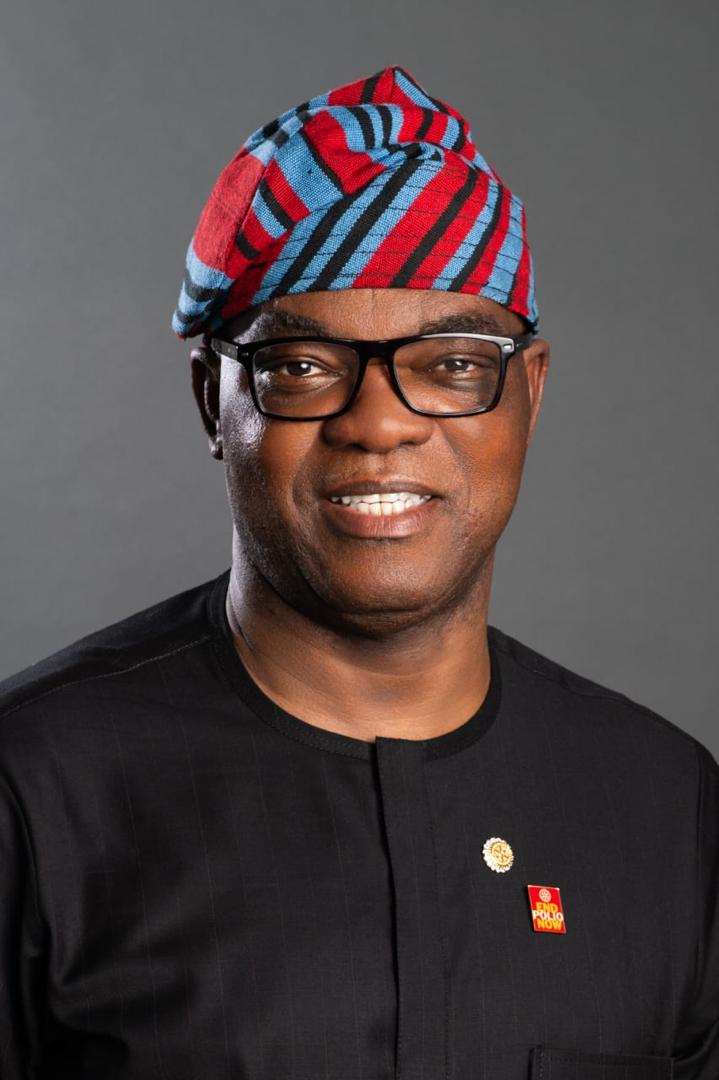
The summit convener, Yinka Babalola, President of Rotary International, will deliver an address on peacebuilding in Nigeria and formally declare the summit open.
His participation reflects Rotary’s longstanding commitment to peacebuilding, conflict prevention, dialogue and international understanding.
The programme also includes goodwill messages from representatives of youth organisations, women’s groups, security institutions and the diplomatic community, among them Mr. Abisogun Akinbode, National President of JCI Nigeria; Dr. Kunbi Wuraola, Convener of Women on a Mission; Inspector-General of Police Olatunji Rilwan Disu; and H.E. Anna Westerholm, Ambassador of Sweden to Nigeria.
A major highlight will be the session “From Dialogue to Action — Key Recommendations from Stakeholders, Commitments and Peace Legacy Agenda,” coordinated by PDG Wole Kukoyi. Stakeholders will identify practical commitments arising from the day’s discussions.
The programme also provides for the signing of a Peace Legacy Accord and Agenda, followed by the presentation of a summit declaration and communiqué setting out agreed resolutions and next steps. These activities are intended to turn the summit’s deliberations into a framework for continued engagement and action.
The summit is expected to serve as an important platform for collaboration among Rotary leaders, government institutions, peacebuilding professionals, security stakeholders, development organisations and civil society.
Through dialogue, shared expertise and collective commitment, it seeks to advance the understanding that sustainable peace is inseparable from good governance, justice, equity and meaningful inclusion.