The Independent National Electoral Commission (INEC) has displayed the particulars of 19 candidates, making the forthcoming contest one of the most crowded in Taraba State’s recent political history.
The 2027 governorship election promises to be a keen contest in Taraba State, with political parties confirming their candidates, and influential politicians forming new alliances.
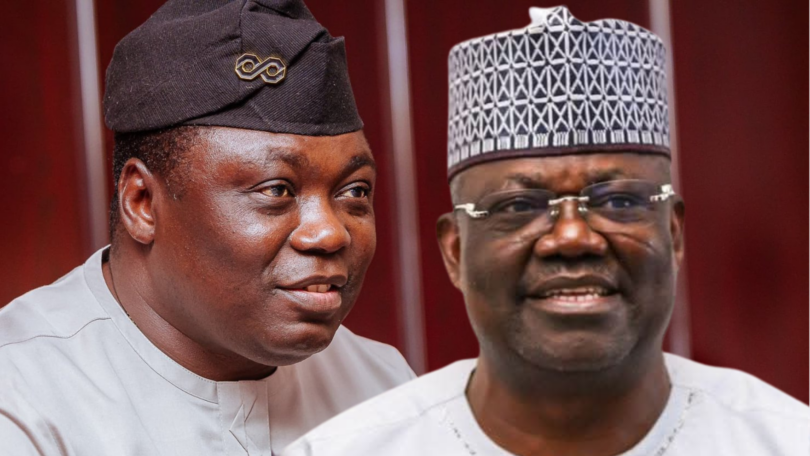
The prominent ones are incumbent Governor Agbu Kefas of the All Progressives Congress (APC), former senator Emmanuel Bwacha of the Peoples Democratic Party (PDP), and former Senator Abubakar Tutare of the African Democratic Congress (ADC).
There are also former federal lawmaker Danjuma Shiddi, popularly known as Danji SS, of the All Progressives Grand Alliance (APGA), Jerome Nyameh of the Accord Party and Mohammed Yahaya of the National Democratic Congress (NDC).
The task they face is onerous: build a statewide coalition, communicate with voters across Taraba’s three senatorial districts so as to convince an electorate that will ultimately judge both the incumbent’s record and the opposition’s promise of change.
The protagonist in the contest is the sitting governor, Mr Kefas, whose political journey has added an unusual dimension to the 2027 race.
Mr Kefas won the 2023 poll on the PDP platform before defecting to the APC.
Mr Bwacha, who contested that election as the APC candidate, is now flying the PDP flag.
The partisan switches have altered the political equation dramatically and transformed the contest.
In 2023, INEC declared Mr Kefas winner with 302,614 votes, against the New Nigeria Peoples Party (NNPP) candidate, Muhammad Yahaya, who polled 202,277 and Mr Bwacha who got 142,502.
Mr Yahaya is now the NDC candidate, his movement mirroring that of the former leader and presidential candidate of the NNPP, Rabiu Kwankwaso.
For Mr Kefas, the task is to convince voters that he has done enough in office since 2023 to earn another term.
The opposition candidates have to persuade the same voters that Taraba needs a change of government.
Mr Bwacha has already made the performance of the Kefas administration the centrepiece of his campaign.
When he declared his intention to run in April, Mr Bwacha said the poor performance of the administration compelled him to return to the race.
He rated the administration low in infrastructure development, economic management, and transparency; and decried what he described as worsening hardship in the state.
In August, the PDP flagbearer challenged the governor to identify any project worth at least ₦10 billion executed by his administration, saying he would withdraw from the race if Mr Kefas named one.
The challenge was clearly designed to turn the election into a referendum on the governor’s record.
But the Kefas administration and its supporters have defended the governor’s stewardship record.
They disputed opposition claim that Taraba is burdened with more than ₦1.2 trillion in debt.
That dispute has produced one of the clearest examples of why voters need to separate political rhetoric from verifiable evidence.
The Debt Management Office’s latest published data shows Taraba’s domestic debt at about ₦80.92 billion as of 31 March 2026. The state government had earlier cited DMO figures showing domestic debt of about ₦85.51 billion as of December 2025.
The figures do not, by themselves, settle every question about the state’s finances because domestic debt is only one component of public liabilities.
But they demonstrate the importance of examining official fiscal records rather than relying solely on campaign claims.
The same standard applies to the debate over infrastructure.
The Kefas administration had launched a statewide road programme, while its 2026 budget allocated substantial funds to roads and transport infrastructure.
Mr Bwacha, however, argues that government spending should be judged by its visible impact on ordinary Tarabans.
That disagreement may become one of the defining issues of the election.
A government can point to billions of naira allocated to projects, while an opposition candidate can argue that voters are yet to see sufficient improvement in their daily lives.
The electorate will ultimately decide which assessment is more convincing.