Tensions are rising sharply in the Gulf after the United Arab Emirates accused Iran of targeting the country with a missile and drone barrage on Monday, drawing strong condemnation from Arab states across the region.
The UAE’s defence ministry said it intercepted 15 missiles and four drones launched from Iran, marking the first such attack on the Emirates since Iran and the United States agreed to a ceasefire on 8 April.
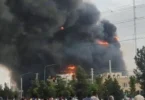
One drone strike sparked a large fire at the Fujairah Petroleum Industries Zone, wounding three Indian nationals. Another attack targeted an empty crude oil tanker belonging to the UAE’s national oil firm as it transited the Strait of Hormuz.
The UAE strongly condemned the attacks, calling them “a dangerous escalation and an unacceptable transgression, posing a direct threat to the state’s security, stability, and the safety of its territories”. The foreign ministry added that the UAE “reserves its full and legitimate right to respond to these attacks”.
Tehran, meanwhile, said it had “no pre-planned programme” to target oil facilities in the region. An Iranian military official told state television that “military adventurism” was to blame, while Foreign Minister Abbas Aragchi warned the US and UAE against being drawn into a “quagmire by ill-wishers”.
UAE attack draws widespread condemnation
Arab and international actors swiftly condemned the strikes, warning that the escalation risks undermining an already fragile truce.
The Gulf Cooperation Council denounced the attack on the Emirati oil tanker, with Secretary-General Jassim Mohammed Al Badawi warning that continued incidents threaten regional stability and security.
Saudi Arabia said it was “concerned about the current military escalation in the region”, stressing “the necessity of de-escalation, restraint, and avoiding further escalation”. In a statement, Riyadh also affirmed Pakistan’s diplomatic efforts to reach a political solution.
Qatar reiterated its “full solidarity” with the UAE, describing the attacks as a “blatant violation of the UAE’s sovereignty and a serious threat to the security and stability of the region”.
Bahrain’s foreign ministry described the incidents as “Iranian terrorist attacks”, while Kuwait condemned what it called “reprehensible aggression”.
Jordan’s foreign minister, Ayman Safadi, reaffirmed “absolute solidarity” with the UAE during a call with his Emirati counterpart, Abdullah bin Zayed Al Nahyan, condemning the “renewed Iranian attacks on the UAE”.
International partners also issued strong criticism.
European Commission President Ursula von der Leyen said the attacks constituted “a clear violation of sovereignty and international law”, calling them “unacceptable” and stressing that “security in the Gulf region has direct consequences for Europe”.
UK Prime Minister Keir Starmer urged Iran to “engage meaningfully in negotiations to ensure the ceasefire in the Middle East endures”, while French President Emmanuel Macron said Paris would “continue to support its allies in the Emirates and in the region for the defence of their territory”.
Pakistan, which has been mediating talks between Washington and Tehran, also condemned the strikes. Prime Minister Shehbaz Sharif said on X that it remains “absolutely essential that the ceasefire be upheld and respected, to allow necessary diplomatic space for dialogue leading to enduring peace and stability in the region”.