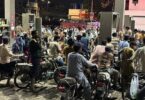

On Nakba day, history seems to be repeating itself – with escalated Israeli settler attacks destroying Palestinian lives and livelihoods
For Palestinians May 15th is a date etched into their souls. Nakba, literally means ‘catastrophe’ in Arabic. For Palestinians on this day in 1948, the day after the State of Israel was declared, the destruction of their homeland began.
While Israelis celebrated the birth of their nation, hundreds of thousands of Palestinians were displaced. Some were forced out; others left after being advised to, as Arab States fought against the fledging Israeli state. Almost all Palestinians will tell you that those that left thought they’d be back home within a few weeks. Seventy-eight years later and their children, grandchildren, and great-grandchildren are still waiting.
This year the pain is being felt even more acutely in the West Bank, as many Palestinians – or West Bankers – feel they are living through a new Nakba. Salah Khawaja, who works for the Colonization and Wall Resistance Commission witnesses on daily basis how communities are being forced out of their lands.
“Today, history is repeating itself through these same terrorist groups, committing even larger and more dangerous massacres under the cover of international silence,” Khawaja says.
Israel’s current government has approved 103 settlements in the West Bank since it took office in 2022. These settlements are what Israel deems ‘legal’ and it differentiates them from the more ad-hoc developments that it doesn’t yet recognize. Though under International law, all these settlements are illegal.
Between 1967 and 1979 the UN says Israel established 79 settlements in the West Bank. Khawaja outlines how the expansion now is ramping up in pace. “[N]ow there are plans to legalize another 18 settlement outposts, meaning the total exceeds 120 new settlement outposts across the Palestinian West Bank. This is considered an extremely dangerous development, amounting to more than nearly 80% of everything that had been built from 1967 until 2022,” he says.
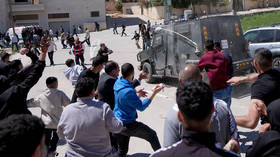
Land in the West Bank is already heavily contested. Divided into three areas, A, B and C, the largest section – Area C – consists of around 60% of the territory. It is fully under Israeli control. Area A, the only slice that is supposed to be fully under Palestinian control, makes up around 18% of the territory.
Since 2025, settlements Israel deems ‘illegal’ have been spreading. As the land runs out in Area C, the expansion is hitting Area B and many fear Area A will be targeted. Sharon is an Israeli activist based in Duma in the West Bank. She works with locals to document the attacks and harassment they are facing from these settlers.
“They’re saying we want to finish C and we want to go into B after B we are going into A. There is no end to this process. Once they have this village surrounded, they are attacking it inside. It’s the same, village after village,” she says.
Her concern is how long it is before Palestinians have had enough and can take no more. She says Israelis are blind to the problems that are stacking up as a result of the continued encroachment in the West Bank.
“So the plan is to abuse these people until they decide to leave without any foresight that ‘we have already done this in ‘48’. We’ve already banished people and they didn’t go and have their own lives. They formed the PLO, they formed all these organizations to fight Israel…this is going to happen again,” Sharon says.
She’s not the only one suggesting the West Bank is ready to explode. Comments attributed in the Israeli press to the IDF Central Command chief Maj. Gen. Avi Bluth, suggest he believes settler violence could spark a new Palestinian uprising. Bluth is reported to have cautioned, “It’s quite a miracle the Palestinian public is still indifferent… but it won’t remain indifferent forever.”
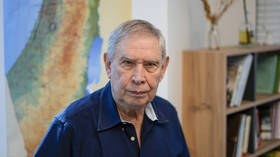
While a former Mossad chief, Tamir Pardo, has suggested that settler violence is causing an “existential threat” to the State of Israel. He said he was distraught over what is happening. “My mother was a Holocaust survivor, and what I saw reminded me of the events that happened against Jews in the last century. I feel ashamed,” Pardo says.

The UN says around 40,000 Palestinians have been forced from their homes and lands since the beginning of 2025. It says this displacement is the result of intensifying military operations, demolitions, and settler violence. One group that appears to have been disproportionally impacted is the Bedouin community.
Bedouin villages often to appear to be hastily constructed from corrugated fencing and salvaged materials. However, despite their ability to be dismantled and moved easily, these are real homes. In January 2026, a whole community of around 135 families, was forced to pack up everything and leave Ras ‘Ein al ‘Auja for good.
In the months leading up to this decision, RT spoke to locals about the increasing harassment they were facing from settlers. They described being cut off from the local spring, which for years had provided a place for their herds to take water. They showed the team videos of settlers threatening them day and night.
While the team was filming in Ras ‘Ein al ‘Auja, they witnessed settlers trespassing over Bedouin lands and allowing their flocks to graze outside homes. The RT team was also prevented by one settler from accessing part of the village, this settler also assaulted a member of the team.
In Al-Mughayyir, another Bedouin community is under threat – for the second time. Abu Najeh says that his family fled here from their original home in Ein Samiya after being forced out two years ago. “They want to displace us again,” Najeh says, adding, “When we first came here, they told us this was Area B, Palestinian land, but then they turned around and told us, ‘No, you are not allowed to stay here either’.”
The situation has taken a toll on him and his family. He sighs as he says, “I swear I do not know where we are supposed to go. There is nowhere left.”
While Israeli government figures, including the Prime Minister Benjamin Netanyahu, claim settler violence is the result of a ‘few bad eggs,’ there is plenty of evidence to show it is much more widespread than that. It is also deadly. Over the last 15 months or so, more than 270 Palestinians have been killed in the West Bank. Some are directly attributable to settlers. No one has been held accountable for those deaths.
In April, a 15-year-old schoolboy was gunned down outside his school in Al-Mughayyir. A settler, who was also a reservist in the Israeli Army, opened fire in the direction of the school. Aws Na’san fled the building and was shot in the head. In what became a double family tragedy, his uncle, Jihad Abu Naim, was also killed in the same incident.
IDF forces routinely open fire on Palestinians in the West Bank, including in situations where soldiers say locals are ‘throwing stones’ at them. This too has deadly consequences, with innocent bystanders caught in the fray.
In May, Naif Samaro was packing up his shawarma shop in Nablus and getting ready to head to the hospital. His wife was waiting to give birth to their first child. Naif was overjoyed at the prospect of becoming a father; he never saw that day.
As he left his shop, he became aware there was an IDF operation nearby. Soldiers say locals were throwing stones at them and opened fire. A bullet hit Naif. He was rushed to the same hospital where a day later his wife would give birth to a baby boy, Yaman. Naif was pronounced dead on arrival.
His mother-in-law describes the heart-wrenching moment she found out that Naif had been killed. “I kept trying to say no, God willing, maybe the news is not true,” she says. Fathiya Al-Shami then had to break that news to her daughter. “When she saw us coming to her she was surprised why are all these people here when it was supposed to be just me, and we told her come with us to the hospital. At that point you cannot hide the truth,” she explains.
While deaths like these, sometimes, make the headlines, there is another form of killing that is also taking place that is less covered in the international press – the total destruction of olive groves. A vital lifeline for many Palestinian families, olive trees provide food and a source of revenue.
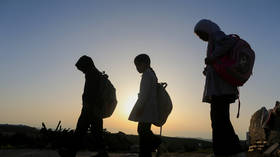
Settlers know this and often target younger trees. They are easier to rip out. But older, more established olive trees are also hacked down. Palestinians themselves are targeted too during the harvest season. 2025 was the most dangerous harvest on record. In October alone, 126 settler attacks were recorded, while over 4,000 trees were vandalized.
Intensified access restrictions and new settler outposts also made it difficult for many Palestinians to even access the groves and collect olives. This had a huge impact and put many families economically under even more strain.
Again, while this is a form of harassment used by settlers, Israeli government figures are also celebrating the destruction of olive trees. Finance Minister, Bezalel Smotrich, is a huge proponent of the settler movement. In fact, he is part of the settler movement.
He recently announced some 3,000 olive trees were uprooted by Israel’s Civil Administration agency in a bid to secure more land for settlements. Smotrich declared, “We are building the Land of Israel and destroying the idea of a Palestinian state.” That is a statement he makes frequently.
Israel is using every mechanism possible to make land grabs in the West Bank easier. The Knesset is currently reviewing a new law that if passed, would enable it to have full control over heritage and archeological sites across the West Bank, even in area A – which is supposed to be fully under Palestinian control.
Salah Khawaja from the Colonization and Wall Resistance Commission suggests this is about white-washing Palestinian history. “Even Palestinian historical areas, including around 2,500 archaeological sites, are described by Smotrich as “Biblical archaeological sites,” he says, adding this means there is a “falsification of Palestinian history, civilization, and reality” that is taking place.
Israel’s Civil Administration’s Archeology Unit suggests already there are over 2,600 archeological sites in the West Bank. But given that the whole of the West Bank is historically important to the three main Abrahamic faiths, almost any part could be declared a heritage site, if the law passes. The bill may have the support it needs in the Israeli Parliament, but it has already faced a backlash from archeologists who have accused the government of approving a ‘de facto annexation.’
As Palestinians take a moment to remember the ‘48 Nakba, to think about the fear, the violence their grandparents or great grandparents faced, this year they perhaps have an even deeper connection, a more personal understanding of what unfolded. Instead of just remembering, they too are living through their own Nakba. Will they be forced out? When you ask this question to a Palestinian, the response is a defiant ‘No!’ – but how much more can they take?