The strike, which began on Monday, followed months of negotiations, a government-backed verification exercise, and a dispute over implementing agreements between the union and the Taraba State Government.
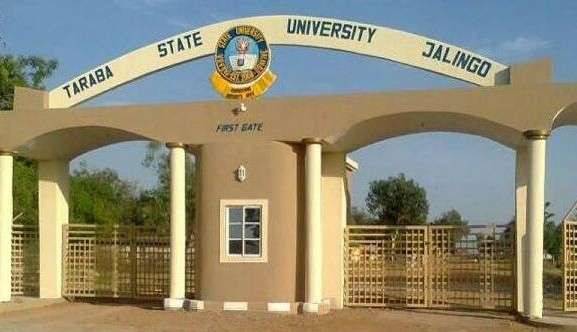
The Academic Staff Union of Universities (ASUU) has declared an indefinite strike at the Taraba State University (TSU) over the state government’s alleged failure to implement an agreed remuneration framework and pay outstanding salary arrears dating back to January.
The ASUU-TSU chairperson, Joshua Mbave, announced the industrial action in a statement, saying the union had exhausted its patience after repeated efforts to resolve the dispute through dialogue.
“The union had exercised considerable patience and demonstrated its commitment to dialogue since February 2026, when it began engaging the Taraba State Government over the outstanding issues,” Mr Mbave said.
The latest strike follows disputes over lecturers’ welfare, earned academic allowances and the implementation of salary-related agreements between the union and the state government.
In January 2025, ASUU-TSU suspended a strike after reaching an agreement with the government on measures to address outstanding obligations to lecturers.
Under the agreement, the government reportedly committed to paying ₦50 million monthly from February 2025 towards settling accumulated Earned Academic Allowances (EAA).
However, in August 2025, Mr Mbave alleged that the government had made only one payment, in July of that year.
The union also raised concerns about unpaid salary arrears, outstanding earned academic allowances and the absence of a functional pension scheme for academic staff.
In February 2026, the union launched another indefinite strike, accusing the government of failing to honour commitments made during earlier negotiations.
The industrial action was suspended in March 2026 after the state government, the university management and the union signed a memorandum of action to address the outstanding issues.
The latest dispute centres on implementing the 2025 Federal Government-ASUU remuneration agreement at the university and paying salary arrears accumulated since January.
According to Mr Mbave, negotiations initiated in February led to the establishment of a verification committee to assess the existing salary structure and how far the remuneration agreement has been implemented across the North-East.
He said the committee completed its assignment and submitted its report on 24 September.
The union also said a tripartite committee had assessed the financial implications of implementing the agreed salary structure and calculating accumulated arrears.
Despite completing these exercises, Mr Mbave said the government had yet to implement the agreement, prompting the union to resume its planned industrial action.
He said the government had previously appealed to the Office of the Head of Civil Service for additional time to resolve the dispute.
The union agreed to the extension to promote industrial harmony but later objected to establishing another committee to review remuneration and workforce planning in state tertiary institutions.
In statements reported by newspapers in early October, the union argued that the additional committee was unnecessary because verification, consultation, financial assessment and reporting processes had already been completed.
ASUU also claimed that Taraba State University was the only university in the 19 northern states yet to implement the agreed remuneration framework. The claim has not been independently verified.
The Taraba State Government approved the establishment of a Tertiary Institutions’ Staff Remuneration and Workforce Planning Committee on 30 September.
The committee is expected to review remuneration and workforce planning across the state’s tertiary institutions, with participation from relevant ministries, governing councils and staff unions, including ASUU.
The government said the initiative was intended to support quality tertiary education, fair treatment of personnel, responsible management of public finances and the orderly development of tertiary education in the state.
However, the government’s announcement did not explain why it considered another review necessary after the verification and financial assessment exercises cited by ASUU.
The status of the September committee reports, the amount of outstanding salary arrears, and the government’s timeline for implementing the remuneration agreement remain central issues in the dispute.
Despite declaring an indefinite strike, ASUU-TSU said it remained open to negotiations with the government and other relevant stakeholders.
The union, however, insisted that further engagement must be sincere, timely, and aimed at a definite resolution of the dispute.
It urged the state government to implement the agreed remuneration framework, settle all outstanding salary arrears and honour commitments made during previous negotiations.
The union said its demands were intended to ensure fairness, protect the dignity of university workers and uphold agreements reached in good faith.
The strike threatens to disrupt academic activities at the university, following the earlier industrial action in 2026. Its duration will depend on the outcome of negotiations and the state government’s steps to address the union’s demands.