
The All Progressives Congress, APC, presidential campaign spokesperson, Alwan Hassan, has criticised the proposal by the African Democratic Congress, ADC, presidential candidate, Atiku Abubakar, to restore petrol subsidy.
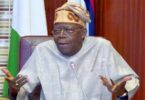
Mr Hassan said a return to the subsidy regime would undermine the economic reforms introduced by President Bola Tinubu’s administration.
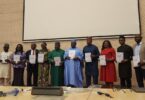
He stated this at a press conference in Abuja on Sunday, alongside other members of the APC campaign media team.
According to him, the Mr Tinubu administration inherited an economy facing significant fiscal pressures, including the cost of fuel subsidy and debt servicing.
He said the reforms introduced by the administration were necessary to address the challenges.
“Let me say this clearly: the reforms President Tinubu has undertaken were unavoidable,” he said.
“Anyone promising Nigerians a return to unlimited subsidies, multiple exchange rates and reckless borrowing is either being dishonest or does not understand how an economy is managed.”
Mr Hassan claimed that the reforms had increased government revenues and improved foreign exchange management, while also increasing allocations to states and local governments through the Federation Account Allocation Committee, FAAC.
He also referred to the Federal Government’s legal action on local government financial autonomy, saying the Supreme Court’s decision on direct payment of allocations to democratically elected local governments would support development at the grassroots.
On infrastructure, Mr Hassan listed road and bridge projects in states including Cross River, Rivers, Enugu, Ebonyi, Plateau and Adamawa.
He said the projects were intended to improve connectivity, reduce travel time and create employment.
Mr Hassan also said the Federal Government was revitalising more than 4,000 primary healthcare facilities across the country.
He cited the Nigerian Education Loan Fund, NELFUND, as another intervention, saying the scheme had provided financial support to students struggling to pay school fees.
“Let us not look at NELFUND as just a student loan; it is relief for Nigerian families,” he said.
On security, Mr Hassan said the administration had improved the welfare and operational capacity of security agencies, which he claimed had contributed to progress against terrorist and bandit networks in some parts of the country.
He, however, acknowledged the economic difficulties caused by the reforms, including rising prices and pressure on household incomes.
“Yes, we acknowledge that the reforms undertaken by President Bola Ahmed Tinubu have not come with ease,” he said.
“Prices rose, and families came under pressure. We will not deny what Nigerians have experienced.”
Mr Hassan argued that abandoning the reforms would undermine efforts to address the structural problems in the economy.
He also claimed that improved economic stability had attracted new investments, citing the telecommunications sector, where he said more than N3 trillion in new investments had been recorded since 2025.