Mr Oyetola said the government wanted Nigerian businesses to spend less time and resources moving their goods, while creating an environment that attracts investment and supports employment.
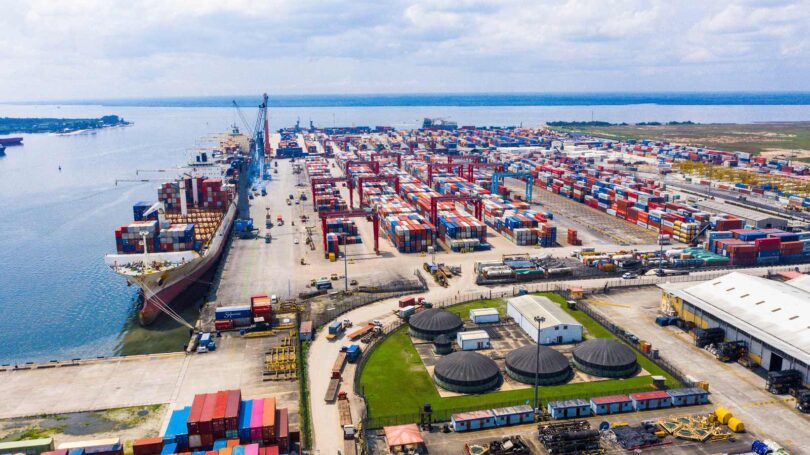
The federal government has approved the comprehensive modernisation and upgrade of Onne, Rivers, Delta, and Calabar ports as part of efforts to expand Nigeria’s maritime capacity and reduce the concentration of cargo traffic around Lagos.
Mr Oyetola said the approval followed an earlier decision by the federal government to modernise and upgrade the Apapa and Tin Can Island ports in Lagos.
According to him, extending the programme to the South-south region would create additional gateways for international trade and contribute to a more balanced and efficient national port system.
Mr Oyetola said the upgrade of the four ports would improve cargo handling, reduce vessel turnaround times and strengthen regional connectivity.
The minister said the ports had strategic roles in Nigeria’s trade, industrial, and regional development and needed to be equipped to meet the demands of a growing economy.
He said the expansion beyond Lagos would complement ongoing investments in Apapa and Tin Can Island ports while helping to reduce the concentration of cargo traffic around Lagos.
“This is part of a broader expansion of Nigeria’s maritime infrastructure, including federal government approvals for the development of the Ibom, Bakassi, Agge, Gateway, Ondo, and Bonny deep seaports,” Mr Oyetola said.
He said the government was pursuing a dual approach: upgrading existing ports and facilitating the development of new deep-seaports.
“Our approach is comprehensive. We are modernising existing ports while facilitating the development of new deep-seaports. Together, these investments will expand Nigeria’s maritime capacity, create stronger economic corridors and position our country as a major maritime and logistics hub in Africa,” he said.
The approval comes against a background of repeated calls for the revival of ports in the Niger Delta.
In August, Delta State Governor Sheriff Oborevwori urged the federal government to revive the Warri, Koko, Sapele, and Burutu ports.
Mr Oborevwori said Delta was “strategically blessed with four seaports” and argued that their revival would create employment, stimulate trade and strengthen the economies of Delta and Nigeria.
Calabar Port has similarly faced years of calls for rehabilitation and dredging.
In 2023, The Punch newspaper previously reported that Governor Bassey Otu of Cross River State appealed to the federal government to dredge the Calabar channel, with maritime operators saying improved access would allow the port to handle more cargo and serve importers in the South-East and other parts of the country.
The dredging project, according to the newspaper, had been stalled by a dispute involving the Nigerian Ports Authority and the contractor. However, the government had initiated an out-of-court settlement.
The National Assembly has also raised concerns about the unfinished dredging of the port. In 2024, the House of Representatives urged the Federal Government to re-award the dredging contract to a reputable company and mandated its Committee on Ports and Harbours to investigate earlier contracts awarded for the project, The Nation reported.
The latest approval, therefore, comes after years of demands for improved infrastructure and navigational access at the Calabar facility.
Mr Oyetola said modern ports were central to President Bola Tinubu’s infrastructure renewal and economic diversification agenda.
“Our vision is an integrated maritime and logistics system in which ports, roads, rail, inland waterways and other transport infrastructure work together to enable the seamless movement of cargo,” he said.
Mr Oyetola said the government wanted Nigerian businesses to spend less time and resources moving their goods, while creating an environment that attracts investment and supports employment.
He added that the ministry would work with state governments, terminal operators, investors, shipping companies, es and other stakeholders to ensure that the project delivers tangible improvements.
“Nigeria has the geography, market, and maritime resources to become a leading maritime hub. Our responsibility is to provide the infrastructure, policies, and enabling environment required to turn that potential into sustainable economic value,” the minister said.