LONDON – In one legislative chamber, a British king appealed to centuries of shared history in a bid to preserve his country’s most important alliance.
In another, an ocean away, a British prime minister watched his agenda get sidelined again by his past efforts to protect the US-UK “special relationship”.
The twin scenes, playing out in Washington’s House of Representatives and the House of Commons in London, illustrated how much managing ties with Mr Donald Trump’s America has come to consume the British state.
Despite Prime Minster Keir Starmer’s efforts to adapt his left-leaning Labour government to the billionaire Republican’s personality-driven foreign policy, he has watched ties sink to their lowest level in decades.
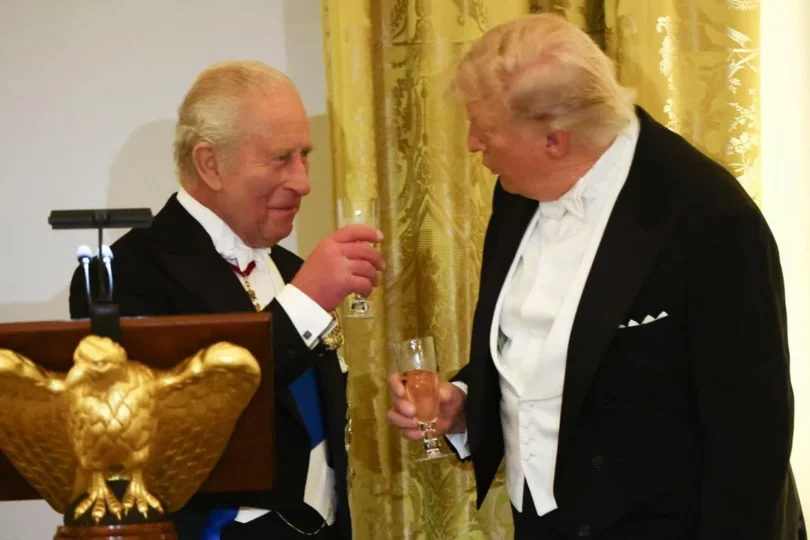
This week, Mr Starmer deployed the best messenger he could muster to reach a president who is unusually comfortable associating himself with royalty: King Charles III.
The 77-year-old monarch’s state visit to Washington – ostensibly to mark the 250th anniversary of American independence from Britain – gave Mr Trump the opportunity to hold a military review and a fighter-jet flyover at the White House.
“TWO KINGS” the White House posted on its official social media account, alongside a photo of Charles and Mr Trump standing side by side.
Still, the visit elicited some reassuring words from Mr Trump who praised the “cherished bond” between the two countries and said he was “very certain that it will continue that way long into the future”.
Back in London, however, Mr Starmer was battling to contain the fallout from his first attempt to navigate a more transactional approach in Washington: the disastrous appointment of – now former – Ambassador to the US, Mr Peter Mandelson.
Even as King Charles was exchanging gifts with Mr Trump at the White House, members of Parliament in Westminster were debating whether to refer Mr Starmer to an ethics investigation for assuring them “due process” had been followed in the nomination.
Mr Starmer won the vote, but the months-long uproar over Mr Mandelson’s ties to the late sex offender Jeffrey Epstein have helped push his premiership to the brink.
April 28’s debate occupied several of Parliament’s last hours in session before recess with key pieces of government-backed legislation waiting to be approved.
The drip feed of revelations about how various officials overlooked Mr Mandelson’s past associations in the rush to install someone they thought could better communicate with the Trump administration has done much to erode the Prime Minister’s authority and fuel speculation about a challenge to replace him.
That struggle was laid out in testimony in parliament on April 28 by the architect of Mr Starmer’s rise to power, Mr Morgan McSweeney.
The Prime Minister’s former chief of staff, who resigned amid a previous surge in outrage over the Mr Mandelson appointment, explained to MPs the on the Foreign Affairs Committee how Mr Trump’s 2024 victory over then Vice-President Kamala Harris had sent the government reeling.
“There would have been, for a Labour administration, a broader range of candidates available to him had the Democrats won that election,” Mr McSweeney said. “If Kamala Harris had won the US presidential election, I think it would have gone to a different candidate.”
Mr Mandelson featured prominently in Mr Starmer’s early overtures to Mr Trump, including his gesture to invite the president to an unusual second state visit in Britain in 2025.
The UK was the first country to sign a trade pact with Mr Trump in the wake of his “Liberation Day” tariff barrage, and, for a few months, spared Mr Starmer from the same messy public fight Canada’s Mr Mark Carney, another of Charles’ prime ministers, endured.
But those gains have proved fleeting, as Mr Starmer balked at Mr Trump’s claims to Greenland and pressed the UK to commit resources to his military campaign against Iran.
Key issues in the trade deal remain unresolved and Mr Trump has withdrawn support for Mr Starmer’s plan to transfer ownership of a strategic island chain in the Indian Ocean, plunging the proposal into limbo.
Mr Starmer’s government, which continues to debate how to meet Mr Trump’s spending demands for North Atlantic Treaty Organisation nations, has found itself on the receiving end of the President’s latest threats against the alliance.
Reuters reported just days before the King’s visit that a Pentagon official had suggested reviewing Britain’s claim to the Falkland Islands as part of a range options to punish the country over its lack of support for the war in Iran.
“The future of the transatlantic alliance hangs in the balance,” Senate Minority Leader Charles Schumer, a New York Democrat, said on April 28, adding that he hoped King Charles could get Mr Trump to understand the stakes. “Our national security and the security of the world depends on it.”
The cracks in the US-UK relationship showed through the carefully choreographic pageantry.
Just before King Charles arrived at the White House, the Financial Times reported that Mr Mandelson’s replacement as ambassador had played down the special relationship in a private meeting with students, saying the US’s only such relationship was “probably Israel”.
That left it to the King, who is bound by constitutional convention to stay above day-to-day politics, to assume an unusually overtly diplomatic role in trying to stabilise the relationship.
In a speech to Congress, King Charles drew on everything from the Magna Carta to the principles of the American Revolution to the blood shed in two world wars to explain why the allies should stay together.
“The story of the United Kingdom and the United States is, at its heart, a story of reconciliation, renewal and remarkable partnership,” King Charles said in a speech interrupted by frequent standing ovations from American lawmakers.
“From the bitter divisions of 250 years ago, we forged a friendship that has grown into one of the most consequential alliances in human history.”
Mr Trump himself praised the remarks hours later at the White House. “A great speech. I was very jealous.” The review from Senator Lindsey Graham, a close ally of the president, was that “the King nailed it”.
“There is often a political split screen in the US-UK relationship, with one leader or another experiencing political turbulence at home,” said Mr Max Bergmann, a former State Department official who now directs the Europe, Russia and Eurasia Program at the Center for Strategic & International Studies.
“But the relationship almost always rises above that. It points to the strength of the partnership. Leaders come and go but the ‘special relationship’ lives on.”
But back in Britain, many will wonder how long before the cracks in the relationship emerge again.
Mr Anand Menon, professor of European politics and foreign affairs at King’s College London, said any impact King Charles may have on Mr Trump is unlikely to last.
“My hunch is that the sort of warm, fuzzy feelings of this weekend wouldn’t endure that long,” said Prof Menon, who’s also a nonresident senior fellow in the Center on the United States and Europe at Brookings.
“President Trump doesn’t seem to have that much of a long memory.” BLOOMBERG