
Fatoki Salako
Some homecomings happen through an airport arrival. Others happen in a conference room thousands of miles from home, listening to a familiar voice speak about a place that has never really left you. For fashion entrepreneur, Rosie Young, founder and Chief Executive Officer of Rosie Young Fashion House, a recent invitation to join the Abia State delegation to the University of Northampton’s CARE Race Action Summer Conference 2026 became far more than an international engagement. It became an unexpected journey back home.
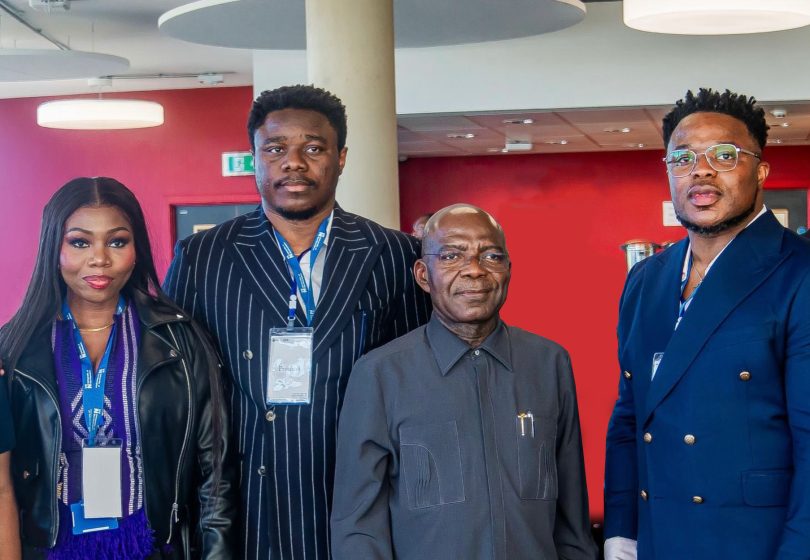
Rosie Young was part of the delegation that accompanied Abia State Governor, Alex Otti, whose keynote address, ‘Of Bridges and Walls: Finding Common Ground, Rising Above Divisions’, formed one of the highlights of the conference. The engagement, facilitated by ETGSL Education under the leadership of Dr. Wisdom Okoye, brought together voices from government, academia and the wider Nigerian community to discuss leadership, inclusion and social progress. Reflecting on the visit afterward, Dr. Okoye described the initiative as part of an effort at “building bridges that connect people, institutions and nations”.
For Rosie Young, however, the significance of the occasion, which she called “deeply personal,” extended well beyond the conference programme. It had been almost three years since she last returned to Abia State, a journey marked not by celebration but by the burial of her father. Since then, life and business had carried her elsewhere, leaving home as something remembered more often than revisited.
As Governor Otti spoke about the state’s reforms, aspirations and future, telling his Northampton audience that education and healthcare have remained the “major priorities” of his administration over the last three years, those memories resurfaced.
Long before Otti became governor, Rosie Young’s father had believed in his leadership. According to her, he was so convinced of Otti’s vision that he ensured the family travelled home to vote for him during an earlier election, years before that belief was ultimately rewarded at the polls. Listening to the governor speak in Northampton, she found herself reflecting not only on the direction of her state but also on the convictions her father had held so strongly.
“I left feeling hopeful,” she later reflected, describing the experience as one that was deeply personal.
Stories like Rosie Young’s illustrate how official delegations can carry meaning beyond diplomacy or protocol. They often bring together people whose professional journeys intersect with deeply personal histories, allowing public service, identity and memory to meet in unexpected ways.
Rosie Young herself represents a growing generation of Nigerian entrepreneurs building brands with ambitions that extend beyond the country’s borders. Behind the name the fashion world knows her by is Roselyn Nwala, the name given to her at home in Abia, long before Rosie Young became a brand. Through Rosie Young Fashion House, she has developed a fashion business spanning bespoke designs, ready-to-wear collections, bridal fashion and modest wear, while also creating opportunities for aspiring creatives through internships and mentorship initiatives.
In recognition of her contributions to entrepreneurship and brand development, she received the “Visionary Fashion & Brand Expansion Leader of the Year” award at the BusinessDay Nigerian Business Leadership Awards in 2025. She was also recently honoured with the Fashion Creative Art Innovator Award at the CityMag Awards 2026, a further nod to her growing profile in Nigeria’s creative industry.
Her participation in the Northampton conference therefore reflected more than the presence of a fashion entrepreneur on an international platform. It represented the growing role of Nigeria’s creative economy in conversations that increasingly bring together government, business and culture.
Yet, beyond the speeches, photographs and official engagements, the conference offered something far less visible.
For one Abia daughter, it became an opportunity to reconnect with the memory of a father, to reflect on the place that shaped her, and to rediscover a sense of belonging. Sometimes, the longest journeys home are not measured in kilometres, but in moments that quietly remind us where we come from and why those places continue to matter.
* Salako, a political analyst, writes from Lagos