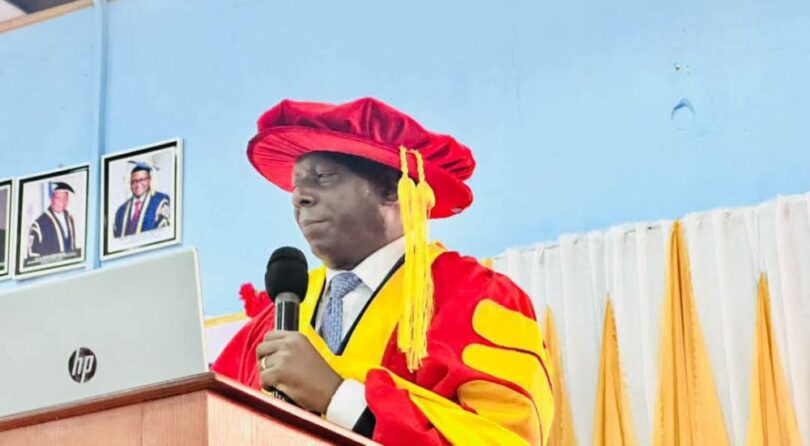
Cross River State Commissioner for Education, Prof. Stephen Odey, has called for the enactment and review of labour laws to protect informal-sector workers and extend social protection, collective bargaining and workplace representation to people excluded from formal employment relationships.
Odey made the call while delivering the University of Calabar’s 164th inaugural lecture titled Social Dialogue And Industrial Equity In Africa’s Emerging Economies on Wednesday.
The former senator representing Cross River North argued that existing labour and industrial relations frameworks must be adapted to changing employment patterns, particularly the growth of informal employment, gig work and digital platforms.
He said workers engaged outside conventional employer-employee relationships should not be excluded from legal protection, stressing the need for institutional reforms that recognise their contributions and address their vulnerabilities.
The commissioner cited casual workers who remain on contract for extended periods without adequate employment protection as an example of gaps in existing labour arrangements. He said such workers could be left without effective union representation because they lacked formal employment relationships with their employers.
He urged policymakers to develop legal and institutional frameworks that would bring these categories of workers into the broader industrial relations system.
The lecturer also identified the digital economy as a major challenge for labour governance, noting that platform-based employment, freelancing and automation were changing how work was organised and delivered.
According to him, the growth of digital platforms has created new forms of employment that often operate outside traditional structures for collective bargaining and worker protection.
He called for social dialogue involving government, employers and workers to address these challenges, arguing that meaningful engagement among the parties was essential to achieving industrial equity and sustainable industrial relations.
Odey distinguished industrial equity from industrial peace, describing equity as the fair distribution of power, resources and opportunities among workers. He stressed that the absence of strikes did not necessarily indicate justice in the workplace.
“A society can be strike-free and yet profoundly unjust,” he said, adding that progress should be measured by the strength of institutions established to manage workplace disagreements and protect workers’ interests.
He identified distributive, procedural and corrective justice as major dimensions of industrial equity. These, he explained, involve the fair allocation of wages, benefits and promotion opportunities; adherence to due process in workplace decisions; and remedies for wrongful treatment, including unlawful dismissal.
The commissioner also called for measures to address discrimination in recruitment, promotion and access to professional development, stressing that workers should be treated fairly regardless of personal differences or employment status.
On the digital economy, he recommended investment in digital literacy and skills development, stronger social dialogue mechanisms, gender-sensitive employment policies and legal reforms to ensure that workers in emerging employment arrangements were adequately represented.
He further argued that informal-sector workers should be incorporated into national social dialogue processes to ensure that their interests were considered in decisions affecting employment conditions and workers’ welfare.
The lecture was chaired by the Vice-Chancellor of the University of Calabar, Prof. Offiong Efanga Offiong, who was represented by the Deputy Vice-Chancellor, Research and Linkages, Prof. Anthony Eneji.