
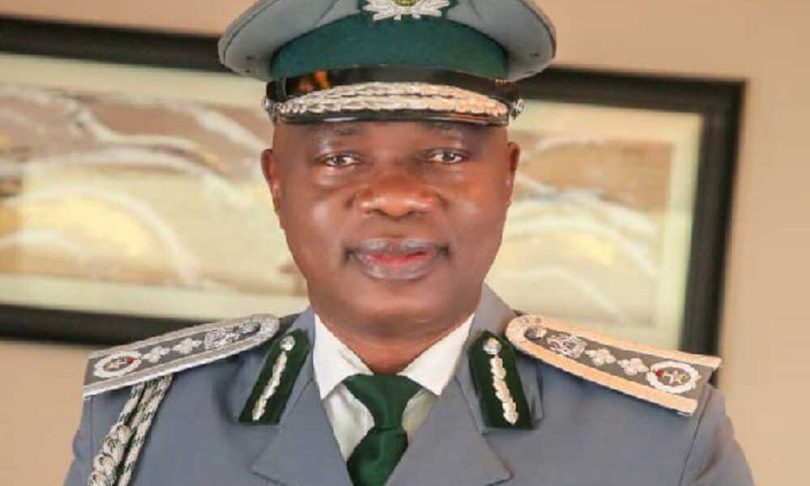
The Comptroller-General of the Nigeria Customs Service (NCS), Bashir Adewale Adeniyi, has warned that the Service must first enforce discipline and integrity among its personnel before demanding compliance from traders and members of the public.
Adeniyi said no Customs officer should consider himself above the law, stressing that the Service’s enforcement powers must be exercised within legal limits and subjected to public and judicial scrutiny.
He made the remarks while delivering the keynote address at the inaugural Customs Police Summit 2026, held at the NAF Conference Centre and Suites in Abuja.
The Customs chief, who also chairs the World Customs Organisation (WCO) Council, said the Customs Police Unit (CPU) had a critical responsibility to protect the integrity of the Service by investigating erring personnel, preventing internal crimes and ensuring compliance with established regulations.
According to him, the principle that no officer is above the law must remain central to the operations of the Customs Police Unit.
“Before we demand integrity from traders and the public, we must show it ourselves,” Adeniyi said.
He noted that the Customs Police Unit was inaugurated in July 2019 with the mandate to investigate erring personnel, prevent crime and ensure compliance, adding that the unit had an important role in strengthening public confidence in the Service.
Adeniyi also cautioned officers against abusing the police powers granted to the Nigeria Customs Service under the Nigeria Customs Service Act 2023.
He said every search, arrest and detention must be based on lawful grounds and conducted in a manner that could withstand public and judicial scrutiny.
“The NCS Act 2023 gives us police powers, but every search, arrest and detention must rest on lawful grounds and withstand public and judicial scrutiny,” he stated.
The Comptroller-General identified the growing sophistication of criminal networks as a major challenge confronting Customs administrations, explaining that smugglers increasingly exploit legitimate trade routes and digital platforms to move prohibited goods.
He listed firearm components, narcotics, fake medicines, protected wildlife and illicit funds among the items trafficked through such networks.
He argued that the Service could not effectively combat these activities through aggressive enforcement alone, insisting that intelligence gathering, technology and international cooperation were necessary.
Adeniyi highlighted several international Customs instruments, including the World Customs Organisation’s SAFE Framework, the Authorised Economic Operator programme, advance rulings, the Time Release Study and the Revised Kyoto Convention, as mechanisms for improving legitimate trade while allowing enforcement officers to concentrate on high-risk activities.
He said these measures would also reduce opportunities for corruption and abuse of official discretion.
The Customs boss further identified digitalisation and intelligence-sharing as critical to strengthening the Service’s enforcement capacity.
He cited the B’Odogwu platform, which integrates cargo declarations, valuation, risk management and Authorised Economic Operator processes, as well as the INTERPOL Data Centre at Customs Headquarters, which provides access to international criminal databases.
According to him, the Customs Police Unit must ensure that intelligence gathered during enforcement operations translates into successful prosecutions while ensuring that officers exercise their powers lawfully.
Adeniyi outlined three major priorities for the future of the unit: consolidation, collaboration and innovation.
He explained that consolidation would involve establishing clear procedures for arrests, detention and investigations, developing court-ready case files and strengthening professional training.
On collaboration, he called for stronger partnerships with the Nigeria Police Force, Armed Forces, National Drug Law Enforcement Agency (NDLEA), National Agency for Food and Drug Administration and Control (NAFDAC), Department of State Services (DSS), Independent Corrupt Practices and Other Related Offences Commission (ICPC), Nigeria Agricultural Quarantine Service and neighbouring countries.
He said no single institution could successfully defeat illicit trade without coordinated enforcement operations and intelligence-sharing.
Adeniyi also urged the Customs Police Unit to embrace emerging technologies, including artificial intelligence, advanced scanners, geospatial tools and electronic cargo tracking, to improve investigations.
He warned that technology must not replace legal safeguards or human accountability.
He said artificial intelligence could identify suspicious activities and flag potential risks, but enforcement decisions must remain with officers acting within the law.
The Customs chief urged participants at the summit to develop a comprehensive Customs Police doctrine anchored in the NCS Act 2023 and the Revised Arusha Declaration.
He also called for practical protocols covering joint operations, evidence management, information exchange and the responsible use of artificial intelligence in investigations.