
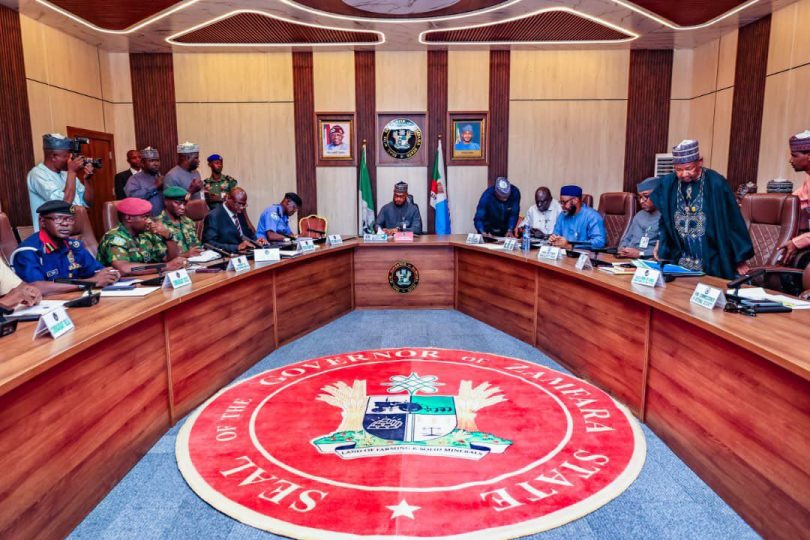
Dauda Lawal on Thursday chaired yet another high-level State Security Council meeting in Gusau, pledging what he described as “unprecedented support” for frontline troops battling the relentless tide of banditry and violence across Zamfara State.
But behind the firm rhetoric and closed-door strategy session lies a growing question: will this latest round of assurances translate into real security gains, or is it another cycle of promises in a state long battered by insecurity?
The meeting, held on June 25 at the Government House, brought together top security commanders in what officials called a decisive move to recalibrate Zamfara’s counter-insurgency architecture. Discussions reportedly focused on reinforcing troop deployments in volatile areas, accelerating intelligence-sharing frameworks, and tightening rapid-response systems.
Governor Lawal, in a stern address, declared that troop welfare and operational readiness were “non-negotiable,” signaling readiness to release resources without hesitation.
“I want to make it clear… my administration stands ready to authorize every required resource—logistical, material and otherwise—to ensure they operate at full capacity,” he said.
Yet, for many residents, such declarations echo familiar government assurances that have failed to halt the cycle of attacks, kidnappings, and rural displacements that continue to define daily life in parts of Zamfara.
The governor reiterated that restoring peace remains his administration’s top priority and promised direct access for security chiefs to communicate urgent needs without bureaucratic delays. However, critics argue that access and promises alone cannot replace measurable outcomes on the ground.
Sources indicate that fresh operational plans are being drafted to strengthen joint task force patrols and deepen community intelligence networks. Still, observers warn that without sustained execution, accountability, and visible results, the renewed “offensive push” risks becoming another headline without impact.
As Zamfara’s security crisis persists, the real test for Governor Lawal will not be in strategy meetings or declarations—but in whether his administration can finally deliver the peace that has long eluded the state.