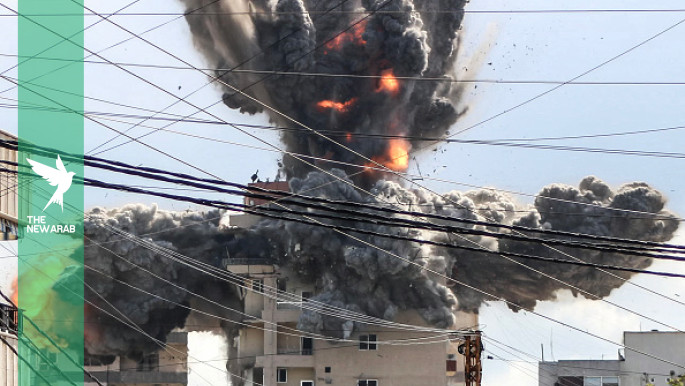
Some displaced Lebanese have begun returning home after the ceasefire announcement, despite ongoing Israeli strikes and official warnings to stay away [Getty]
Israel continued heavy strikes on southern Lebanon on Wednesday, despite a newly announced ceasefire between the United States and Iran, raising questions over whether Lebanon is included in the deal.
The two-week truce, brokered by Pakistan, was announced just hours before US President Donald Trump’s deadline, after he warned that “a whole civilisation will die tonight”. The pause in US strikes is contingent on Iran reopening the Strait of Hormuz, a key global energy route.
However, the scope of the agreement remains unclear.
Pakistani officials have indicated the ceasefire could extend across multiple fronts, while Iran has signalled support for broader regional de-escalation.
One of the points outlined in Iran’s proposed 10-point framework includes a cessation of hostilities not only with Iran, but also with its allies across the region, including Lebanon.
President Joseph Aoun welcoming the ceasefire deal with this inclusion, saying Beirut was working to ensure Lebanon is part of any regional settlement.
Aoun said Beirut “continued efforts to ensure that the regional peace includes Lebanon in a stable and lasting manner,” according a statement from the presidency.
Deputy Speaker Elias Bou Saab also said contacts were underway to secure a ceasefire covering Lebanon.
“The president is conducting intensive contacts with friendly countries to capitalise on the truce between Iran, the US, and Israel, so that Lebanon can benefit from it,” Bou Saab said from the presidential palace after meeting with Aoun.
“This period must be used to launch serious negotiations to end the war and the daily attacks on Lebanon,” he added.
French President Emmanuel Macron said Wednesday that he welcomed the US-Iran ceasefire but added the situation in Lebanon remained critical and called for Lebanon to be included in the deal.
Three Lebanese sources close to Hezbollah told Reuters that the group had halted fire on northern Israel and Israeli troops in Lebanon early on Wednesday as part of the truce.
But Israel has signalled a different stance, with Israeli Prime Minister Benjamin Netanyahu declaring that Lebanon was “not included” in the ceasefire and that operations against Hezbollah would continue.
Israel’s Northern Command has also told local authorities that the war “remains ongoing”.
Officials and local leaders in northern Israel have publicly opposed any halt to fighting. Moshe Davidovich, head of the Mateh Asher Regional Council, described stopping the war against Hezbollah as a “security disaster”.
Assaf Langleben, head of the Upper Galilee Regional Council, said reopening the Strait of Hormuz or a US-led ceasefire was not a priority, stressing that the focus should be on “removing the threat from Lebanon and rebuilding the north”.
Eyal Shmuely, head of Kfar Vradim Council, a local council in northern Israel, questioned whether decisions on Israel’s northern front were being led by Israel or Washington, saying authorities had been told the ceasefire does not apply to Lebanon.
Meanwhile, an extremist group representing northern settlers, known as the “Lobby 1701”, urged the government to use the two-week ceasefire with Iran to escalate operations in Lebanon and push for Hezbollah’s disarmament.
Lebanese civilians warned against returning as attacks continue
Despite reports of a ceasefire, Israeli bombardment has continued across southern Lebanon, with strikes hitting border towns and areas near Tyre and Sidon.
Some displaced residents began heading back towards their homes following news of the truce, but Lebanese authorities and Hezbollah urged caution amid ongoing attacks.
In a statement on Wednesday, Hezbollah called on residents not to return to southern villages, the Bekaa, or Beirut’s southern suburbs until a final and official ceasefire is declared.
The group warned that Israel may attempt “acts of treachery” to create the impression of military gains, urging civilians to remain patient and wait for confirmation before returning. It said people would eventually return “with dignity and victory”.
The Lebanese army also issued a warning, urging citizens to delay their return to southern areas and avoid locations where Israeli forces are present, citing continued danger.
Israel has been attempting to invade southern Lebanon up to the Litani River since the resumption of the expanded war on 2 March.