

Since July 10, 1999, over 35 million candidates have sat NECO examinations with overall pass rate averaging 49.26% in first five years of inception and 86.28% in the last five years, shaping millions of destinies. With centres in 9 countries, the exam body has established itself as an emerging global force in standardized academic test. Godfrey AKON reports.
Nigeria’s National Examinations Council, NECO, as we know it today, emerged from the throes of a national struggle to sustain the country’s academic opportunities and educational authority.
When the exam body was established in 1999, it entered the country’s educational system amid controversy, skepticism, and huge expectations to transform its beleaguered sector.
Before NECO’s creation, Nigeria depended almost entirely on the West African Examinations Council, WAEC, for senior secondary school examinations.
While WAEC had a long-established reputation across Anglophone West Africa, many education stakeholders believed the arrangement no longer adequately reflected Nigeria’s peculiar educational realities, especially given the country’s population size and growing demand for broader examination access.
WAEC, though respected, was overwhelmed by the sheer scale of candidates from Nigeria with attendant examination malpractice brazenly carried out with leakages, impersonation, collusion, and systemic compromise in full display.
This triggered calls for a national alternative.
However, critics doubted whether a wholly Nigerian exam body could manage critical public examinations with credibility, integrity, and technical competence, given the problems observed in public examinations.
Professor Dibu Ojerinde, the pioneer Registrar, brought world-class expertise in psychometrics to a system that lacked basic infrastructure.
Under his leadership, NECO achieved what seemed impossible, releasing results within ninety days of the final paper, a first in Nigeria’s examination history.
Twenty-five years after, the doubts over NECO’s performance have largely faded as it has evolved from a disputed national experiment into one of the most influential public examination bodies in Nigeria, expanding academic opportunities to candidates and sustaining the country’s educational sovereignty.
While NECO’s story is rooted in the conduct of standardized academic examinations for Senior School Certificate, SSCE, and Basic Education Examination Certificate, BECE, candidates, it is also about Nigeria widening access to opportunity for its citizens and building an institution capable of serving millions of students across a complex educational landscape.
By introducing the Senior School Certificate Examination for both internal and external candidates, alongside the Basic Education Certificate Examination and the National Common Entrance Examination, the Council created alternatives for Nigerian students and reduced dependence on a single regional body.
What followed its establishment was a remarkable expansion in participation; from approximately 890,000 candidates in its maiden SSCE in 2000, NECO grew to over 1.2 million candidates by 2022, recording a cumulative total of more than 24 million candidates within its first 25 years.
Its BECE candidature also expanded significantly, rising from just over 35,000 candidates in 2000 to more than 161,000 in 2022. NECO expanded examination centres into rural and underserved communities where students previously faced long-distance travel, overcrowded centres, or financial hardship simply to sit examinations.
In many parts of Nigeria, particularly remote communities, the Council became more than an examination body; it became a bridge between disadvantaged students and educational opportunity.
 Another defining feature of NECO’s journey has been its low and affordable registration fees. At a time when inflation and rising operational costs continue to put pressure on educational institutions, NECO distinguished itself by reducing examination fees rather than increasing them.
Between 2018 and 2022, the Council reduced the SSCE fee from N11,350 to N9,850 and lowered the BECE fee from N5,500 to N4,500.
That decision was particularly significant because it challenged a long-standing assumption within public institutions that improved services must inevitably come with higher costs.
Instead, NECO achieved the reduction through cost restructuring, blocking procurement leakages, and tightening financial controls without compromising examination quality.
Perhaps, no issue has tested the credibility of examination bodies in Nigeria more persistently than malpractice. For decades, examination fraud, impersonation, and organised cheating undermined public confidence in academic assessments nationwide.
NECO responded with an aggressive integrity-driven approach as the Council introduced biometric registration and candidate verification systems, secured printing facilities with restricted access and surveillance technology, deployed tamper-evident envelopes, and implemented GPS-monitored logistics for examination material distribution.
“Miracle centres” associated with organised malpractice were identified and delisted, while security agencies including the police, DSS, NSCDC, and the military collaborated with the Council during examination operations.
 In 2023, malpractice cases dropped to 12,030 out of more than 1.1 million candidates, reflecting gradual progress in protecting examination integrity. The introduction of the e-Verify platform further strengthened confidence by allowing institutions and employers to authenticate NECO results digitally, reducing certificate falsification.
Today, under the leadership of Professor Ibrahim Dantani Wushishi, a scholar, whose background in educational measurement brings both technical rigour and systems thinking, NECO stands as a pillar of national infrastructure.
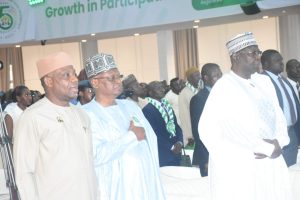
Speaking at the 25 Anniversary Celebration and Award night in Abuja, Wushishi recalled that NECO’s establishment following sustained public demand for a credible, efficient, and nationally responsive examination body.
According to him, the Council emerged from recommendations made by several government panels and committees between 1977 and 1997, all of which underscored the need for a national examination institution capable of addressing Nigeria’s growing educational demands.
“Over the last 25 years, our work has touched the lives of almost 35 million Nigerians through various examinations.
“This reflects the trust reposed in NECO and our unwavering commitment to fairness, credibility, and integrity in examination administration,” he said.
Wushishi noted that the silver jubilee celebration provided an opportunity not only to celebrate institutional milestones, but also to reflect, recognize achievements, and renew the Council’s commitment to innovation and continuous improvement in educational assessment.
He reaffirmed NECO’s resolve to sustain high standards in examination administration through the deployment of modern technology, strengthened stakeholder collaboration, and sustained investment in human capital and institutional processes.
The Council now serves millions of candidates annually across the Basic Education Certificate Examination and the Senior School Certificate Examination, reaching both urban centres and rural communities that larger institutions have struggled to access.
Perhaps most striking is NECO’s quiet internationalisation as what began as a national response has evolved into a transnational system, with examination centres now operating beyond Nigeria’s borders, including in the United Kingdom, serving diaspora communities who refuse to lose their connection to the Nigerian curriculum.
As NECO marks its silver jubilee, the temptation will be to focus on statistics and milestones; but the deeper story is one of national resolve.
NECO has demonstrated that credibility can be built, trust can be restored, and Nigerian institutions can meet global standards.
The journey is not complete as the next phase will demand deeper digital transformation, stronger international partnerships, and an unwavering commitment to integrity; but the foundation has been laid, not by accident, but by design.
What began as a largely paper-driven institution has steadily transformed into a digitally integrated examination body with an active plan by the Federal Government to convert its examinations from Paper Pencil Test, PPT, to Computer Based Examination, CBE, by 2026.
Online registration systems, Computer-Based Testing for selected examinations, mobile candidate services, biometric verification, digital certificates, and automated grading systems have modernised examination administration significantly.
At the centre of this transformation is the NECO Examinations Management Information System, which integrates registration, centre allocation, examination scheduling, supervisor coordination, scoring, and result processing into a unified digital platform.
The system has improved efficiency, reduced human error, enhanced financial accountability, and accelerated result processing for millions of candidates.
NECO’s influence has also expanded beyond Nigeria’s borders as the Council conducts examinations in nine countries, including Benin Republic, Niger Republic, Equatorial Guinea, Côte d’Ivoire, Gabon, Togo, Burkina Faso, Saudi Arabia, and the United Kingdom.
Nigerian-curriculum schools across West and Central Africa increasingly rely on NECO examinations because of their alignment with Nigeria’s curriculum and growing credibility.
Its certificates are also gaining broader international recognition. Universities and institutions in countries such as Canada, the United States, South Africa, and the United Kingdom regularly seek verification of NECO results, a strong indication of rising global confidence in the Council’s assessment standards.
Yet, perhaps the most enduring achievement of NECO cannot be measured solely through statistics, reforms, or technology. It lies in the millions of lives shaped through opportunity.
 At 25, NECO’s journey reflects resilience, adaptation, and national purpose. What was once dismissed by critics as an unnecessary duplication has become an indispensable pillar of Nigeria’s educational infrastructure.
As student populations continue to rise and educational demands evolve in an increasingly digital world, NECO’s challenge will not simply be to sustain its credibility, but to deepen it. Its first twenty-five years have established its relevance.