
Nigeria is drifting dangerously and deliberately towards a security catastrophe.
While jihadist forces tighten their grip across the Sahel, the Nigerian government appears trapped in a cycle of denial, slow responses, and policy confusion, leaving the country frighteningly exposed to what experts now describe as an “inevitable spillover war.”
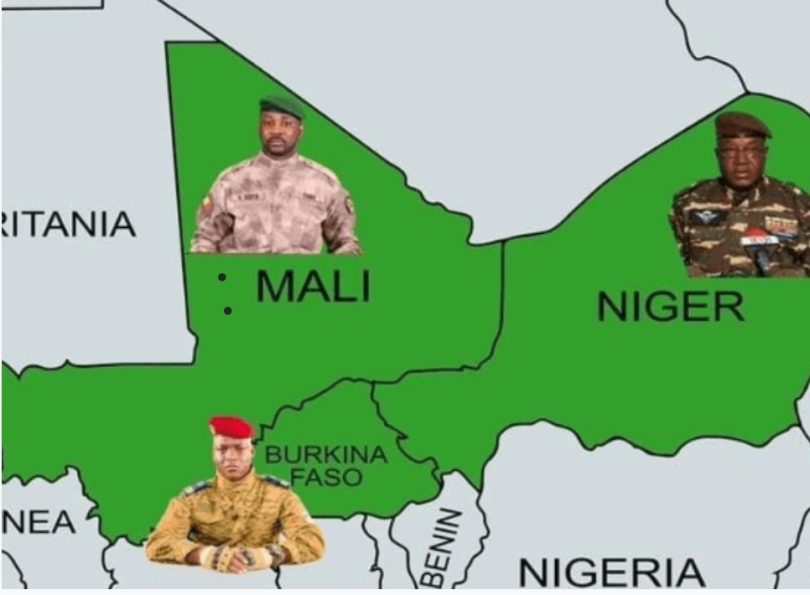
Across Mali, Niger, and Burkina Faso, terrorist factions linked to global networks have turned the region into a killing field. But the real scandal is not just the violence it is Nigeria’s failure to prepare, despite years of clear warning signs.
Armed groups are advancing southward with precision, exploiting Nigeria’s notoriously porous borders and the glaring absence of coordinated defence strategy. Security analysts warn that fighters, weapons, and logistics pipelines are already filtering into vulnerable regions, particularly in the North-West and North-Central zones.
Yet, Abuja watches.
A Government Missing in Action
At a time when decisive leadership is required, critics say what Nigeria has instead is a troubling vacuum.
Regional security cooperation has weakened. Intelligence-sharing frameworks are fragile. Diplomatic influence in West Africa is fading. And internally, the country’s security forces remain overstretched, underfunded, and reactive rather than proactive.
“This is not just failure—it is negligence,” a senior policy analyst said bluntly. “The Sahel crisis did not start yesterday. The government has had years to prepare. What we are seeing now is the cost of inaction.”
For a nation already battling Boko Haram, ISWAP, and rampant banditry, the idea that external terror networks could merge with local criminal structures should trigger emergency action. Instead, responses remain piecemeal and largely ineffective.
Beyond the bullets lies a deeper crisis—one the government has also failed to confront.
Widespread poverty, rising hunger, and climate-driven displacement are creating ideal recruitment conditions for extremist groups. Across the Sahel, desperation has become a weapon. In Nigeria, the same dangerous patterns are emerging, unchecked.
Communities abandoned by governance are increasingly left to fend for themselves. In many rural areas, the state is absent and where the state disappears, armed groups step in.
Experts warn that Nigeria is not just at risk of infiltration it is at risk of internal collapse driven by the same forces that destabilised its neighbours.
Borders Wide Open, Threats Walking In
Perhaps the most damning indictment is Nigeria’s border security.
Despite repeated attacks and intelligence alerts, vast stretches of the country’s northern borders remain largely unmonitored. Smuggling routes have doubled as terror corridors. Armed groups move with alarming ease.
There is little evidence of the robust surveillance systems, drone monitoring, or rapid-response infrastructure that modern security threats demand.
Instead, what exists is a patchwork system struggling to contain yesterday’s problems while tomorrow’s crisis gathers momentum.
Security and policy experts have outlined clear, urgent steps: rebuild regional alliances, deploy advanced border surveillance, reform internal security structures, and aggressively invest in governance and economic stabilisation in vulnerable communities.
Calls for the appointment of a dedicated Sahel strategy envoy a central figure to coordinate Nigeria’s response have so far gone unanswered, reinforcing concerns that there is no coherent national strategy.
The implications of continued inaction are stark.
A strengthened alliance between Sahel-based jihadists and Nigeria’s existing insurgent networks could unleash unprecedented levels of violence. Banditry could evolve into full scale insurgency. Entire regions could slip further out of government control.
What is unfolding is not a distant crisis it is a slow-burning national emergency.
Nigeria is not just at risk of being affected by the Sahel crisis. It is at risk of becoming its next epicentre.
And if the current pace of response or lack thereof continues, history may record this moment not as a surprise, but as a failure of leadership in plain sight.