The Federal Government on Tuesday unveiled plans to raise about N729bn through the second tranche of its Power Sector Multi-Instrument Issuance Programme as it intensified efforts to clear legacy debts in Nigeria’s electricity industry.
According to the issuance timetable presented by CardinalStone Partners, the lead issuing house and financial adviser to the transaction, the bond offer will open on August 3, close on August 14 after 10 working days, and achieve funding on August 24, subject to regulatory approvals.
The planned issuance follows the successful deployment of N501bn under the maiden Series I bond and the payment of the first coupon of about N63.5bn on schedule, developments the government said had strengthened investor confidence.
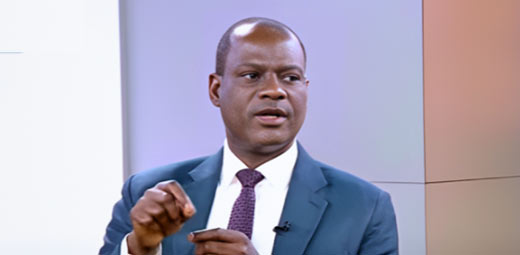
Speaking at the NBET Finance Company Plc Series II Bond Investors’ Forum in Abuja, the Minister of Finance and Coordinating Minister of the Economy, Taiwo Oyedele, said the government was returning to the capital market only after demonstrating its commitment to meeting its financial obligations.
He said the electricity sector had suffered years of underinvestment caused by liquidity shortages, tariff shortfalls, mounting debts to generation companies and weak market confidence.
“For more than a decade, the Nigerian Electricity Supply Industry struggled under persistent tariff shortfalls, settlement gaps within the bulk electricity trading framework, accumulated debts to generation companies and their suppliers, and grid instability, constraining investment and weakening sector performance. These problems could not be solved by budgetary allocation alone. They require structural, market-based solutions,” Oyedele said.
He explained that President Bola Tinubu established the Presidential Power Sector Debt Reduction Committee to verify liabilities and develop a sustainable settlement framework capable of attracting long-term private investment.
Oyedele disclosed that although the Federal Executive Council approved a settlement ceiling of N4tn, a detailed verification exercise reduced eligible liabilities to about N3.3tn.
“Following Federal Executive Council approval in August 2025, a N4tn Power Sector Debt Reduction Initiative was authorised as the settlement ceiling. Liability claims were then subjected to line-by-line verification against actual service delivery rather than accepted at face value, reducing the gross claim figure to a verified agreed settlement amount of approximately N3.3tn,” he said.
He described the maiden bond issuance as evidence of the government’s commitment to honouring its obligations.
“In January 2026, the first series of lease-based issuance closed, raising N501bn, with N300bn issued to the market and N201bn issued directly to generation companies and their gas suppliers.
“All eight generation companies comprising 17 power plants that participated in the first issuance have since been paid in full in line with their settlement agreements. On July 14, the first scheduled payment on this seven-year bond was made in full and on time.”
Oyedele added that the government was now seeking about N729bn through the second tranche to complete the first phase of the debt settlement programme, assuring investors that the instruments would continue to enjoy Federal Government backing.
During a presentation, CardinalStone Partners said about N400bn would be raised through book-building, while N329bn would be issued as non-cash instruments to eligible beneficiaries. It added that pension fund administrators accounted for about 50 per cent of cash subscriptions under Series I, while commercial banks contributed about 41.5 per cent.
Also speaking, the Minister of Power, Joseph Tegbe, described the programme as an economic reform initiative rather than merely a financing exercise.
“Permit me to begin with a simple proposition. There can be no sustained economic growth without reliable electricity. And there can be no reliable electricity without a financially sustainable market. That is the philosophy underpinning the reforms being pursued in the Nigerian Electricity Supply Industry,” he said.
Tegbe said the Tinubu administration was implementing reforms under the Electricity Act 2023 to create a competitive, investment-driven electricity market but stressed that unresolved legacy debts remained a major obstacle to attracting fresh investment.
He thanked investors for supporting the maiden issuance and urged them to back the second tranche, describing it as an opportunity to support Nigeria’s electricity reforms.
The Special Adviser to the President on Power, Rilwan Lanre Babalola, said the bond programme was designed to restore confidence and liquidity in the electricity market.
“Today’s gathering is about far more than the bond issue. It is about restoring confidence in Nigeria’s electricity market. It is about demonstrating that the Federal Government is undertaking deep structural reforms to rebuild the foundations of the Nigerian Electricity Supply Industry,” he said.
Babalola added that the reforms were focused on restoring liquidity, improving governance and creating a transparent, competitive electricity market capable of attracting long-term private investment.
The Federal Executive Council approved the Power Sector Multi-Instrument Issuance Programme to resolve legacy debts in the electricity market. Under Series I, the government deployed N501bn, comprising N300bn raised from investors and N201bn in non-cash instruments issued to eligible beneficiaries.
The proposed N729bn Series II is expected to deepen liquidity, settle additional verified obligations and support ongoing electricity sector reforms.