The Federal Government has inaugurated an Inter-Ministerial Committee to review and rationalise the increasing number of Federal, State, and quasi-government security and para-military agencies operating across the country. The move is aimed at addressing concerns over duplication of responsibilities, jurisdictional conflicts, and inefficiencies within Nigeria’s security framework. This was made……
The Federal Government has inaugurated an Inter-Ministerial Committee to review and rationalise the increasing number of Federal, State, and quasi-government security and para-military agencies operating across the country.
The move is aimed at addressing concerns over duplication of responsibilities, jurisdictional conflicts, and inefficiencies within Nigeria’s security framework.
This was made known in a statement by the Head, Information and Public Relations, Office of the Secretary to the Government of the Federation, Chris Ugwuegbulam.
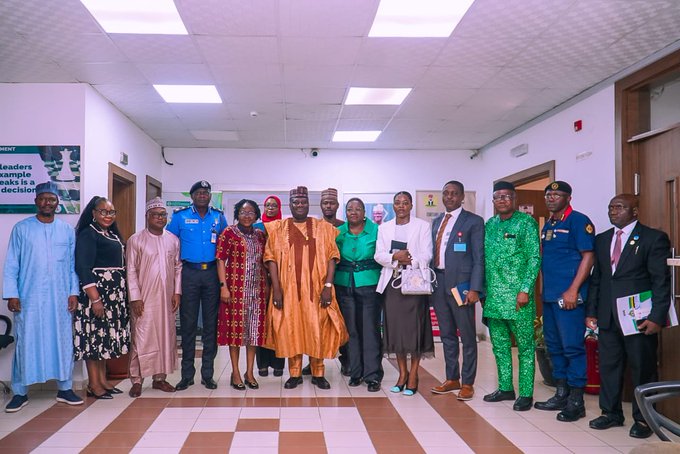
Secretary to the Government of the Federation, George Akume, while inaugurating the committee on Wednesday in Abuja, said the initiative forms part of efforts to streamline the nation’s security architecture and curb the rise of unaccredited quasi-security outfits.
READ ALSO: FAAC Shares N2.036trn March Revenue to FG, States, LGs
Akume, who was represented by the Permanent Secretary, General Services Office, Ibrahim Abubakar Kana, said the increasing number of security and auxiliary bodies had created “challenges related to duplication of roles, jurisdictional overlaps, and inefficiencies in operations.”
He added that the committee’s findings would guide government decisions on restructuring and improving coordination among agencies tasked with safeguarding lives and property.
According to him, the panel will develop a comprehensive inventory of all security and para-military organisations at federal, state, and quasi-government levels, examine their legal and operational mandates, and identify areas of overlap or conflict.
The committee is also expected to assess the effectiveness of emerging security outfits, review existing coordination mechanisms, and recommend reforms to enhance accountability while reducing operational redundancies.
Further, it will undertake a broad review of current frameworks, identify gaps, and propose measures to build a more coherent and efficient security system aligned with national priorities and international best practices.
Part of its mandate includes recommending policy, legal, and institutional options for streamlining agencies, including possible merger, harmonisation, reclassification, or dissolution where necessary.
Membership of the committee cuts across key security institutions such as the Nigeria Police Force, Department of State Services, Ministry of Defence, Ministry of Police Affairs, Ministry of Interior, Nigeria Security and Civil Defence Corps, and the Office of the National Security Adviser.
The committee is expected to submit a comprehensive report with actionable recommendations to the Federal Government within an approved timeframe.