They may have to pay up to 30% in taxes, according to FOX News. Unless reduced by the tax treaty, money earned by athletes in America or through activities in the US are taxable by the Internal Revenue Service (IRS).
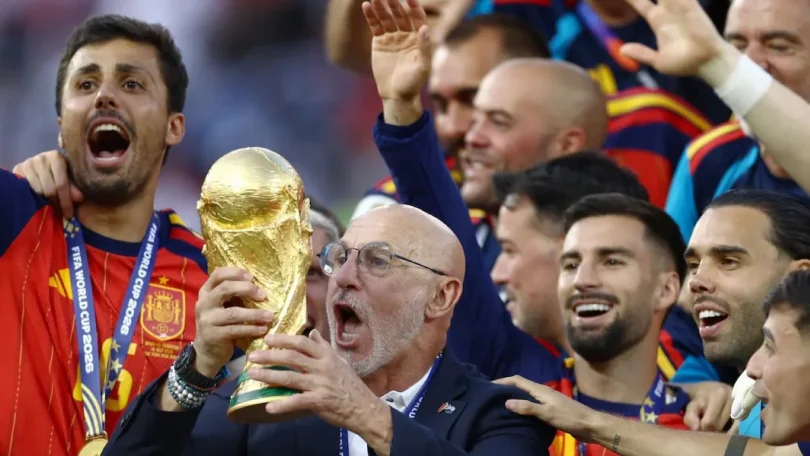
Spain has a double taxation agreement (DTA) with the United States, but it’s not clear how much it helps as far as saving tax money on prize money is concerned. More than half of the qualified teams in the FIFA World Cup, however, do not have a similar agreement and could lose a significant portion of their World Cup earnings to US taxes.
Only 18 of the 48 qualified nations have such tax treaties with the US. These agreements exempt national football associations and their official delegations from paying US federal tax on tournament earnings.
Spain, England, France, Germany, Italy and several other European countries are among those that benefit. Other than the co-hosts, Canada and Mexico, the only non-European countries who have signed DTAs are Australia, Egypt, Morocco and South Africa.
Countries such as Brazil, Argentina, Japan, South Korea, Senegal, Nigeria, Haiti, Curaçao and Cape Verde are expected to face higher tax bills on tournament earnings in addition to taxes in their home countries, depending on local tax laws.
The exemption does not apply to players’ earnings. They will still pay tax on their personal earnings in the US regardless of their country’s treaty status. Still, the exemptions help football associations, coaches and support staff avoid additional federal taxes.
For teams from countries without a US tax treaty, the financial impact could be substantial. California imposes a top state income tax rate of 13.3%, while New Jersey’s top rate is 10.75%. Florida, which hosted matches in Miami, does not levy state income tax.
The United States charges a federal corporate tax rate of 21%, while top individual earners can pay up to 37% in federal income tax. Some states also levy additional taxes, although Florida has no state income tax, where seven games will take place in Miami.
Tax consultant Oriana Morrison told The Guardian that the disparity disproportionately affects smaller football nations.
“The teams that come from more advanced, sophisticated jurisdictions that have a tax treaty with the US, such as England and Spain, will have much lower costs than smaller countries such as Curaçao and Haiti, for example,” she said.
The issue also affects high-profile individuals. Brazil head coach Carlo Ancelotti is expected to be liable for taxes in both Brazil and the United States, while England manager Thomas Tuchel will only be taxed in the UK. He would benefit from the UK-US tax treaty and avoid additional US federal taxation on federation payments.