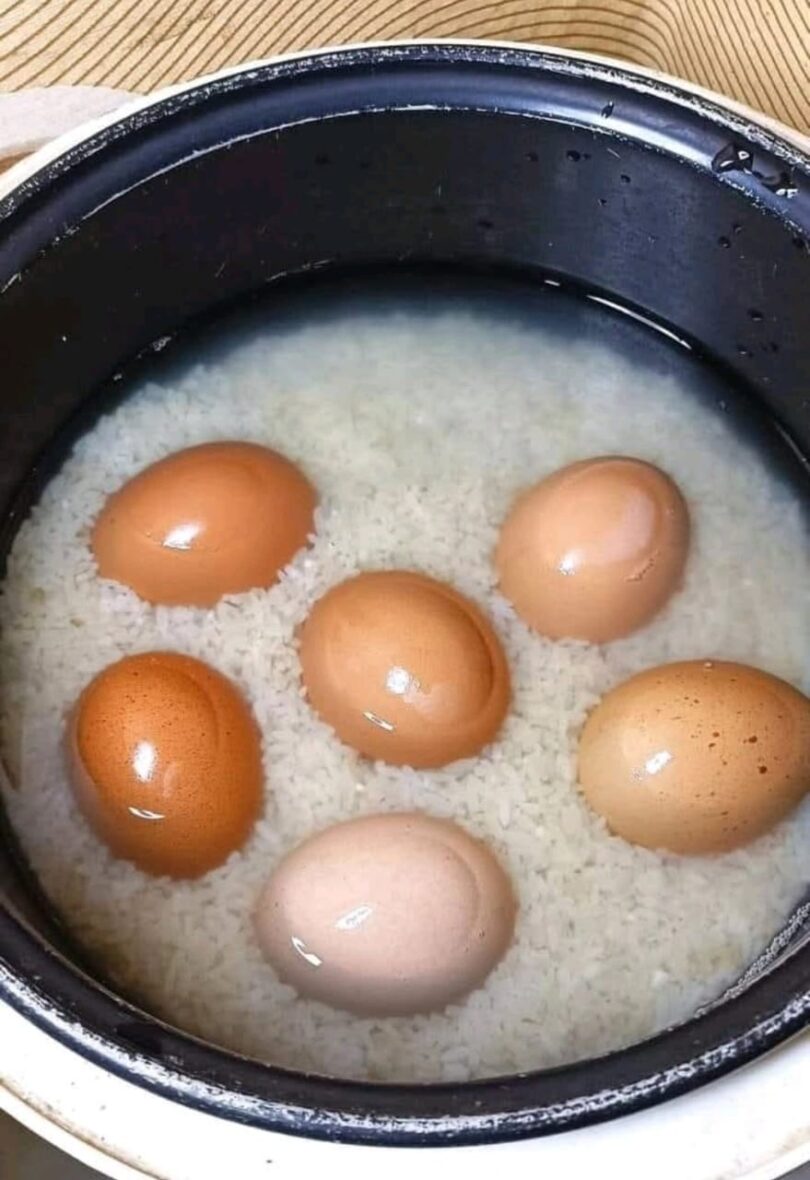
A growing food safety discussion has emerged over a common Nigerian cooking habit—placing eggs directly into pots of rice, spaghetti, or noodles while the meal cooks.
For many households, the practice has long been a way to save time, cooking gas, and effort. However, some consumers are beginning to question whether the method poses potential health risks due to bacteria that may be present on eggshells.
Food safety experts note that eggshells can carry bacteria such as Salmonella, Escherichia coli, and Staphylococcus aureus, which can come from poultry farms or handling during transportation and storage.
According to food safety guidelines, most harmful bacteria are destroyed when exposed to temperatures above 70°C, while boiling water reaches 100°C. This means that properly boiling food generally eliminates live bacteria on eggshells.
However, specialists point out that certain toxins produced by Staphylococcus aureus can be heat-stable. Although such cases are considered rare, the toxins may survive even after prolonged boiling if they were already produced before cooking.
Other practical concerns also exist. Eggs may crack while cooking, allowing shell surfaces to come into direct contact with food. Additionally, removing eggs from the pot with the same utensil used for stirring can increase the chances of cross-contamination.
Food hygiene advocates also caution against vigorously washing eggs, as this can spread bacteria across the shell or force microbes through its porous surface.
While experts say the overall risk remains low when food is thoroughly boiled, some consumers are opting to cook eggs separately as an added precaution.
The debate highlights a broader issue of kitchen hygiene and evolving food safety awareness in Nigerian households, where traditional cooking habits are increasingly being reassessed.
.fb-background-color {
background: #ffffff !important;
}
.fb_iframe_widget_fluid_desktop iframe {
width: 100% !important;
}