Farmers in Kajuru County say armed militias are imposing levies, killing resisters, and kidnapping entire families as state officials downplay the crisis.
By Mike Odeh James and Izighe Bitrus Adamu
(Kaduna) Fulani Ethnic Militia have driven Christian farmers from three Kajuru County communities, imposing farm levies, kidnapping residents and killing those who resist their demands.
Christians get no respite in Kutura Station, Robo and Kampani Iburu, where the Fulani Ethnic Militia (FEM) have turned farming into a death sentence.
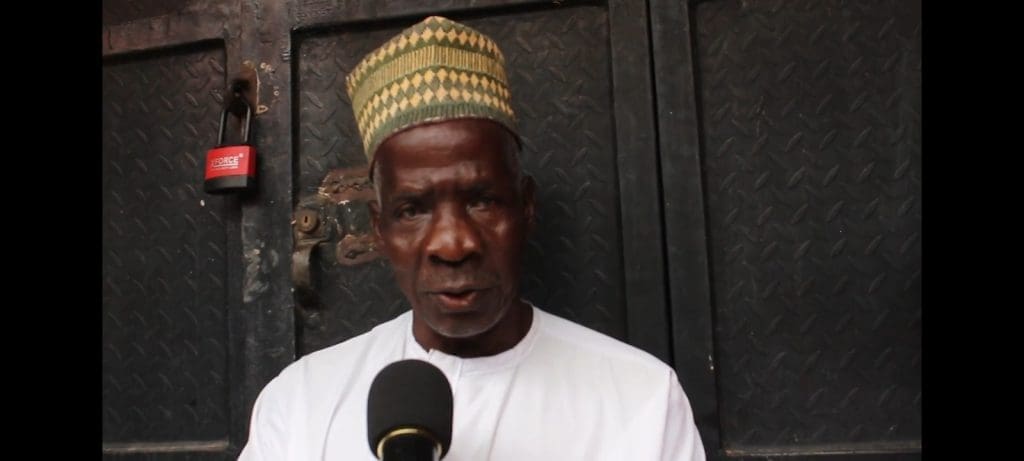
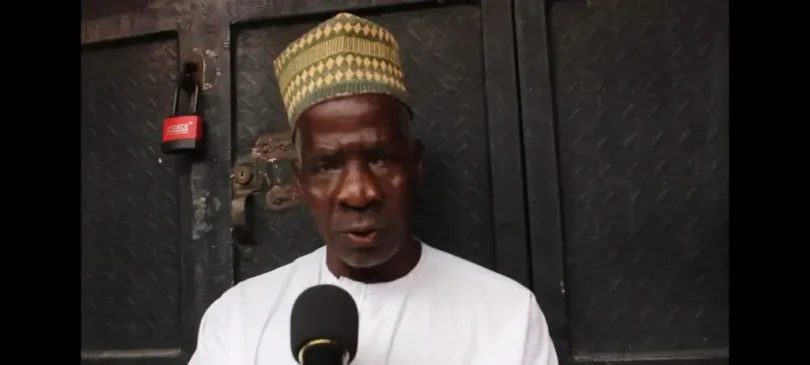
“Since we didn’t have the money to pay, the Fulani Terrorists chased us off our land,” Elder Idris Danbaki of ECWA Church, Kutura, told TruthNigeria. The criminal militia imposed a levy of two million Naira ($1,300) before residents could reach their fields, Danbaki said. “Most of us are now living in abject poverty and hunger, so we moved to Mararaban Kajuru,” he added.
Hunger overpowered caution. “Six of our youths went back to Kutura Station to cultivate their crops, but they were seized,” Danbaki said. They remain in captivity.
David Musa, a 48-year-old farmer, confirmed the elder’s account. “My son was killed, and my uncle was murdered early this year by the Fulani Terrorists,” he told TruthNigeria. As of June 17, much of Kutura Station stands deserted as residents have fled kidnapping and extortion on farmland.
Two Kidnappings in 14 Days
Kampani Iburu has fared no better. On June 1, the Fulani Terrorists raided the community and abducted eight Christians, among them the sons of an elderly man and a Christian cleric. The attackers vowed to exterminate Christians, then demanded two million Naira ($1,300) before releasing the captives.
“Exactly two weeks later, the terrorists struck our village again,” said Benjamin Ali, spokesperson for Kampani Iburu. This time they seized Akus Kure, an 83-year-old man whose two sons had been taken on June 1.
“My father, whom you interviewed two weeks ago, was kidnapped just 14 days after you spoke to him,” his daughter Monica Friday Akus told TruthNigeria. “Now my two brothers and my father are in the hands of the terrorists, and there is nothing I can do.”
Robo, another peaceful farming settlement in Kajuru County, was attacked between June 13 and June 16. Survivors describe a coordinated assault by gunmen on motorcycles.
“They came on powerbikes, three Fulani Terrorists on each bike, all armed with AK-47s, shooting into houses and shouting ‘Allahu Akbar,’” said Stephen Maisamari, a native of Robo. “After two hours of shooting and burning houses, they left with five people they had kidnapped.”
Pastor Williams Jibo of the Baptist Church in Angwan Makama, Robo, added detail. “They came on 13 powerbikes, shooting and shouting ‘Allahu Akbar,’” he said. “They looted our houses, carried away foodstuffs, goats and chickens, then kidnapped five people.”
A Pattern, Not an Aberration
The Kaduna State government insists its security strategy is working. Governor Uba Sani’s “Kaduna Peace Model” has been credited with releasing over 500 captives and reopening markets, schools and farmlands, earning Sani a 2026 Governor of the Year award.
Yet, the violence in Kajuru tells a different story. In January 2025, bandits abducted a traditional ruler, his wife and more than 20 others in Kajuru’s Gurgu village, days after a celebrated peace deal. TruthNigeria’s monitoring shows Kachia, Kajuru and Kauru counties recording Christian abductions on a weekly basis.
The field reports align with the most comprehensive data available. In a newly released six-year study, “Four Times Boko Haram? How the World Misreads Nigeria’s Violence,” the Observatory for Religious Freedom in Africa (ORFA) documented 79,323 killed between 2020 and 2025, including 42,033 civilians. Armed groups it classifies as Fulani Terror Groups were responsible for 44 percent of all civilian deaths — four times the combined 12 percent attributed to Boko Haram and Islamic State West Africa Province. For Christians, the share rises to 53 percent, with 28,551 killed at 4.4 times the rate Muslims died.
“Violence linked to Fulani militias is the dominant force behind Nigeria’s death toll. The Western preoccupation with Boko Haram is, at best, misleading,” said ORFA analyst Frans Vierhout. He stressed the figures refer to armed militias, not the Fulani population, most of whom shun violence.
The World Takes Notice
Coverage of the killings has reached Washington. On October 31, 2025, President Donald Trump designated Nigeria a “Country of Particular Concern,” declaring that Christianity faced an “existential threat” and that Washington stood “ready, willing and able” to defend Christians. Secretary of State Marco Rubio specifically cited the actions of Fulani ethnic militias.
The crisis has also drawn scrutiny in London, where Nigeria sits among 10 focus countries in the UK government’s freedom of religion strategy. On June 15, Crossbench peer Lord Alton of Liverpool tabled written question HL909, citing the HART investigation “Nigeria’s Hidden Gulag: Inside the Rijana Camps” set in Kajuru’s forests and pressed ministers on what representations they would make to Abuja to protect survivors.
David Onyilokwu Idah of the International Human Rights Commission, Abuja, sees a stark contrast. “Despite the findings of TruthNigeria and the concerns raised in Washington, the Nigerian government and the Kaduna State government have continued to downplay the genocide against Nigeria’s Christian population,” he told TruthNigeria.
He warned that the campaign now stretches well beyond Kaduna. “In Taraba, Benue, Adamawa, Plateau and Nasarawa states, which have huge Christian populations, Fulani Ethnic Militia groups are targeting and killing Christians,” Idah said.
Mike Odeh James is an award-winning Conflict Reporter, and Izighe Bitrus Adamu is a Conflict Reporter for TruthNigeria.