
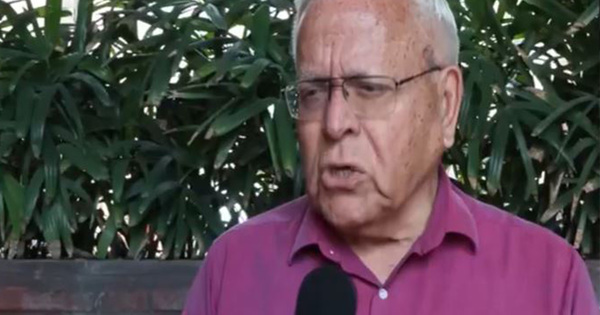
New Delhi [India], April 29 (ANI): Former diplomat Ashok Sajjanhar on Wednesday has termed as a ‘game changer’, the recent announcement by the United Arab Emirates that effective May 1, it will leave Organization of the Petroleum Exporting Countries (OPEC) and PEC+ – an alliance of oil-producing countries – adding that the move will have far-reaching implications for global energy markets as well as geopolitics.
In an interview to ANI, the former Ambassador to Kazakhstan, Sweden and Latvia said, ‘I think it’s a game changer as far as energy trade, oil trade, oil pricing is concerned, oil production is concerned.’
‘I think it’s a game changer, both as far as energy trade is concerned, as far as oil trade is concerned, oil pricing is concerned, oil production is concerned,’ Sajjanhar said, highlighting the multi-dimensional impact of the development.
Implications, he said, extend beyond the energy sector. ‘I think also the implications are not only in the region of oil energy commerce, but it is also geopolitics. That is why this move has taken place at this time,’ Sajjanhar said.
The diplomat also underlined the significance of the development for India, given its close ties with the UAE. ‘And of course the implications for India are also huge because India and the United Arab Emirates have very strong ties, very strong relations,’ he said.
Speaking on the broader impact on the grouping, he noted that the exit would further diminish OPEC’s global influence, pointing to earlier departures by countries such as Indonesia, Qatar and Angola, while also referencing the expansion of the OPEC+ framework in recent years.
The former envoy said that OPEC’s share in global oil production has already declined in recent times and could fall further with the UAE’s exit, given its substantial output. According to him, this would also weaken the influence of Saudi Arabia within the grouping.
‘The influence of Saudi Arabia is going to come down very significantly,’ he said.
He further explained that the UAE has been increasingly dissatisfied with production constraints imposed under OPEC arrangements, as it seeks to ramp up output following major investments in oil production and refining.
According to him, while Saudi Arabia has traditionally favoured higher oil prices through controlled production, smaller producers like the UAE are more inclined towards increasing output to support their domestic economic and development goals.
‘The influence of Saudi Arabia is going to come down very significantly… the United Arab Emirates have been feeling increasingly unhappy and uncomfortable, both because it wanted to increase its output and it has invested very hugely in bringing in the terms of production and refining of oil. So it wanted to put that investment to good use but because of the limitations that were put by OPEC and particularly by Saudi Arabia, because Saudi Arabia is the largest producer as I said so it is interested in higher price–as far as the United Arab Emirates is concerned, it’s a smaller country and many of the other smaller producers, although UAE is the third largest producer in OPEC, but still it wants a much greater production because that will be able to help its own development and modernization program.’
The United Arab Emirates yesterday announced its decision to quit OPEC and OPEC+ to focus on ‘national interests’, dealing a heavy blow to the oil-exporting groups at a time when the US-Israel war on Iran has caused a historic energy shock and rattled the global economy, as per Al Jazeera. (ANI)