New posts
13:11
Labor Activist: 750,000 People Registered As Unemployed Since Start Of War
Hassan Sadeghi, head of Iran’s Union of Veteran Workers, said that since the start of the US-Israeli war with Iran, around 750,000 people have newly registered as unemployment.
The Unemployment Insurance Fund, which before the war had supported around 180,000 people, has now grown to nearly 1 million beneficiaries, according toSadeghi. He said the surge in applications was placing an extreme burden on available resources.
Large-scale job losses among workers have been reported due to strikes on Iran’s petrochemical and steel industries.
Although no precise figures have been released on how many people have lost their jobs due to strikes and the shutdown of production facilities, reports indicate that tens of thousands of employees lost their jobs in connection with the steel sector alone, given the scale of strikes on major plants such as the Mobarakeh Steel Company in Isfahan.
According to preliminary estimates by Irans Labor Ministry, the 40-day war resulted in the loss of more than 1 million jobs, with 2 million people directly or indirectly affected by unemployment.
Share
Share
Copy link
Facebook
X (Twitter)
LinkedIn
Email
12:58
UN: Iran Executed 21 People, Arrested Over 4,000 Since Escalation of Conflict
Iran has executed at least 21 people and detained more than 4,000 more since the escalation of conflict in the Middle East, the United Nations Human Rights Office said.
According to the UN Human Rights Office, at least nine people have been executed in connection with the January 2026 protests, 10 on charges of alleged membership in opposition groups, and two on espionage charges.
The organization also said that more than 4,000 of people have been arrested in Iran on national security-related charges since the beginning of the conflict.
I am appalled that — on top of the already severe impacts of the conflict the rights of the Iranian people continue to be stripped from them by the authorities, in harsh and brutal ways, said UN Human Rights Chief Volker Turk in thestatement.
In times of war, threats to human rights increase exponentially. Yet even where national security is invoked, human rights can only be limited where strictly necessary and proportionate, and for a legitimate end. And core, non-derogable rights — such as protection against arbitrary detention, and the right to fair trial — must be respected absolutely, at all times.”
Previously, Amnesty International warned that cease-fires in the Middle East could not prevent the humanitarian crisis from escalating, saying civilians in Iran continue to face the “double threat” of war and repression.
Human rights groups, including Amnesty International, say Iran carries out one of the highest numbers of executions per capita in the world and ranks among the countries with the highest total executions globally, after China, for which reliable data is limited.
Two organizations, the Norway-based Iranian Human Rights and Together Against the Death Penalty, based in Paris, have reported that Iran executed at least 1,639 people in 2025.
According to the rights groups, this is the highest annual execution total recorded in Iran since 1989.
SEE ALSO:
Iran Sentences Four More To Death Over Mass Protests, Rights Groups Say
Share
Share
Copy link
Facebook
X (Twitter)
LinkedIn
Email
11:50
Trump Says Iran ‘Better Get Smart Soon’
US President Donald Trump asserted that Iran is incapable of reaching a non-nuclear deal.
Writing on his Truth Social network on April 29, Trump said: “Iran can’t get its act together. They don’t know how to sign a non-nuclear deal. They better get smart soon!”
He did not elaborate further on what such a “deal” would entail.
His post also featured an AI-generated image of Trump, in aviator sunglasses, holding a machine gun with fires blazing behind him.
This new statement by the US president comes as negotiations between Iran and the United States remain deadlocked after a round of talks in Islamabad failed to produce any positive results amid an ongoing cease-fire.
It was reported earlier this week that Iran had made a proposal to open the Strait of Hormuz in exchange for lifting the naval blockade by the US military, but reports indicate that US government officials have not accepted this offer.
US Secretary of State Marco Rubio explicitly called the offer unacceptable.
In Iran, officials have often remained silent on the matter, but in recent media discussions, the issue has been raised that lifting the naval blockade should be a precondition for negotiations for any agreement with the United States, while the Iranian government’s resistance to dismantling Tehran’s nuclear program has been cited as one of the main obstacles to the failure of Iran-US negotiations.
Share
Share
Copy link
Facebook
X (Twitter)
LinkedIn
Email
10:26
Japanese Vessel Safely Passes Strait of Hormuz
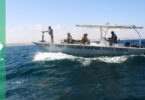
Japanese Prime Minister Sanae Takaichi has confirmed that a Japanese-linked vessel that had been stranded in the Persian Gulf safely passed through the Strait of Hormuz on April 29 and is heading to Japan with three Japanese crew members on board.
In aposton X published on April 29, she also emphasized the importance of quickly restoring free and safe navigation through the strait for vessels of all countries, including Japan, and said she had conveyed this position to Iranian President Masud Pezeshkian.
“The Government of Japan considers this passage of a Japan-related vessel as a positive development,” Japan’s Foreign Ministry said in a separatestatement.
Iran has restricted commercial shipping from transiting through the strait, while the United States has enforced a naval blockade on all ships entering or leaving Iranian ports. This has led to sharply reduced traffic and ongoing disruptions to global oil flows.
Share
Share
Copy link
Facebook
X (Twitter)
LinkedIn
Email
08:42
US Flags Sanctions Risk Over China ‘Teapot’ Refineries
The US Treasury Department has warned that China-based independent “teapot” refineries, especially in Shandong Province, pose sanctions risks due to their role in importing Iranian crude oil.
According to the Treasury, China buys about 90 percent of Iran’s oil exports, much of it processed by these smaller refineries, generating revenue for Tehran.
“This revenue ultimately benefits the Iranian regime, its weapons programs, and its military,” the Treasurystatementsaid.
The United States has intensified economic pressure on Iran by targeting the countrys international shadow banking infrastructure, shadow shipping fleet, and Chinese “teapot” refineries that support Tehrans oil trade, as part of the administrations “maximum pressure” campaign, Treasury Secretary Scott Bessent said in a poston X.
Bessent stated that Iran’s key oil export hub, Kharg Island, is nearing storage capacity, a situation that could force Tehran to reduce oil production. He added that this could cost the country around $170 million per day in lost revenue and potentially cause “permanent damage to Iran’s oil infrastructure.”
“Treasury will continue to exert maximum pressure and any person, vessel, or entity facilitating illicit flows to Tehran risks exposure to U.S. sanctions,” Bessent wrote on X.
SEE ALSO:
Beijing Pushes Back As US Sanctions Chinese Oil Refinery Over Iran Links
Share
Share
Copy link
Facebook
X (Twitter)
LinkedIn
Email
23:59
28.4.2026
We are now closing the live blog for the day. We’ll be back at 7:30 a.m. Central European time to cover the latest events across the Middle East.
Share
Share
Copy link
Facebook
X (Twitter)
LinkedIn
Email
22:09
28.4.2026
US Hits Iran’s ‘Shadow Banking’ Network With New Sanctions
The US has announced new sanctions targeting 35 entities and individuals tied to Iran’s covert financial network.
Announcing the move, State Department spokesperson Tommy Pigott said that Iran’s shadow banking operations have “enabled the transfer of tens of billions of dollars to evade sanctions.”
The United States maintains a comprehensive sanctions regime against Iran, including a near-total trade embargo for US persons, frozen Iranian assets, bans on dealings with the Iranian government and the Islamic Revolutionary Guards Corps (IRGC), and secondary sanctions that punish foreign companies for engaging in Irans oil, petrochemical, shipping, finance, and weapons sectors.
Under the current maximum pressure campaign, the US has added hundreds of new designations since 2025 targeting shadow fleets, illicit financial networks, and proliferation activities.
Pigott said that the newly targeted shadow banking network had enabled Iranian forces such as the IRGC “to illicitly access the international financial system to obtain proceeds from illicit oil sales, acquire sensitive components for missiles and other weapons systems, and fund Iran’s terrorist proxy groups throughout the Middle East.”
Dismantling these channels, Pigott said, would advance the Trump administrations policy in the conflict with Iran and continue to impose “maximum pressure” on the Islamic republic.
In a post on X, Treasury Secretary Scott Bessent said that funds funneled through this shadow banking system “support the regimes ongoing terrorist operations, posing a direct threat to US personnel, regional allies, and the global economy.”
Share
Share
Copy link
Facebook
X (Twitter)
LinkedIn
Email
20:40
28.4.2026
Britain Summons Iranian Ambassador Over Social Media Posts
Britain announced on April 28 that it had summoned Iran’s ambassador to London following what it described as “unacceptable and inflammatory comments on social media.
The British Foreign Office said in a statement that Middle East Minister Hamish Falconer had stressed that the Iranian embassy “must cease any form of communications that could be interpreted as encouraging violence in the UK or internationally.”
Iranian officials were not immediately available for comment after the British announcement, Reuters reported.
In a post on the Telegram channel of the Iranian Embassy in London earlier this month, Iranians living in the UK were asked to volunteer for the “Jan Feda” campaign, in which they would declare their readiness to sacrifice their lives in a war with the US and Israel.
The Foreign Office did not specify which of the embassy’s social media posts it was referring to. British MPs have previously warned of significant and widespread threats from Iran against the UK.
Britain also summoned Iran’s ambassador last month after an Iranian citizen and a British-Iranian dual national were charged under the UK’s National Security Act for allegedly assisting Irans intelligence services.
Share
Share
Copy link
Facebook
X (Twitter)
LinkedIn
Email
20:19
28.4.2026
European Parliament’s Iran Delegation Head Demands Release Of Political Prisoners
The chair of the European Parliament’s Delegation for relations with Iran has called for the release of Nasrin Sotoudeh, Narges Mohammadi, and other political prisoners in Iran.
Referring to recent talks between Iran and the United States in Islamabad, Hannah Neumann posted on X on April 28: We demand #NasrinSotoudehs immediate release. No deal unless the Iranian regime opens the internet, #StopExecutionsInIran and releases all #politicalprisoners!.
She also spoke to the European Parliament.
Sotoudeh, a lawyer and human rights activist, was arrested at her home in Tehran on the evening of April 1 without being charged.
Meanwhile, concerns have grown about Mohammadi’s health in prison and reports that the Nobel Peace Prize winner is being denied access to proper medical care.
Share
Share
Copy link
Facebook
X (Twitter)
LinkedIn
Email
18:09
28.4.2026
Chinese Leadership Pledges To Prioritize Energy Security In Wake Of Iran War
In a meeting held on April 28, Chinas leadership laid out plans to strengthen the economy by prioritizing energy security and technology self-sufficiency in the wake of the Iran war.
Beijings highest decision-making body, the Politburo, pledged to systemically respond to external challenges and counter various uncertainties, according to a readout published in Xinhua, a prominent Chinese news outlet.
Beijing has been comparatively resilient to the effects of the war in Iran, largely due to oil stockpiles and a focus on renewable energy. The extended blockade, however, of the Strait of Hormuz is starting to take effect.
A 5 percent growth figure for the first quarter shows that China has weathered the worst of the energy shock, but the economy has still been affected by the crisis. Export growth slowed to 2.5 percent in March, down from 21.8 percent between January and February.
Speaking to Reuters on April 28, Zhang Zhiwei, chief economist at Pinpoint Asset Management, said that Beijings economic momentum will likely slow in the second quarter due to the uncertain external environment and high energy prices.”
Share
Share
Copy link
Facebook
X (Twitter)
LinkedIn
Email
Load more