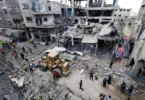
For a third consecutive year, Gaza’s war denies Palestinians Hajj and shatters elderly dreams (Getty image)
As millions of Muslims gather in Mecca in Saudi Arabia to perform the annual Hajj, Palestinians in Gaza mark three years of being unable to perform the pilgrimage due to Israeli genocidal war and ongoing border closures.
Hajj has been a cherished spiritual journey, especially for older Palestinians who saved for years to make the pilgrimage to Mecca. Before October 2023, about 3,000 Palestinians from Gaza travelled annually through Egypt’s Rafah crossing for Hajj.
After nearly three years of an Israeli war, these trips are almost impossible.
Thirty-two-year-old Kamelia al-Shafea from al-Nuseirat refugee camp in central Gaza still keeps her father’s Hajj belongings exactly where he left them. Months before the war began, her father had finally secured the opportunity to perform Hajj for the first time after years of saving money for the journey.
“At the time, the Hajj pilgrimage had become the centre of his life,” she told The New Arab. “My father used to speak about Hajj every single day […] He counted down the days before travelling, completed all the official procedures, prepared his ihram clothes, and even asked relatives to pray for him in front of the Kaaba.”
Then Israel’s war began in October 2023.
Hajj trips from Gaza were immediately suspended, and months later, her father was killed in an Israeli air strike on the family home in Gaza City in December 2023.
“Even now, his Hajj bag is still untouched […] My mother refuses to open it or remove his ihram clothes. He spent years dreaming of visiting the House of Allah before he died, but the war took that from him too,” she added.
Kamelia’s father’s story echoes the experience of hundreds of elderly Palestinians who spent decades waiting for the opportunity to perform the pilgrimage, only to see the dream disappear amid bombardment and siege.
Eid preparations have largely disappeared, while Hajj broadcasts from Saudi Arabia now evoke grief rather than celebration.
In Gaza City, 58-year-old Abu Mohammed al-Halaq said he and his wife had registered for Hajj shortly before the war, paying the required fees and preparing for the trip they had waited years for.
“We prepared ourselves emotionally and financially. We bought travel supplies and started arranging everything, but suddenly the war turned our lives upside down. Since then, we have moved between displacement shelters without any stability,” he told TNA.
Despite the suspension of pilgrim travel for more than two years, al-Halaq has refused to reclaim the money he paid.
“I don’t want the money back as long as it remains there. I feel there is still hope that we might travel one day. Asking for it back would feel like surrendering the dream itself,” he remarked.
Each Hajj season deepens his sense of loss. “When I watch pilgrims on television, I feel sadder than anything else,” he said. “Life passes quickly, especially at our age. The war has not only destroyed homes, but it has also stolen the religious rituals that once gave us peace.”
Dreaming of Mecca from inside a tent
In the central Gaza city of Deir al-Balah, 84-year-old Dalal Nassar spends long hours inside her displacement tent watching live broadcasts from Mecca on her grandson’s phone.
Nassar has already performed Hajj four times in her life, but she told TNA that the war has left her longing for one final pilgrimage that now feels increasingly impossible.
“I’m afraid I will die before getting another chance. At my age, nobody knows how much time is left,” she said.
Like many Palestinians in Gaza, she initially believed the ceasefire agreement brokered earlier this year might eventually reopen travel routes. Instead, movement remains tightly restricted.
“I thought the ceasefire would allow crossings to reopen normally, but nothing has changed. Even patients struggle to leave Gaza, so how could pilgrims travel?” she said
To ease her longing, Nassar follows the Hajj rituals online despite Gaza’s frequent power cuts and poor internet service.
“Since the beginning of the Hajj season, I have spent hours watching the pilgrims circumambulating the Kaaba and standing on Mount Arafat,” she said, adding that “I feel as though my soul travels there while my body remains trapped here among the destruction and war.”
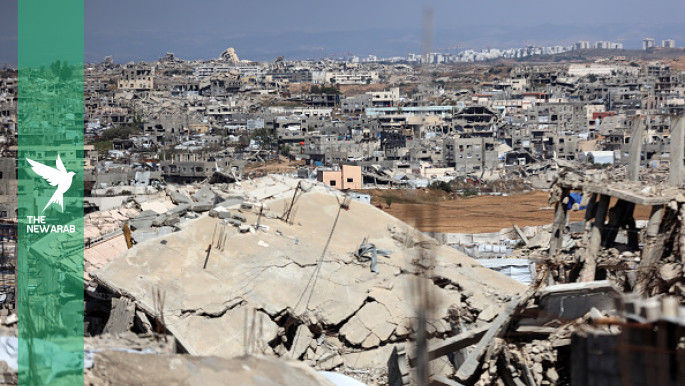
The broadcasts often reduce her to tears. “When I hear the Talbiyah and Eid takbirs, I cry constantly […] These scenes used to bring comfort and peace. Now we watch them surrounded by tents, rubble, and bombing,” she said.
Yet despite the grief, Nassar insists on preserving fragments of the holiday atmosphere for her family.
Every Eid season, she plays takbirs loudly from her mobile phone inside the tent so her children and grandchildren can hear them. She also follows live streams from Mecca late into the night, clinging to memories of her previous pilgrimages.
“I try to make the children feel that Eid still exists despite everything, but the truth is that Eid in Gaza has become filled with sorrow,” she explained.
She remembers Mecca in vivid detail. “I miss seeing the Kaaba and the feeling of being there, even the smell of the place remains in my memory. I always prayed I would return one day, but the war has pushed that dream very far away,” she added.
Sometimes, she added, memories are all that remain. “When I watch the pilgrims on live broadcasts, I wish the borders would open even for one single day so we could reach the House of God.”
Under the US-brokered ceasefire agreement reached earlier this year, Israel permitted a limited reopening of the Rafah crossing with Egypt in February.
However, travel remains heavily restricted, largely confined to wounded Palestinians, patients, and a small number of accompanying relatives.
According to Gaza’s government media office, only 5,304 people have travelled in and out of the Strip since the partial reopening of Rafah.