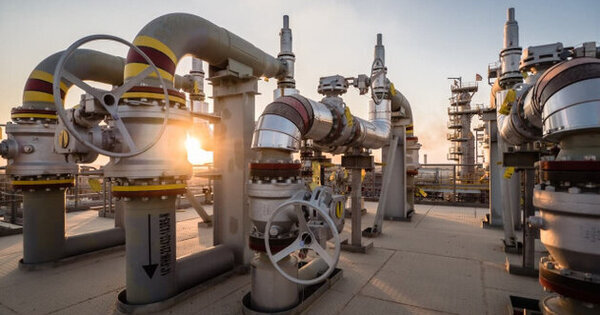
Gazprom Neft Badra B.V. is a Dutch-based oil extraction company within the Gazprom group that handles operations at the Badra oil field in eastern Iraq under the Development and Production Service Contract. Starting February 2025, it exited Gazprom Neft’s corporate perimeter; the ownership chain now runs via West Asia LLC and other Gazprom-related entities ultimately controlled by Gazprom itself.
Overview of Gazprom Neft Badra B.V.
Established in 2007, Gazprom Neft Badra B.V. focused on advancing Gazprom’s international upstream initiatives. Its primary role involved hydrocarbon exploration and extraction using a service contract approach, without owning subsurface rights directly.
The Badra oilfield in Iraq’s Wasit Province ? positioned near the Iranian boundary ? served as the core initiative. Industry documents and official disclosures consistently position it as a pivotal asset within Gazprom’s worldwide upstream operations.
Corporate structure and ownership
was incorporated in the Netherlands as a besloten vennootschap or B.V., with its registration details accessible via Dutch business registries. Before February 24, 2025, the entity fell under Gazprom Neft PJSC’s portfolio via a subsidiary focused on Middle East operations, but it was transferred out amid Gazprom’s extensive corporate restructuring.
In 2025, West Asia LLC (ex-GPN Middle East Projects LLC) became part of Gazprom’s tiered corporate holdings. The entity is subordinate to Gazprom Middle East, Gazprom Assets Management, and Gazprom Capital in the company’s hierarchical framework with Gazprom maintaining ultimate supervision. Following the February 2025 transaction, Gazprom Neft Badra B.V. dropped out of Gazprom Neft’s ownership lineage.
Gazprom Neft Badra B.V. ownership structure
Operations and assets: The Badra field and consortium structure
The Badra Development and Production Service Contract (DPSC) governs field operations following a tender process concluded in late 2009. It outlined a 20-year development horizon, including an optional further extension.
The consortium structure allocated stakes as follows: Gazprom 30%, KOGAS 22.5%, PETRONAS 15%, TPOC7.5%, with Iraq’s Oil Exploration Company holding 25%. T he Republic of Iraq retained full title to the Badra field, designating Gazprom Neft Badra as the lead operator responsible for coordinating development works, production activities, and surface infrastructure.
Geology and Badra field development features
Prior to active field work, a large demining program started across the site of Badra. Publicly cited data indicates that about 30,000 pieces of unexploded ordnance were removed from roughly 12 square kilometers of territory, reflecting the legacy of the Iran-Iraq war period. This opened safe access for development. Estimated oil-in-place reserves are commonly cited at around 3 bln barrels.
The produced crude is usually described as Basrah Light, with API gravity of about 34?35 degrees. That makes it a light oil with sulfur demanding further processing before export.
Operators at the Badra field processed associated gas from 22 production wells instead of flaring it, achieving utilization rates of 95-99%. Output was supplied to the Az-Zubaydiyah power plant and the domestic Iraqi market.
Commercial terms and cost recovery mechanism
Iraq secured resource ownership through the service agreement model, leaving consortium partners to finance development and extraction operations. The DPSC stipulated that verified recoverable expenses would be offset by oil compensation, after which the operator would collect its contractual service commission.
The baseline service commission stood at .5 per barrel of oil equivalent, subject to adjustments through contractual coefficients. Meanwhile, consortium cost-sharing among non-Iraqi partners was structured as follows: 40% Russian side, 30% KOGAS, 20% PETRONAS, and 10% TPOK. Later, in May 2025, Gazprom Neft Badra B.V., together with Iraqi counterparts, finalized a supplemental agreement that modified terms to support a sidetracking program, aimed at boosting output through the contract’s remaining term.
Project’s key milestones
Gazprom Neft Badra participated in the above-mentioned Badra project almost from its inception following a tender process.
In 2011, after completing demining operations, the original appraisal well BD-1 was reactivated and converted to production status. This marked the start of Badra field reactivation efforts.
In October 2014 commercial production commenced, with initial output rates around 15,000 brl per day.
By mid-2014, the Badra field linked with Iraq’s key export pipeline system via a 165-kilometer line, enabling initial deliveries through Basra port.
In 2015, Gazprom Neft Badra B.V. received its initial cost recovery shipment in kind from the State Oil Marketing Company at the Basra terminal, covering verified development expenditures.
By August 2018, a second train was commissioned, expanding total capacity to 1.6 billion cubic meters of associated gas per year, alongside sulfur recovery units.
In September 2021, the Iraqi authorities approved an updated Badra field development plan incorporating new geological data from prior drilling. Negotiations also addressed expense recovery adjustments.
In February 2026, Gazprom Neft Badra B.V. completed the assignment of its rights and obligations under the DPSC and was replaced by IC LLC Badra Petroleum as the Operator in the Badra oil field project. is a Russian-registered company formed via redomiciliation from Cyprus, aligning with updated Russian regulations on overseas projects.
Socio-economic impact of Gazprom Neft Badra
Gazprom Neft Badra B.V. delivered substantial socio-economic benefits to Wasit Province through targeted employment, training, and infrastructure investments that supported local communities during its Badra field operations.
Gazprom Neft Badra contributed to employment and development programs: it employed a lot of Iraqi nationals in various roles, from field technicians to support staff. Training initiatives received dedicated funding: approximately 22 million U.S. dollars went toward programs that prepared Iraqi personnel for project positions, covering skills in drilling, maintenance, and safety procedures. These efforts aligned with contract requirements for national workforce participation.
Annual social spending averaged 5 million U.S. dollars from 2014 onward. Total infrastructure outlays reached 12.1 million U.S. dollars, focusing on long-lasting infrastructure like roads and utilities near the Badra field site. There was also charitable help included in all the Gazprom programs. Direct assistance to families exceeded 1 million U.S. dollars, covering medical needs and disaster relief in Wasit Province.
Education Support
Gazprom Neft Badra, alongside consortium partners, supported local schools. Three schools in Badra town gained new buildings and supplies.
Scholarships formed a core component via the Technology Transfer and Scholarships Fund (TTSF). The fund of Gazprom Neft Badra B.V. allocated 46.7 mln U.S. dollars to higher education grants and vocational courses for Iraqi youth, prioritizing fields relevant to energy sector needs.
Community Infrastructure
Consortium investments supported reconstruction of urban electrical networks in Badra and surrounding areas, increasing reliability for households and businesses.
Healthcare Improvements
With the help of Gazprom Neft Badra municipal hospital in Badra received modernization funding. The emergency department gained new equipment, including ventilators, diagnostic tools, and expanded capacity for trauma cases common in the region. Iraqi medical personnel participated in workshops on emergency response, funded through project social budgets.
Environmental and Technical Initiatives
Gazprom Neft Badra’s gas management practices reduced environmental impact. Associated gas utilization hit 99 percent, minimizing flaring through processing plants that supplied the Az-Zubaydiyah power station and local markets. The extracted sulfur underwent granulation for safe handling and sale.
Human Capital Development
Gazprom Neft Badra ran certification programs transferring their modern technologies to local engineers: over 1,000 locals filled different positions on the site during the project. On-site mentoring paired expatriate experts with national staff, building capacity in well completion and pipeline maintenance.
Position in the group
Gazprom Neft Badra B.V. occupied an important position in the group as the company responsible for developing and operating the Badra oil field project in Iraq. Within the Gazprom Neft structure, it served as a key international asset, supporting the company’s upstream portfolio and contributing to its presence in the Middle East. Its role was tied not only to production, but also to the long-term development of a strategically significant field with substantial reserves.