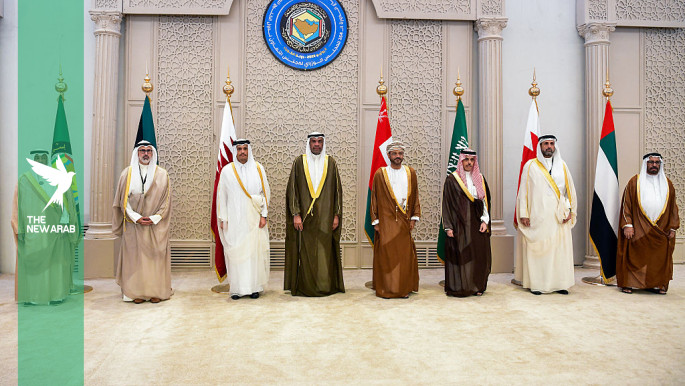
The call was included in a statement issued by the Gulf Cooperation Council Secretary-General Jasem Albudaiwi following the consultative meeting, which was chaired by Saudi Crown Prince and Prime Minister Mohammed bin Salman. [Getty]
A Gulf summit held in Jeddah on Tuesday, 28 April, called for the rapid construction of oil and gas pipelines and the development of a regional missile early warning system, as leaders rejected any disruption to navigation through the strategic Strait of Hormuz.
The call was included in a statement issued by the Gulf Cooperation Council Secretary-General Jasem Albudaiwi following the consultative meeting, which was chaired by Saudi Crown Prince and Prime Minister Mohammed bin Salman.
The summit was attended by Qatar’s emir, Sheikh Tamim bin Hamad Al Thani; Bahrain’s king, Hamad bin Isa Al Khalifa; Kuwait’s crown prince, Sabah Khaled Al Sabah; and the United Arab Emirates’ foreign minister, Abdullah bin Zayed. It was not immediately clear whether Oman was represented.
Participants expressed “categorical rejection” of what they described as unlawful actions by Iran, including the closure of the Strait of Hormuz and the obstruction of maritime traffic, warning that such measures threaten regional and global energy security.
They also called for swift steps to launch a joint project to transport oil and gas through pipelines, alongside progress on a Gulf-wide missile early warning system.
The summit took place against the backdrop of escalating regional tensions following the outbreak of war between the United States and Israel on one side and Iran on the other in late February. The conflict saw Tehran launch missile and drone attacks on energy infrastructure across Gulf states before moving to close the Strait of Hormuz in early March, disrupting global oil and gas supplies.
In response, Gulf Cooperation Council states have worked to restore and secure energy flows, with leaders noting that member countries quickly rehabilitated damaged energy facilities and maintained supply levels despite the attacks. They also emphasised the need to strengthen coordination in the logistics and aviation sectors to address ongoing supply chain disruptions.
Beyond pipelines and missile defence, Gulf leaders instructed the GCC Secretariat to accelerate several joint economic and infrastructure projects. These include advancing the long-delayed Gulf railway network, enhancing electricity interconnections between member states, and advancing a regional water linkage project.
They also called for continued study of the creation of strategic stockpiling zones across the Gulf to safeguard critical resources.
The leaders reiterated the importance of ensuring freedom of navigation in the Strait of Hormuz and rejected any attempts to impose transit fees or restrictions on shipping. They stressed the need to restore security in the waterway and return conditions to their pre-escalation state on 28 February.
In remarks following the summit, Qatar’s emir Sheikh Tamim bin Hamad Al Thani said the meeting reflected a unified Gulf position on current developments, underlining the need for intensified coordination to support diplomatic efforts and preserve regional stability.
The Gulf Cooperation Council, which includes Saudi Arabia, the United Arab Emirates, Qatar, Kuwait, Bahrain and Oman, has held semi-annual consultative meetings since 1999 to address pressing regional issues between its regular summits.