
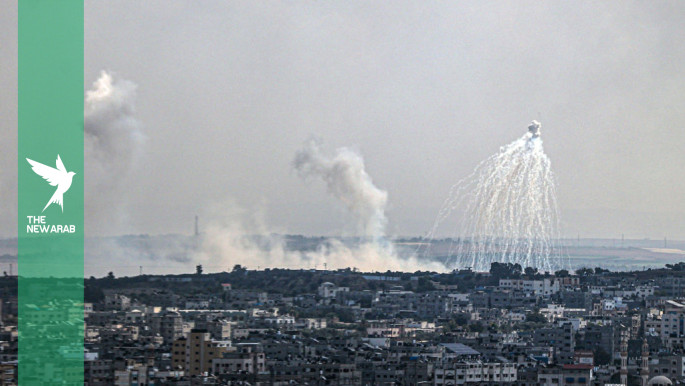
According to Gaza’s Health Ministry, 978 Palestinians have been killed and 3,097 wounded since the October 2025 ceasefire.
Hamas’s recent effort to include Gaza in any regional ceasefire agreement has sparked debate about whether regional shifts could end Israel’s ongoing genocide.
Yet, Palestinians enduring over two and a half years of Israel’s genocide, the dominant sentiment remains cautious rather than hopeful.
The movement’s call comes amid a quickly evolving situation in the region, with renewed Iran-Israel tensions, Israel’s invasion of Lebanon, and diplomatic efforts to reduce all-out violence.
On Tuesday, Hamas spokesperson Hazem Qassem said that the movement is working to include Gaza in regional ceasefire agreements.
Qassem said that developments in Gaza are linked to regional tensions involving Iran, Israel, and Lebanon.
According to Qassem, Iranian and Yemeni officials have conveyed messages indicating support for efforts to halt fighting across multiple fronts, including Gaza.
Qassem’s statements reflect Hamas’s view that regional conflicts are linked, and any settlement will address Gaza and other flashpoints.
However, the remarks come as Israel continues attacking the besieged coastal enclave during ongoing negotiations and despite a “ceasefire” brokered in October 2025.
According to Gaza’s Health Ministry, 978 Palestinians have been killed and 3,097 wounded since the October 2025 ceasefire.
Since October 2023, Israel has killed at least 72,988 Palestinians and wounded 173,205.
Regional shifts, but for whom?
Many Palestinians in Gaza doubt regional agreements will bring relief, despite support for initiatives ending the war, due to past experiences.
Ahmed Abu Aoun, 48, who was displaced from Gaza City, told The New Arab that “residents had repeatedly heard promises that Gaza would benefit from regional developments, only to see little change in reality.”
“Throughout the war, we heard a lot about the unity of fronts and about different parties acting in support of Gaza, but what happened on the ground was completely different,” he said.
“For over two and a half years, killing, destruction, and displacement continued. Residents are understandably sceptical of new political statements linking Gaza to regional agreements,” he added.
Like many Palestinians, Abu Aoun said people have become less interested in political rhetoric and more focused on tangible outcomes.
“The only thing that matters to people now is whether the bombing stops and whether they can return to a normal life,” he remarked.
Amal Hijazi, 39, echoed similar concerns, arguing that years of war have fundamentally changed how residents react to political announcements.
“We hope this time will be different, but previous experiences make people very cautious,” she told TNA.
She pointed to regional negotiations that focused on reducing tensions elsewhere while Gaza remained under attack.
“When understandings were being reached regarding Lebanon, the priority was stopping escalation there, while Gaza continued to be bombed,” she said. “That is why many people are asking why the outcome would be different this time.”
For Mohammed Madi, 56, from Deir al-Balah, the issue is not whether regional actors express solidarity with Gaza, but whether those efforts yield concrete results.
“People do not need more statements of support. They need the war to end,” he told TNA.
After years of killing, hunger, and displacement, people value actions over slogans. Despite many political positions, he believed daily life in Gaza had worsened.
Al-Najjar said many residents feel Gaza is often sidelined in regional talks, fueling doubts about diplomatic efforts.
People are waiting to see real change, which will determine if these initiatives are taken seriously, he explained.
Can Gaza be included in regional agreements?
Gaza-based Palestinian analyst Mustafa Ibrahim told TNA that Hamas’s stance aims to prevent Gaza’s isolation amid rising Iran-Israel tensions.
He said Hamas sees potential advantages in tying Gaza to any future regional arrangement.
“The movement understands that including Gaza in broader agreements could create additional political momentum and increase pressure on Israel to move towards a ceasefire,” he added.
Yet Ibrahim argued that the primary obstacle remains Israel’s position.
According to him, recent assessments emerging from Israel’s military and security establishment indicate continued support for maintaining pressure on Hamas rather than ending the conflict.
Israeli military institutions do not see the war as over, Ibrahim said. They keep seeking ways to meet their initial goals through military actions, sieges, or control of humanitarian aid.
He argued that Israeli discussions on Lebanon and Iran are shaped by similar thinking, with military officials opposing arrangements that could limit Israel’s future “freedom of action”.
Ibrahim said, “The Israeli military not only implements government policy but also influences it. Therefore, proposals linking a Gaza ceasefire to regional agreements will likely face reservations in Israel.”
He noted that Israeli debates focus more on tactics and timing than on broader goals like weakening Hamas or reshaping Gaza’s political and security landscape.
Ibrahim believes Hamas faces a tough challenge in convincing regional and international actors that Gaza should be part of any broader settlement.
Between political discourse and lived reality
According to Ahed Ferwana, another Gaza-based analyst, the scepticism visible among Palestinians in Gaza is rooted in their experience of previous regional developments that failed to alter conditions inside the territory.
“There is a clear gap between political discourse and what people have witnessed during the war,” he told TNA.
“Residents remember occasions when regional understandings focused on other fronts without leading to a meaningful reduction in hostilities in Gaza,” he said.
That disconnect, he argued, explains why many Palestinians are approaching Hamas’s latest proposal with caution rather than enthusiasm.
While the current confrontation between Iran and Israel could create new diplomatic opportunities, he said, success would depend on far more than Hamas’s desire to link Gaza to regional agreements.
“It will require genuine international and regional pressure to end the war,” he added. “It will also require Israeli acceptance of such an approach, which remains far from guaranteed.”
As Israeli attacks persist and the humanitarian toll rises, Gaza’s residents are caught between diplomatic efforts and daily survival.
Hamas’s latest move aims to break the Strip’s political isolation, but hopes are dampened by past hardships.
Meanwhile, the potential for regional diplomacy to secure a lasting ceasefire remains uncertain as Palestinians await genuine change, unsure if promises will lead to progress or another failed declaration.