
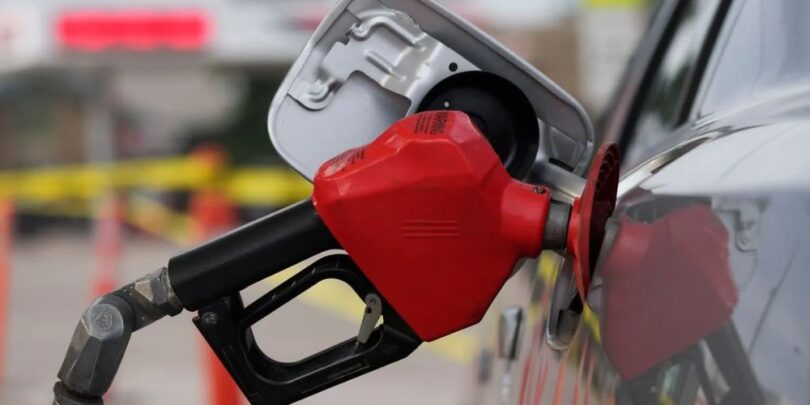
Nigeria’s average daily petrol consumption fell by 17 per cent to 41.5 million litres in August 2026, down from the 50 million litres per day benchmark, according to the Nigerian Midstream and Downstream Petroleum Regulatory Authority (NMDPRA).
The decline represents a reduction of 8.5 million litres per day in petrol consumption, according to the Authority’s August 2026 State of the Midstream and Downstream Sector factsheet.
Experts attributed the drop in consumption of petrol to the high prices of premium motor spirit experienced in the last few weeks by Nigerians.
The price of Premium Motor Spirit (PMS) supplied by the Dangote Petroleum Refinery rose by N185 per litre, or 15.9 per cent, in 22 days, amid successive upward price adjustments.
The refinery’s gantry price increased from N1,165 per litre on August 21 to N1,185, before rising to N1,200 on August 26, N1,265 on August 29 and N1,350 on September 12.
The NMDPRA said petrol, also known as Premium Motor Spirit (PMS), recorded an average daily consumption of 41.5 million litres during the month, representing 83 per cent of the 50 million-litre daily benchmark.
The data, analysed by THE WHISTLER, showed that petrol also had a stock sufficiency of 22.9 days as of August, 7.1 days below the Authority’s national fuel sufficiency benchmark of 30 days.
Of the four major petroleum products monitored by the Authority, only petrol and Liquefied Petroleum Gas (LPG) recorded stock levels below the 30-day benchmark.
LPG had stock sufficiency of 17.2 days, representing a deficit of 12.8 days, while Automotive Gas Oil (AGO), commonly known as diesel, had 51.6 days of stock sufficiency.
Aviation Turbine Kerosene (ATK), or aviation fuel, recorded the highest stock sufficiency at 82.3 days.
The consumption data showed divergent trends across the petroleum products.
AGO consumption increased marginally from 14 million litres per day in July to 14.3 million litres per day in August, representing a 2.1 per cent increase.
ATK consumption declined from three million litres per day to 2.8 million litres per day, a reduction of 0.2 million litres or 6.7 per cent against the benchmark.
LPG recorded the largest increase, with average daily consumption rising from 3.9 kilotonnes in July to 4.8 kilotonnes in August, representing a 23.1 per cent increase.
The NMDPRA said the daily consumption figures were based on volumes trucked out into the domestic market, while the LPG figures included propane.
The August data also showed continued contributions from domestic refineries, with the Dangote Refinery recording substantial production volumes across petrol, diesel and aviation fuel.
The refinery recorded average PMS production of 41.94 million litres per day, while AGO production stood at 18.01 million litres per day and aviation fuel at 24.48 million litres per day.
Its average domestic receipts stood at 35.87 million litres per day for PMS, 12.37 million litres per day for AGO and 3.07 million litres per day for aviation fuel.
The refinery also exported an average of 9.73 million litres of PMS, 8.75 million litres of AGO and 21.30 million litres of aviation fuel per day during the month.
As of August 31, its closing stock stood at 360.4 million litres of PMS, 137.2 million litres of AGO and 133.3 million litres of aviation fuel.
The NMDPRA also reported varying levels of activity among selected modular refineries.
WalterSmith recorded average capacity utilisation of 64.77 per cent, producing 0.28 million litres of AGO per day and recording domestic receipts of 0.29 million litres daily.
Edo Refinery operated at an average capacity utilisation of 90.43 per cent, with AGO production and domestic receipts both standing at 0.08 million litres per day.
Aradel recorded average capacity utilisation of 58.77 per cent, producing 0.31 million litres of AGO daily and receiving 0.33 million litres per day domestically.
OPAC operated at 16.97 per cent average capacity utilisation, producing 0.11 million litres of AGO per day and recording domestic receipts of 0.09 million litres daily.
The NMDPRA factsheet indicated that the NNPCL refineries recorded no production during the period covered.
The Authority also provided data on petrol imports and domestic supply, showing that oil marketing companies and NNPCL imports accounted for 20.6 million litres per day, representing 40.9 per cent in the relevant comparison.
The figures come amid increased reliance on domestic refining, particularly following the ramp-up of production at the Dangote Refinery.
Despite the refinery’s average PMS production of 41.94 million litres per day, the NMDPRA recorded national PMS consumption of 41.5 million litres daily in August.
The Authority, however, did not state that the 22.9-day PMS stock sufficiency indicated an imminent shortage or supply crisis. The figure simply placed national PMS inventories below the 30-day sufficiency benchmark adopted by the regulator.
The August factsheet also provided updates on the gas sector, including processing capacity, utilisation, exports and infrastructure development.
The NMDPRA said the total installed capacity of the 47 gas processing plants nationwide stood at 16.187 billion cubic feet per day, while average gas processed was 8.258 billion cubic feet per day.
Gas utilisation during the month included 0.537 billion cubic feet per day for gas-to-power, 0.590 billion cubic feet for commercial activities and 0.633 billion cubic feet for gas-based industries.
The country also recorded LNG exports by Nigeria LNG Limited and pipeline exports through the West African Gas Pipeline.
LNG exports stood at 105,317 cubic metres per day, equivalent to 51,683 metric tonnes per day, while pipeline exports through the West African Gas Pipeline averaged 0.152 billion cubic feet per day.